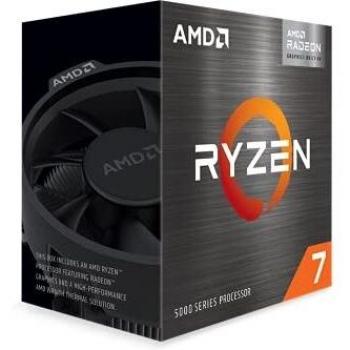
AMD Ryzen 7 5800X processor 3.8 GHz 32 MB L3


Sponsored This site contains affiliate links for which we may receive compensation. More information
 austic.com.au
AMD Ryzen 7 5800X Zen 3 CPU 8C/16T TDP 105W Boost Up To 4.7GHz Base 3.8GHz Total Cache 36MB No Cooler AMDCPU RYZEN5000
545.99 AUD
Price updated on: 25-02-2025 07:24:37
545.99 AUD
Price updated on: 25-02-2025 07:24:37 Find other available options:

| Identifiers | |
|---|---|
| MPN | AMD AMD Ryzen 7 5800X |
| Dimensions / Weight | |
| Key Features | |
|
Cache The amount of internal memory reserved for a processor’s cache, expressed in units such as megabytes (MB) or gigabytes (GB). This value indicates how much data the CPU can store locally to accelerate access and improve performance.
|
36 MB |
|
Component for Specifies the type of device or system that the product is intended to be used with, such as a PC, server, notebook, surveillance system, or other electronic equipment. The value represents a single category and can be used to filter or group products by their target platform.
|
PC |
|
CPU Brand The company that designs and produces the central processing unit (CPU) used in a device. This value identifies the brand of the processor, such as Intel, AMD, Qualcomm, or ARM Holdings, allowing users to assess compatibility, performance expectations, and support resources.
|
AMD |
|
CPU Cores The total count of physical processing units (cores) present in a central processing unit (CPU). This integer value indicates how many independent execution threads the CPU can handle simultaneously, influencing multitasking performance and computational throughput.
|
Octa Core |
|
CPU Family The processor family identifies the group or series of CPU models that share a common architecture, design, and performance characteristics. It helps users compare processors across brands and generations by indicating the underlying technology used in the chip.
|
AMD Ryzen 7 |
|
CPU Socket The physical connector used by a processor to attach to a motherboard or other compatible platform, such as LGA 1151, BGA 1440, Socket AM4, or LGA 1200. This attribute indicates the exact socket designation required for proper CPU installation and compatibility with other hardware components.
|
Socket AM4 |
|
CPU Speed The maximum operating frequency of a central processing unit (CPU), expressed in hertz (Hz). This value indicates how many cycles per second the CPU can execute under normal conditions and is useful for comparing performance potential across different models.
|
3.8 GHz |
|
CPU Threads The total number of independent execution units (threads) that a CPU can handle simultaneously. This value indicates how many parallel tasks the processor can process at once, affecting multitasking performance and workload distribution.
|
16 |
| Discrete graphics adapter model | Not available |
|
Form factor Specifies the physical configuration or design of a product, such as ATX, Micro‑ATX, Mini‑ITX, tower, case with cover, etc. It describes how the device is built and what mounting or expansion options it supports.
|
CPU |
|
Graphics chipset The exact model or designation of the graphics processing unit (GPU) installed in a device, such as "Intel UHD Graphics 620", "NVIDIA GeForce RTX 2070" or "AMD Radeon RX 580". It identifies the specific GPU variant used for rendering and video processing, allowing users to compare visual performance and compatibility across products.
|
None |
|
Harmonized System HS code The Harmonized System (HS) code is a standardized numerical identifier used internationally to classify traded goods. It consists of up to six digits, where each pair of digits represents progressively more specific product categories. The HS code facilitates customs duties, trade statistics, and regulatory compliance by providing a common language for describing products across borders.
|
85423119 |
|
L3 cache The amount of internal memory reserved for a processor’s L3 cache, expressed in units such as megabytes (MB) or gigabytes (GB). This value indicates how much data the CPU can store locally to accelerate access and improve overall performance.
|
32 MB |
|
Market segment The target market segment for a product, such as "Business", "Home", or "Small‑medium business". This attribute helps customers quickly identify the intended user group and typical use case of the item.
|
Desktop |
|
Memory clock speeds supported by processor A list of the operating frequencies that a processor can run at, expressed in hertz (Hz). The values are typically given as MHz or GHz and may include multiple speeds separated by commas to indicate base, boost, or other supported clock rates. This attribute helps users compare the performance potential of different CPUs and understand the range of speeds they can achieve under various workloads.
|
3200 MHz |
|
Memory speed The maximum operating frequency of a memory module, expressed in hertz (Hz). It indicates how many cycles per second the RAM can perform and is typically reported as MHz or GHz. This value helps users compare performance potential across different memory types and system configurations.
|
MHz |
|
Number of cores The total count of processing cores present in a CPU or GPU. This value indicates how many independent execution units are available for parallel processing, which can affect performance and multitasking capability.
|
8 |
|
Processor boost frequency The highest clock speed a processor can reach when its turbo or boost feature is active, expressed in hertz (Hz). This value indicates the peak performance capability of the CPU under load and helps users compare how fast a processor can run beyond its base clock speed.
|
4.7 GHz |
|
Processor cache type Indicates the level or category of a processor’s internal cache memory, such as L1, L2, L3, or Smart Cache. This attribute helps users understand the hierarchy and accessibility of cached data within the CPU, which can influence performance characteristics.
|
L3 |
|
Processor operating modes The set of instruction set architectures or execution modes that a processor can operate in, such as 32‑bit or 64‑bit. This attribute lists the supported modes for the CPU and helps users determine compatibility with software that requires a specific bitness.
|
64-bit |
|
Thermal design power The maximum amount of power, expressed in watts (W), that a processor or other electronic component is designed to dissipate as heat under typical operating conditions. It represents the thermal load the cooling system must handle and is used by manufacturers and users to assess performance, energy consumption, and suitability for specific environments.
|
105 W |

AMD is a computer processor manufacturer that was founded in 1969. The company produces a wide range of processors for both personal and business use, and is a major competitor to Intel. AMD is also a major supplier of graphics processors for gaming and professional use.