Trust HS-250 Headset Wired Head-band Calls/Music Black
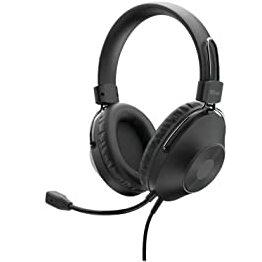


Sponsored This site contains affiliate links for which we may receive compensation. More information
Find other available options:

| Identifiers | |
|---|---|
| MPN | Trust Computer 24185 |
| Dimensions / Weight | |
| Key Features | |
|
3.5 mm connector Indicates whether a product includes a standard 3.5 mm audio connector, the common analog jack used for headphones, microphones and other audio devices.
|
N |
|
Colour The colour or combination of colours that a product is available in, expressed as common names such as "Black", "Silver" or comma‑separated lists like "Black, White". It indicates the visual appearance of the item for consumers.
|
Black |
| Control unit type | In-line control unit |
|
Detachable Microphone Indicates whether the product’s microphone can be detached from the main device, allowing it to be removed or replaced independently of the rest of the equipment.
|
Y |
|
Driver unit The physical dimension of the driver’s diaphragm or cone in a speaker or headphone. It is expressed as a linear measurement (e.g., millimetres, centimetres, inches) and allows users to compare the relative size of drivers across different products.
|
40 cm |
|
Ear coupling The type of ear attachment used by a headset or earphones, indicating how the device fits around or inside the ear. Common values include "Intraaural", "Circumaural", "Supraaural" and "On‑ear". This attribute helps users choose a model that matches their preferred fit and comfort.
|
Circumaural |
|
Headphone frequency The span of audio frequencies that a product can accurately reproduce or respond to, expressed in hertz (Hz). It indicates the lowest and highest frequencies the device can handle, helping users assess suitability for music playback, communication, or signal processing applications.
|
20 - 20000 Hz |
|
Headphone sensitivity The sensitivity of a headphone expressed in decibels (dB), indicating how much sound pressure the headphones can produce or detect for a given electrical input level. Values may be positive, negative, or zero and are typically measured at 1 kHz. This attribute helps users compare the loudness performance of different headphones.
|
108 dB |
|
Headset type The general classification of a headset based on how it delivers audio to the user, such as binaural (two‑channel), monaural (single‑channel), or other configurations. This attribute helps buyers understand whether the device provides stereo sound, single‑speaker output, or specialized listening modes.
|
Binaural |
|
Mac operating systems supported A list of macOS operating system versions that the product supports or is compatible with, such as "macOS 10.15 Catalina", "macOS 11 Big Sur" or newer releases. Each entry represents a distinct OS version that can run on or be supported by the device.
|
Mac OS X 10.15 Catalina,Mac OS X 10.15.3 Catalina |
|
Magnet type The material or composition of a magnet used in the product, such as neodymium, ferrite, or other magnetic alloys. It indicates the type of magnetic core that determines strength, size, and suitability for specific applications.
|
Neodymium |
|
Microphone direction type The directional sensitivity of a microphone, indicating how it captures sound from different angles. Common patterns include omnidirectional (equal pickup from all directions), unidirectional or cardioid (focused on one direction), bidirectional (pickup from two opposite directions), and supercardioid or hypercardioid (narrower focus with some rear pickup). This attribute helps users choose a microphone that best suits their recording environment, whether they need wide coverage for group discus
|
Omnidirectional |
|
Microphone frequency The span of audible frequencies that a microphone can accurately capture, expressed as a minimum and maximum value in hertz (Hz). It indicates the lowest and highest tones the device can reproduce or record, helping users assess suitability for different audio applications.
|
150 - 17000 Hz |
| Microphone Type | Boom |
|
Quantity Represents the count of individual units included in a product offering, such as pieces, packs, or sets. It indicates how many discrete items are available per purchase.
|
1 |
|
Recommended usage A brief statement of the intended or most suitable use cases for a product, such as the type of environment (indoor, outdoor), activity (gaming, office work, music listening) or general application category. It helps customers quickly determine whether the item fits their needs.
|
Calls/Music |
|
Wearing style A textual description of the way a product is worn or fitted on the body, such as "headband", "earhook", "neck‑band", "over‑the‑ear", or "in‑ear". This attribute helps users understand how the item will be positioned and secured during use.
|
Head-band |
|
Windows operating systems supported A list of Microsoft Windows operating system versions that the product is compatible with, including any relevant architecture or edition information.
|
Windows 10,Windows 7,Windows 8 |
Trust Computer


