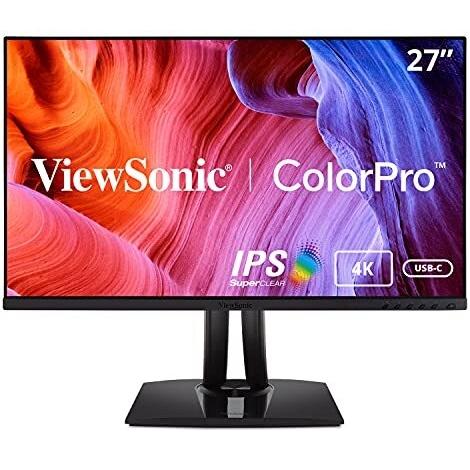
ViewSonic VP2756-4K 27 Inch 4K UHD IPS Ergonomic Monitor with Ultra-Thin Bezels


Sponsored This site contains affiliate links for which we may receive compensation. More information
Find other available options:

| Identifiers | |
|---|---|
| MPN | Viewsonic VP2756-4K |
| Dimensions / Weight | |
| Key Features | |
|
AC input voltage The range of alternating current voltage that the product accepts from its power source, expressed in volts (V). It indicates the minimum and maximum supply voltages compatible with the device across different regions.
|
100 |
|
Cable lock slot type Specifies the type of interface or mechanism used to secure a cable in its port, such as Kensington, Noble, IBM, or other standard lock slots. This attribute helps users identify compatibility and security features of the device.
|
Kensington |
|
Colour The colour or combination of colours that a product is available in, expressed as common names such as "Black", "Silver" or comma‑separated lists like "Black, White". It indicates the visual appearance of the item for consumers.
|
Black |
|
Contrast ratio The contrast ratio is the proportion between the brightest and darkest luminance a display can produce, expressed as a simple ratio such as 1000:1. It indicates how well a screen can differentiate light from dark areas, affecting image clarity and color depth.
|
1000:1 |
|
Depth without stand The linear measurement of an object from front to back or top to bottom, expressed in a physical unit such as millimeters, centimeters, inches, etc. It indicates how deep the item is and can be used for fitting, compatibility, or spatial planning.
|
5.3 cm |
|
Digital horizontal frequency The horizontal digital frequency indicates the range of frequencies, expressed in kilohertz (kHz), over which a device can process or transmit horizontal digital signals. It is represented as a minimum–maximum interval and helps users understand the signal bandwidth supported by the product.
|
15 |
|
Digital vertical frequency The range of frequencies, in hertz (Hz), at which a display device can refresh its image vertically when operating in digital mode. It indicates the minimum and maximum vertical scan rates supported, helping users assess visual smoothness and compatibility with various content sources.
|
24 |
|
Display brightness typical The average luminance emitted by a display under normal viewing conditions, expressed in candela per square meter (cd/m²). It indicates how bright the screen will appear to users and is useful for comparing monitors, TVs, laptops and other visual devices.
|
350 cd/m² |
|
Display resolution The pixel dimensions of a display or image, expressed as width by height (e.g., 1920x1080). It indicates how many pixels are used to render visual content and is commonly used for monitors, TVs, smartphones, cameras, and digital images.
|
3840x2160 |
|
Display technology The type of display panel used in a visual device, such as LED‑backlit LCD, IPS, TN, VA, OLED, or AMOLED. It indicates the underlying technology that determines image quality, color accuracy, viewing angles, response time and power consumption.
|
LED |
|
Displayports quantity The total count of physical or virtual display output connections available on a device, such as HDMI, DisplayPort, DVI, VGA, or USB‑C ports that support video output.
|
1 |
|
Harmonized System HS code The Harmonized System (HS) code is a standardized numerical identifier used internationally to classify traded goods. It consists of up to six digits, where each pair of digits represents progressively more specific product categories. The HS code facilitates customs duties, trade statistics, and regulatory compliance by providing a common language for describing products across borders.
|
85285210 |
|
HD type The pixel dimensions of a product’s screen, expressed as width by height (e.g., 1920x1080). It indicates the total number of pixels that compose the display and is used to assess image sharpness and clarity across devices such as monitors, TVs, laptops, and cameras.
|
4096x2160 |
|
HDMI A list of the HDMI ports available on the product, each entry indicating the number of ports and their specific HDMI version or additional features (e.g., "2 x HDMI 2.0b", "1 x HDMI 1.4 with CEC"). This attribute helps users understand both the quantity and capabilities of the HDMI connections.
|
2 |
|
Height without stand The vertical dimension of a product measured from its lowest to highest point, excluding any attached stand or base. It is expressed in a physical unit such as millimetres, centimetres or inches and applies to any item where height is relevant, including books, electronics, furniture and other objects.
|
36.3 cm |
|
Maximum power consumption The highest electrical power that a device can draw or consume during operation, expressed in watts (W). It represents the peak energy usage of the product and is useful for estimating maximum power requirements, comparing efficiency across similar devices, and ensuring compatibility with power supplies.
|
122 W |
|
Native aspect ratio The proportion between the width and height of a screen or image, expressed as two numbers separated by a colon (e.g., 16:9). It indicates whether content is designed for widescreen, square, or other aspect ratios and helps users match devices to their media formats.
|
16:9 |
|
Operating relative humidity The range of relative humidity (in percentage) within which the product is designed to operate reliably. Values are expressed as a minimum–maximum interval such as "20 - 80 %" and indicate the acceptable environmental moisture level for optimal performance.
|
20 - 90 % |
|
Panel mounting interface The pair of horizontal and vertical dimensions in millimetres that a product supports for VESA mounting (e.g., "100 × 100 mm"). This value indicates the exact hole spacing required by a mounting bracket to secure the device. It is used for monitors, TVs, projectors and other display equipment that can be wall‑mounted or attached to stands.
|
100x100 |
|
Panel type The specific technology used to construct the display panel, such as IPS, TN, VA, OLED, or LCD. It indicates how pixels are controlled and affects image quality, color accuracy, viewing angles, and power consumption.
|
IPS |
|
Pivot angle The maximum angular range a product can rotate or tilt around its vertical axis, expressed in degrees. It indicates how far the device can pivot from its neutral position while maintaining functionality and usability.
|
90 |
| Power consumption | 42 W |
|
Response time The time interval between a stimulus and the corresponding response of a device or system, expressed in units such as milliseconds (ms). It indicates how quickly the product reacts to input or processes data, which is critical for performance-sensitive applications like displays, gaming monitors, and interactive devices.
|
5 ms |
|
RMS rated power The root‑mean‑square (RMS) power rating of a device, expressed in watts (W). It represents the average electrical power that the product can deliver or consume under normal operating conditions.
|
4 W |
| Screen shape | Flat |
| Supported video modes | 2160 p |
|
Tilt angle range The minimum and maximum angles, expressed in degrees, that a monitor can be tilted or adjusted vertically while maintaining acceptable performance or usability. It indicates the tilt limits for displays such as monitors, stands, or other adjustable equipment.
|
-5 - 21° |
| Tiltable | Yes |
|
Weight with stand The total mass of a product including any attached stand or base, expressed in a standard unit such as grams or kilograms. This measurement is useful for shipping calculations, handling instructions, and consumer information.
|
6.9 kg |
|
Weight without stand The mass of a product measured from its lowest to highest point, excluding any attached stand or base. It is expressed in a standard unit such as grams or kilograms and can be used for shipping calculations, handling instructions, or consumer information.
|
4.4 kg |
|
Width without stand The horizontal measurement of a product excluding any attached stand or base, expressed in a linear unit such as millimetres or inches. It indicates how wide the item is from one side to the other and is used for sizing, fitting, and compatibility purposes.
|
61.3 cm |

Viewsonic is a brand of computer monitors, projectors, and other electronics. It was founded in 1987 and is now a subsidiary of TPV Technology.


