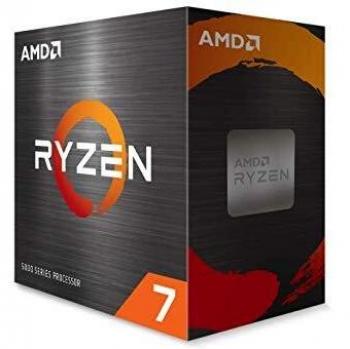
AMD Ryzen 3 4100 Desktop Processor


Sponsored This site contains affiliate links for which we may receive compensation. More information
 techdirect.ie
AMD Ryzen 3 4100 processor 3.8 GHz 4 MB L3 Box
84.64 EUR
Price updated on: 10-04-2024 07:43:11
84.64 EUR
Price updated on: 10-04-2024 07:43:11  memoryc.ie
AMD Ryzen 3 4100 3.8GHZ 4 Core L3 Desktop Processor Boxed
259.83 EUR
Price updated on: 13-09-2025 18:18:57
259.83 EUR
Price updated on: 13-09-2025 18:18:57 Find other available options:

| Identifiers | |
|---|---|
| MPN | AMD AMD Ryzen 5 4100 |
| Dimensions / Weight | |
| Key Features | |
|
Architecture A concise list of the specific processor micro‑architecture or generation used by a CPU, such as "Kaby Lake", "Comet Lake", "Zen 2" or "Rocket Lake‑S". This attribute helps users identify compatibility with software, performance characteristics and hardware requirements.
|
Zen 2 |
|
Cache The amount of internal memory reserved for a processor’s cache, expressed in units such as megabytes (MB) or gigabytes (GB). This value indicates how much data the CPU can store locally to accelerate access and improve performance.
|
6 MB |
|
CPU Brand The company that designs and produces the central processing unit (CPU) used in a device. This value identifies the brand of the processor, such as Intel, AMD, Qualcomm, or ARM Holdings, allowing users to assess compatibility, performance expectations, and support resources.
|
AMD |
|
CPU Cores The total count of physical processing units (cores) present in a central processing unit (CPU). This integer value indicates how many independent execution threads the CPU can handle simultaneously, influencing multitasking performance and computational throughput.
|
Quad Core |
|
CPU Family The processor family identifies the group or series of CPU models that share a common architecture, design, and performance characteristics. It helps users compare processors across brands and generations by indicating the underlying technology used in the chip.
|
AMD Ryzen 3 |
|
CPU Socket The physical connector used by a processor to attach to a motherboard or other compatible platform, such as LGA 1151, BGA 1440, Socket AM4, or LGA 1200. This attribute indicates the exact socket designation required for proper CPU installation and compatibility with other hardware components.
|
Socket AM4 |
|
CPU Speed The maximum operating frequency of a central processing unit (CPU), expressed in hertz (Hz). This value indicates how many cycles per second the CPU can execute under normal conditions and is useful for comparing performance potential across different models.
|
3.8 GHz |
|
CPU Threads The total number of independent execution units (threads) that a CPU can handle simultaneously. This value indicates how many parallel tasks the processor can process at once, affecting multitasking performance and workload distribution.
|
8 |
|
Form factor Specifies the physical configuration or design of a product, such as ATX, Micro‑ATX, Mini‑ITX, tower, case with cover, etc. It describes how the device is built and what mounting or expansion options it supports.
|
Processor |
|
L1 Cache The amount of internal memory reserved for a processor’s L1 cache, expressed in units such as kilobytes (KB), megabytes (MB) or gigabytes (GB). This value indicates how much data the CPU can store locally to accelerate access and improve performance.
|
256 KB |
| Memory types | DDR4-3200 |
|
Thermal Spec The highest ambient temperature, in degrees Celsius, at which the product is designed to operate safely and reliably. This value indicates the thermal limit for normal use and helps users assess suitability for hot environments or intensive workloads.
|
95 °C |
|
Turbo speed The maximum operating frequency reached by a processor when it enters turbo mode, expressed in hertz (Hz). It indicates the peak clock speed that can be achieved under high load, typically higher than the base frequency. This value helps users compare performance potential across different CPU models.
|
4.0 GHz |

AMD is a computer processor manufacturer that was founded in 1969. The company produces a wide range of processors for both personal and business use, and is a major competitor to Intel. AMD is also a major supplier of graphics processors for gaming and professional use.