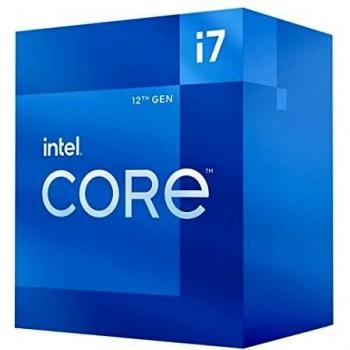
Intel Core i9-10920X Unlocked Processor


Sponsored This site contains affiliate links for which we may receive compensation. More information
Find other available options:

| Identifiers | |
|---|---|
| MPN | Intel BX8069510920X |
| Dimensions / Weight | |
| Key Features | |
|
Box Indicates whether a product comes packaged in a closed box or container. A value of "Yes" means the item is supplied with protective packaging; "No" indicates it is not.
|
Yes |
|
Bus speed The maximum theoretical speed at which the processor’s internal bus can transfer data, expressed in gigatransfers per second (GT/s). This value indicates the bandwidth capacity of the communication pathway between the CPU and other components such as memory or peripheral devices.
|
8 GT/s DMI3 |
| Commodity Classification Automated Tracking System (CCATS) | G077159 |
|
Component for Specifies the type of device or system that the product is intended to be used with, such as a PC, server, notebook, surveillance system, or other electronic equipment. The value represents a single category and can be used to filter or group products by their target platform.
|
PC |
| Cooler | No |
|
Cooler included Indicates whether the product comes with a cooling solution included in its package. A value of "Yes" means a cooler (air, liquid, or passive) is supplied; a value of "No" means no cooler is provided and must be purchased separately.
|
No |
|
Dimensions The pixel dimensions of a display or image, expressed as width by height (e.g., 1920x1080). It indicates how many pixels are used to render the visual content and is commonly used for monitors, TVs, smartphones, cameras, and digital images.
|
23 x 39 x 40cm (W x H x D) |
|
Discrete graphics adapter Indicates whether the product includes a dedicated graphics adapter (discrete GPU) separate from any integrated graphics. A value of "Yes" means a discrete GPU is present, while "No" indicates only integrated graphics are available.
|
No |
| Discrete graphics adapter model | Not available |
|
ECC Indicates whether the memory module or component supports Error‑Correcting Code (ECC) for detecting and correcting single-bit errors during operation. A value of "Yes" means ECC is enabled, allowing automatic correction of data corruption; a value of "No" indicates no ECC support.
|
No |
|
Embedded options available Indicates whether the product includes embedded options such as firmware features, hardware modules or configuration settings that are built into the device and available for use without external accessories.
|
No |
| Enhanced intel speedstep technology | Yes |
|
Execute disable bit Indicates whether the processor’s Execute Disable bit is enabled, allowing the CPU to prevent execution of code from memory regions marked as non-executable.
|
Yes |
|
Export Control Classification Number (ECCN) A code that identifies the classification of a product for export control purposes, indicating its regulatory status and any restrictions on sale or shipment.
|
5A992C |
|
Generation The generation of a central‑processing unit indicates the cohort or family of CPU models that share common architecture, performance characteristics, and feature sets. It is typically expressed as an ordinal number (e.g., "1st Generation", "10th Gen") followed by the manufacturer name and model series, helping users compare processors across brands and time periods.
|
10th Generation |
|
Harmonized System HS code The Harmonized System (HS) code is a standardized numerical identifier used internationally to classify traded goods. It consists of up to six digits, where each pair of digits represents progressively more specific product categories. The HS code facilitates customs duties, trade statistics, and regulatory compliance by providing a common language for describing products across borders.
|
8542310001 |
|
Intel 64 Indicates whether the processor is compatible with the Intel® 64 architecture, enabling it to run operating systems and applications designed for x86‑64 processors.
|
Yes |
|
Intel optane memory Indicates whether the product includes support for Intel Optane memory, a technology that uses non‑volatile storage to accelerate system performance by caching frequently used data and improving boot times.
|
Yes |
|
Intel Smart Cache Indicates whether a processor includes Intel’s Smart Cache feature, which allows the CPU to use additional cache memory for faster data access and improved performance.
|
N/A |
|
Intel Turbo Boost Max Technology 3.0 Indicates whether the processor supports Intel Turbo Boost Max Technology 3.0, a feature that dynamically selects the fastest cores for peak performance and improves efficiency during demanding workloads.
|
Yes |
|
Intel Turbo Boost Technology The multiplier applied to a processor’s base clock when Turbo Boost is active, indicating how many times the base frequency can be increased under load. It helps users compare the peak performance potential of different CPUs.
|
2.0 |
|
Launch date The calendar date on which a product was first made available to the public or released for sale. It is expressed in the format YYYY-MM-DD and can be used to filter, sort, or display the launch timeline of the item.
|
Q4'19 |
|
Market segment The target market segment for a product, such as "Business", "Home", or "Small‑medium business". This attribute helps customers quickly identify the intended user group and typical use case of the item.
|
Desktop |
|
Maximum internal memory supported by processor The largest amount of internal random‑access memory (RAM) that a processor can address and support, expressed as a data size such as megabytes or gigabytes. It indicates the upper limit of memory capacity for active processes and multitasking performance on devices using this CPU.
|
256 GB |
|
Maximum number of PCI Express lanes The total count of PCI Express lanes available on a device or component, indicating the maximum number of high‑speed communication channels that can be used simultaneously for peripherals such as graphics cards, storage devices, and networking adapters.
|
48 |
|
Memory The amount of random‑access memory (RAM) physically installed in a device, expressed as a data size such as megabytes or gigabytes. It indicates how much information the system can hold for active processes and affects multitasking performance.
|
DDR4-2933 |
|
Memory channels The configuration of memory channels supported by a device, indicating how many independent memory paths the system can use for data transfer (e.g., Dual‑channel, Quad‑channel). This attribute helps users understand the potential bandwidth and performance characteristics of the memory subsystem.
|
Quad-channel |
|
Memory clock speeds supported by processor The set of operating frequencies that a processor can run at, expressed in hertz (Hz). Values are typically listed as individual frequencies or ranges separated by commas, indicating the base clock and any boost or turbo options available for the CPU.
|
2933 MHz |
|
Memory types supported by processor A list of the types of memory modules that a device can use, such as DDR4 SDRAM, LPDDR3, or other compatible standards. Each entry represents a distinct memory technology supported by the hardware.
|
DDR4-SDRAM |
|
More information Free‑text details that provide extra context about a product, such as usage notes, special features, or general remarks. The value can be a short phrase or a longer paragraph and is not restricted to any specific format.
|
Here |
|
On-board graphics adapter The model name or number of the integrated graphics adapter built into a device, such as a laptop, desktop, or motherboard. It identifies the specific GPU variant used for rendering and video processing, allowing users to compare visual performance and compatibility across products.
|
No |
|
PCI Express CEM Revision The PCI Express Common Extensible Module (CEM) revision indicates the version of the PCI Express specification supported by a device or component. It is expressed as a numeric value such as 2.0, 3.0, or 4.0 and determines compatibility with PCIe devices and the maximum achievable bandwidth.
|
3.0 |
|
Processor ARK ID The Processor ARK ID is a numeric identifier assigned by Intel to each processor model. It uniquely distinguishes one CPU from another and can be used to look up detailed specifications, compatibility information, or firmware updates for that specific chip.
|
198012 |
|
Processor base frequency The minimum clock speed at which a CPU operates under normal conditions, expressed in hertz (Hz). It represents the core’s base operating rate and is used to compare performance potential across processors.
|
3.5 GHz |
|
Processor boost frequency The maximum operating frequency that a processor can reach when its turbo or boost feature is active, expressed in hertz (Hz). This value indicates the peak performance capability of the CPU under load and helps users compare how fast a processor can run beyond its base clock speed.
|
4.6 GHz |
|
Processor cache The amount of internal memory reserved for a processor’s cache, expressed in units such as megabytes (MB) or gigabytes (GB). This value indicates how much data the CPU can store locally to accelerate access and improve performance.
|
19.25 MB |
| Processor codename | Cascade Lake |
|
Processor cores The total number of physical processing units in a single central processing unit (CPU). This value indicates how many independent tasks the CPU can handle simultaneously, influencing multitasking and parallel performance.
|
12 |
|
Processor family The processor family identifies the group or series of CPU models that share a common architecture, design, and performance characteristics. It helps users compare processors across brands and generations by indicating the underlying technology used in the chip.
|
Intel® Core™ i9 X-series |
|
Processor generation The generation of a processor indicates the cohort or family of CPU models that share common architecture, performance characteristics, and feature sets. It is typically expressed as a numeric ordinal (e.g., "1st Generation", "10th Gen") followed by the manufacturer name and model series. This attribute helps users compare processors across brands and time periods.
|
10th gen Intel® CoreT i9 |
|
Processor lithography The lithography process defines the minimum feature size that can be etched onto a semiconductor chip, expressed in nanometers (nm). It indicates the manufacturing technology generation and influences performance, power consumption, and integration density of the processor.
|
14 nm |
|
Processor manufacturer The company that designs and produces the central processing unit (CPU) used in a device. This value identifies the brand of the processor, such as Intel, AMD, Qualcomm, or ARM Holdings, allowing users to assess compatibility, performance expectations, and support resources.
|
Intel |
|
Processor model Identifies the exact model of the central processing unit used in a device, including brand and numeric designation such as "Intel Core i5-8250U" or "AMD Ryzen 7 3700X". This value allows users to distinguish between different processor families, generations, and performance levels.
|
i9-10920X |
|
Processor operating modes The set of instruction set architectures or execution modes that a processor can operate in, such as 32‑bit or 64‑bit. This attribute indicates the architectural mode(s) supported by the CPU and helps users determine compatibility with software that requires a specific bitness.
|
64-bit |
|
Processor socket The physical connector used by a processor to attach to a motherboard or other compatible platform. Common examples include LGA 1151, BGA 1440, Socket AM4, and LGA 1200. This attribute indicates the exact socket designation required for proper CPU installation and compatibility.
|
LGA 2066 |
|
Processor threads The number of independent execution units (threads) that a processor can handle simultaneously. This value indicates how many parallel tasks the CPU can process at once, which affects multitasking performance and workload distribution.
|
24 |
|
Product Type Indicates the general classification or type of an item, such as "laptop", "projector", "router" or "paint". It helps users quickly identify the nature of the product and compare similar items across categories.
|
Processor |
|
Refresh rate The number of times per second that a display updates its image, expressed in hertz (Hz). It indicates the smoothness and responsiveness of motion on the screen; higher rates generally provide a more fluid visual experience.
|
60Hz 2Ms Response Time |
|
Scalability The maximum number of CPU sockets that a product can support. It indicates how many processor units can be installed simultaneously in the system, which affects overall processing capacity and scalability.
|
1S |
| Status | Launched |
|
Supported instruction sets A list of processor instruction set extensions that a CPU can execute, such as AVX, AVX2, SSE4.1, SSE4.2, and AVX‑512. Each value represents an individual extension or group of extensions supported by the hardware.
|
SSE4.1,SSE4.2,AVX 2.0,AVX-512 |
|
Target market The segment of consumers or businesses for whom the product is intended, such as Gaming, Content Creation, Cloud/Datacenter, Small and Medium Business, or Entry-level users. It helps shoppers quickly identify whether a product fits their needs and allows filtering by target audience.
|
Gaming, Content Creation |
|
TDP The maximum amount of heat generated by a computer component that the cooling system is designed to dissipate under normal operating conditions. It indicates the power consumption and thermal load the component can produce, helping users select appropriate cooling solutions and assess energy usage.
|
165W |
|
Thermal solution specification A short alphanumeric code that identifies the thermal solution or cooling configuration used in a computer component such as a processor, motherboard, or chassis. The identifier is typically assigned by the manufacturer and can be referenced to determine compatibility, performance characteristics, or warranty information for the cooling system.
|
PCG 2017X |
|
Tjunction Die maximale Temperatur, bei der ein Produkt sicher betrieben werden kann. Der Wert wird in Grad Celsius angegeben und gibt an, bis zu welcher Hitze das Gerät ohne Gefahr für Funktionsstörungen oder Schäden arbeiten darf.
|
94 °C |

Intel is a computer chip manufacturer that also produces motherboard chipsets, network interface controllers and other integrated circuits. It is the world's largest semiconductor company.