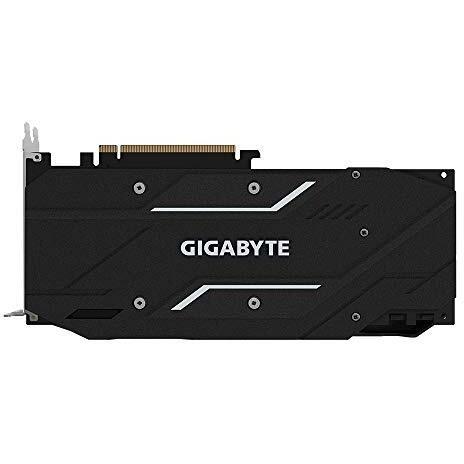
RTX 2060 WindForce OC 6GB Graphics Card



Sponsored This site contains affiliate links for which we may receive compensation. More information
Find other available options:

| Identifiers | |
|---|---|
| Model | Gigabyte 9VN2060WO6-00-10 |
| MPN | Gigabyte GV-N2060WF2OC-6GD V2 |
| Dimensions / Weight | |
| Key Features | |
|
Boost Clock The maximum operating frequency that a graphics processing unit (GPU) can reach when its turbo or boost feature is active, expressed in hertz (Hz). This value indicates the peak performance capability of the GPU under load and helps users compare how fast a GPU can run beyond its base clock speed.
|
1770 MHz |
|
Chipset The chipset is the collection of integrated circuits that manages communication between a computer’s CPU, memory, and peripheral devices. It defines the supported processor families, available I/O interfaces, and overall system capabilities, allowing users to understand compatibility and feature sets for motherboards or other hardware components.
|
GeForce RTX 2060 |
|
Connectivity Indicates the types of network or data interfaces available on a product, such as wired (e.g., Ethernet, USB) and wireless (e.g., Wi‑Fi, Bluetooth). The value may list one or more interface names separated by commas.
|
3 x DisplayPort 1.4 1 x HDMI 2.0b |
|
Cooler Design The visual and functional style of the cooling system used in a product, such as air cooler, liquid cooler, or passive heat sink. It describes whether the cooler has features like RGB lighting, fan configuration (single, dual, triple), or special mounting designs, helping users identify the overall look and performance characteristics of the cooling solution.
|
WINDFORCE 2X |
|
Cooling type The method or mechanism used to dissipate heat from a component such as a processor, graphics card, or other electronic part. It indicates whether the device relies on active cooling (fans or liquid pumps), passive heat sinks, or hybrid solutions, and helps users assess thermal performance and noise levels.
|
Active |
|
Core clock The maximum operating frequency of a graphics processing unit (GPU) core, expressed in hertz (Hz). This value indicates how many cycles per second the GPU can execute and is useful for comparing performance potential across different graphics cards.
|
1365 MHz |
|
Cores The total count of processing cores present in a graphics processing unit (GPU). This value indicates how many independent execution units are available for parallel rendering, compute tasks, and other GPU‑accelerated operations.
|
1920 |
|
CUDA Indicates whether the product is compatible with NVIDIA’s CUDA technology, which enables parallel computing on graphics processing units.
|
Yes |
|
Depth The linear measurement of an object from front to back or top to bottom, expressed in a physical unit such as millimeters, centimeters, inches, etc. It indicates how deep the item is and can be used for fitting, compatibility, or spatial planning.
|
40.4 mm |
|
Dimensions The pixel dimensions of a display or image, expressed as width by height (e.g., 1920x1080). It indicates how many pixels are used to render the visual content and is commonly used for monitors, TVs, smartphones, cameras, and digital images.
|
120.58 x 40.41 x 264.9 mm |
|
DirectX Version The specific version of the DirectX graphics API that a product supports or implements. Values are typically numeric (e.g., "12.0", "11.2") and may include minor revisions. This attribute helps users determine compatibility with software, games, and drivers that require particular DirectX capabilities.
|
12.0 |
|
Discrete graphics adapter memory The amount of dedicated video memory (VRAM) available on a discrete graphics adapter, expressed as a data size such as megabytes (MB) or gigabytes (GB). It indicates how much graphical data can be stored for textures, frame buffers, and other GPU tasks, affecting performance in gaming, rendering, and high‑resolution displays.
|
6 GB |
|
DisplayPort version The specific version of the DisplayPort standard that a product supports, such as "1.4", "2.0" or "2.1b". This value indicates the capabilities and compatibility of the DisplayPort interfaces on the device.
|
1.4 |
|
Displayports quantity The total count of physical or virtual display output connections available on a device, such as HDMI, DisplayPort, DVI, VGA, or USB‑C ports that support video output.
|
3 |
|
Drivers included Indicates whether the product comes with drivers included in the package or available for download. A value of "Yes" means that drivers are supplied, while a value of "No" indicates they are not provided and must be obtained separately.
|
Yes |
|
Dual link DVI Indicates whether the device supports a Dual‑Link DVI connection, which allows higher video resolutions by using two separate DVI channels.
|
No |
|
Edition A brief statement indicating the edition or version of a product, such as "Reprint", "New Edition", or a numeric edition number like "2nd edition". It identifies which specific release of the item is being referenced.
|
WINDFORCE OC |
|
Firestream Indicates whether the product is compatible with or supports the Firestream feature set, allowing it to integrate with Firestream-enabled systems and services.
|
No |
|
Fitted Backplate Indicates whether the product includes a backplate that is permanently attached or can be fitted to the device, allowing for protection and structural support.
|
Yes |
|
Full HD Indicates whether the product is capable of displaying or transmitting video at Full HD resolution (1920 × 1080 pixels). A value of "Yes" means that Full HD functionality is supported, while a value of "No" indicates it is not available.
|
Yes |
|
GeForce VR Ready Indicates whether a GeForce graphics card is compatible with virtual reality systems and can support VR applications or experiences.
|
Yes |
|
Graphics Card Power Connectors The arrangement of PCI Express power connectors required by a graphics card, expressed as the number and type of pins (e.g., "2 x 8-pin PCIe"). This attribute helps users determine the appropriate power supply cables and connector compatibility for installing or upgrading the card.
|
1 x 8-pin PCIe |
|
Graphics processor family The brand or model line of the graphics processing unit (GPU) used in a product, such as NVIDIA, AMD, or Matrox. It identifies the overall family of GPUs that share similar architecture and performance characteristics, helping users compare visual capabilities across devices.
|
NVIDIA |
|
HDCP Indicates whether a device supports HDCP (High‑bandwidth Digital Content Protection), allowing it to play or display protected digital content on compatible screens and audio/video equipment.
|
Yes |
|
HDCP Ready Indicates whether the product supports HDCP version 2.2, allowing it to play or display protected digital content such as movies, games or streaming services on compatible screens and devices.
|
Yes |
|
HDMI A list of the HDMI ports available on the product, each entry indicating the number of ports and their specific HDMI version or additional features (e.g., "2 x HDMI 2.0b", "1 x HDMI 1.4 with CEC"). This attribute helps users understand both the quantity and capabilities of the HDMI connections.
|
1 |
|
HDMI version The specific version of the HDMI standard that a product supports, such as "2.0", "2.1" or "1.4b". This value indicates the capabilities and compatibility of the HDMI interfaces on the device.
|
2.0b |
|
Height The vertical dimension of a product measured from its lowest to highest point. It is expressed in a physical unit such as millimetres, centimetres or inches and applies to any item where height is relevant, including books, electronics, furniture and other objects.
|
120.6 mm |
|
Interface The physical or logical interface used by a device to connect with other components, such as USB, PCI Express, SATA, Ethernet, Thunderbolt, DisplayPort, or similar standards. It indicates the technology that enables data transfer and power delivery between the product and its peripherals.
|
PCIe 3.0 (x16) |
|
Interface type A list of the physical or logical interfaces that a product can use to connect with other devices or components, such as USB, PCI Express, SATA, M.2, Ethernet, Thunderbolt, and similar standards.
|
PCI Express x16 3.0 |
|
Low Profile Compatible Indicates whether the product is designed to fit in low‑profile or slim form factors, such as low‑height graphics cards or compact components that require reduced vertical clearance. A value of "Yes" means the item can be installed in a low‑profile chassis or slot; "No" indicates it requires standard or higher clearance.
|
No |
|
Low Profile Support Indicates whether a graphics card includes an integrated bracket for mounting or if the bracket must be purchased separately. A value of "Yes" means the card comes with a bracket, while "No" indicates it does not. If the information is unavailable, the attribute may be marked as N/A.
|
N/A |
|
Manufacturing process The manufacturing process used to fabricate a semiconductor device, expressed as the feature size in nanometers (nm). It indicates the scale of transistors and other structures on the chip, which influences performance, power consumption, and integration density.
|
12 nm |
|
Maximum Concurrent Displays The maximum count of independent displays a device can drive simultaneously. It indicates how many monitors or screens the product can output to at once, regardless of resolution or refresh rate.
|
4 Displays |
|
Maximum digital resolution The highest pixel dimensions that a device can output or support, expressed as width by height (e.g., 1920x1080). It indicates the maximum resolution available for visual content on the product.
|
7680x4320 @ 60Hz (8K UHD) |
|
Maximum resolution The highest pixel dimensions that a device can output or support, expressed as width by height (e.g., 1920x1080). It indicates the maximum resolution available for display content on the product.
|
7680 x 4320 pixels |
| Memory bandwidth maximum. | 336 GB/s |
|
Memory bus The width of the memory bus, expressed in bits. It indicates how many data lines are available for transferring information between the processor and memory modules at once, affecting overall memory bandwidth.
|
192 Bit |
|
Memory Clock The maximum operating frequency of a graphics processing unit (GPU), expressed in hertz (Hz). This value indicates how many cycles per second the GPU can execute and is typically reported as megahertz (MHz) or gigahertz (GHz). It helps users compare performance potential across different graphics cards.
|
14000 MHz |
|
Microarchitecture The specific microarchitecture or generation of a processor, GPU, or other digital component, indicating the design family and technological improvements used in its fabrication.
|
Turing |
|
Minimum Recommended PSU The minimum power output that a computer’s power supply unit (PSU) should provide to ensure reliable operation of the device or component. It is expressed in watts and represents the lowest PSU capacity required for stable performance under typical load conditions.
|
500 W |
|
Multi-Way Graphics Support Indicates whether a graphics card or integrated GPU supports multi‑way interconnects such as NVLink, allowing multiple GPUs to share memory and bandwidth for improved performance.
|
Not Supported |
|
NVIDIA RT Cores The total count of NVIDIA RT (Ray Tracing) cores present in a graphics processing unit. This value indicates how many dedicated hardware units are available for accelerating ray‑tracing calculations, which can improve rendering performance and visual fidelity in supported applications.
|
30 |
|
NVIDIA Tensor Cores The total count of dedicated tensor processing units present in a graphics card or GPU. These cores accelerate machine‑learning and AI workloads by performing matrix operations efficiently, improving performance for deep‑learning inference and training tasks.
|
240 |
|
OpenGL version The specific version of the OpenGL graphics API supported by a product, indicating its rendering capabilities and compatibility with software that requires certain OpenGL features.
|
4.5 |
|
Package type The form of packaging used for a product, such as box, blister pack, bag, or pallet. It indicates how the item is contained and protected during shipping and storage.
|
Retail |
|
PhysX Indicates whether the product supports NVIDIA PhysX technology, enabling advanced physics simulations for enhanced graphics and gameplay.
|
Yes |
|
Rays cast The number of rays emitted by a graphics component per second, expressed in billions (Giga Rays/sec). This metric indicates the rendering throughput capability of the device and is useful for comparing performance across similar models.
|
5 Giga Rays/Sec |
|
Real-time ray tracing Indicates whether a graphics card or device can perform real‑time ray tracing, a rendering technique that simulates realistic lighting and shadows by tracing the paths of light rays in a virtual scene. A value of "Yes" means the hardware and drivers support this feature for games, simulations, or professional applications; "No" indicates it is not supported.
|
Yes |
|
RTX-OPS The peak computational throughput of a graphics processor expressed in teraflops (trillions of floating‑point operations per second). It indicates the raw processing power available for rendering, simulation or AI workloads.
|
37T |
|
TV tuner integrated Indicates whether a product includes an integrated television tuner that can receive broadcast signals directly without requiring an external receiver. The value is "Yes" or "No", representing the presence or absence of this feature.
|
No |
|
User Guide The mass of the product expressed in a standard unit such as grams or kilograms. It represents how heavy the item is and can be used for shipping, handling, or user information purposes.
|
Yes |
|
Width The horizontal measurement of a product, expressed in a linear unit such as millimetres or inches. It indicates how wide the item is from one side to the other and is used for sizing, fitting, and compatibility purposes.
|
Dual Slot |
|
Windows operating systems supported A list of Microsoft Windows operating system versions that the product is compatible with, including any relevant architecture or edition information.
|
Yes |

Gigabyte is a Taiwanese computer hardware company that produces motherboards, graphics cards, and other computer hardware. The company was founded in 1986 and is now one of the largest computer hardware companies in the world.

