TP-Link EAP225-Wall Omada AC1200 Wireless Wall-Plate AP with Free EAP Controller Software
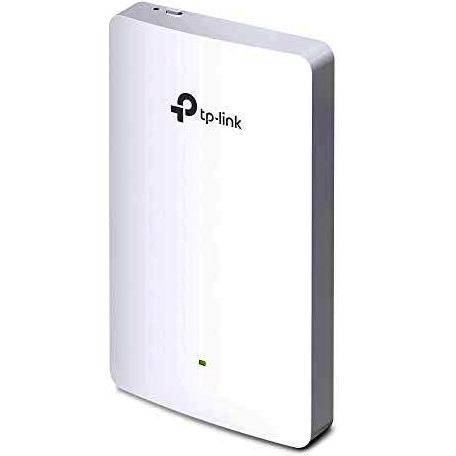


Sponsored This site contains affiliate links for which we may receive compensation. More information
 store.squareone.ie
Square One - TP Link EAP225-WALL (TPEAP225WALL)
225.00 EUR
Price updated on: 08-10-2025 04:59:48
225.00 EUR
Price updated on: 08-10-2025 04:59:48 Find other available options:

| Identifiers | |
|---|---|
| Model | TP-LINK EAP225-Wall |
| MPN | TP-LINK EAP225-Wall |
| Dimensions / Weight | |
| Key Features | |
|
Buttons The total count of physical and programmable button controls available on a device, such as a router, switch, or mouse. This value indicates how many distinct actions the user can trigger directly from the hardware.
|
1 x Reset Button |
|
Compatible Internet Connections A list of the types of internet connections that a product can use to access network services. Each value describes a specific connection method or technology, such as wired broadband (e.g., cable modem, ADSL, VDSL), wireless local networks (e.g., existing Wi‑Fi), or cellular data links (e.g., 3G/4G via USB modem). The list helps users determine whether the device will work with their available internet infrastructure.
|
Existing WiFi Network |
|
Device type The general classification of a product, such as tablet, smartphone, router, or computer. It indicates the primary function or form factor that helps buyers quickly identify and compare similar items.
|
Wireless Access Point |
|
Firewall Indicates whether the device includes an integrated firewall that filters and protects network traffic.
|
No |
|
Frequency The operating frequency of a device or component, expressed in hertz (Hz). It represents the number of cycles per second that the product’s internal circuits or wireless radios can run and is useful for comparing performance across similar products.
|
5.15~5.85GHz |
| Interfaces | "1 x 10/100Mbps Shielded Ethernet Port (LAN0,Passive PoE in)1 x Grounding Terminal1 x Reset Button" |
|
Maximum power consumption The highest electrical power that a device can draw or consume during operation, expressed in watts (W). It represents the peak energy usage of the product and is useful for estimating maximum power requirements, comparing efficiency across similar devices, and ensuring compatibility with power supplies.
|
25.5 W |
|
Network Connectivity A comma‑separated list of the networking protocols and standards that a device can support or comply with, such as IEEE 802.11 variants for wireless, IEEE 802.3 for Ethernet, or other relevant network specifications. The values are typically separated by commas and may include both technical identifiers and consumer‑friendly labels.
|
10/100 |
| Other Connectors | N/A |
|
Protection A comma‑separated list of protective features that a product offers, such as resistance to dust, water, shock, heat, or other environmental factors.
|
15KV ESD Protection6000V Lightning Protection |
|
Quality of service A list of the quality‑of‑service (QoS) levels that a product can provide or comply with, such as "Low Latency", "High Throughput" or other QoS categories. Each value represents a distinct QoS capability that the device supports.
|
QoS(WMM) |
|
Refresh rate The number of times per second that a display updates its image, expressed in hertz (Hz). It indicates the smoothness and responsiveness of motion on the screen; higher rates generally provide a more fluid visual experience.
|
60Hz 2Ms Response Time |
|
Wireless Band The radio frequency band(s) that a wireless device supports, such as Dual‑Band (2.4 GHz and 5 GHz), Tri‑Band, or Single‑Band. It indicates the spectrum range available for Wi‑Fi connectivity.
|
Dual Band |
|
Wireless Protocols A textual list of the wireless protocols and standards that a device supports, such as IEEE 802.11a/b/g/n/ac/ax, PoE (IEEE 802.3af/at), LTE bands, or other radio‑frequency technologies. The value may contain multiple entries separated by spaces or commas.
|
IEEE 802.11ac IEEE 802.11b IEEE 802.11g IEEE 802.11n |
|
Wireless range The maximum distance over which a device can maintain a reliable wireless connection to another device or network. It is expressed in linear units such as meters or feet and indicates the effective coverage area for Wi‑Fi, Bluetooth, RF, or other radio technologies.
|
System-level optimizations for more than 15km |

TP-Link is a brand of networking products that was founded in 1996. The company is headquartered in China, and manufactures a wide range of networking products, including routers, switches, and adapters. TP-Link has a large global presence, and is one of the most popular networking brands in the world.


