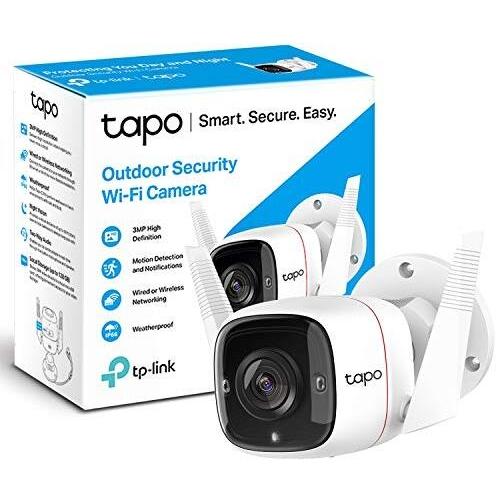
TP-Link Tapo Outdoor Security Wi-Fi Camera


Sponsored This site contains affiliate links for which we may receive compensation. More information
Find other available options:

| Identifiers | |
|---|---|
| MPN | TP-LINK Tapo C310 |
| Dimensions / Weight | |
| Key Features | |
|
AC input frequency The frequency of the alternating current supplied to a power supply or charger, expressed in hertz (Hz). It indicates the acceptable operating range for the electrical mains that powers the device, ensuring proper functionality and safety.
|
50 - 60 Hz |
|
AC input voltage The range of alternating current voltage that the product accepts from its power source, expressed in volts (V). It indicates the minimum and maximum supply voltages compatible with the device across different regions.
|
100 - 240 V |
|
Audio system Specifies the audio system installed or supported by the product, such as Dolby Audio, SonicMaster, MaxxAudio Pro, or other proprietary audio processing technologies. The value is a free‑text string that identifies the main audio engine or brand used for sound playback and processing.
|
2-way |
| Bluetooth | No |
|
Built-in speakers Indicates whether the product includes built‑in speaker(s) that can produce sound without requiring external audio devices. A value of "Yes" means the device has one or more integrated speakers; a value of "No" means it does not.
|
Yes |
|
Certification A list of official certifications or compliance marks that the product has received from regulatory bodies, safety organizations, or industry standards groups. Each entry represents a distinct certification such as CE, FCC, RoHS, UL, or WEEE, and may include additional details like version numbers or specific test reports.
|
CE, NCC |
|
Colour The colour or combination of colours that a product is available in, expressed as common names such as "Black", "Silver" or comma‑separated lists like "Black, White". It indicates the visual appearance of the item for consumers.
|
White |
|
Compatible memory cards List of the memory card types that a device can read or write, such as MicroSD (TransFlash), SD, MMC, CompactFlash, and others. Each value represents a format that the device’s slot or reader supports for storage expansion.
|
MicroSD (TransFlash) |
|
Connectivity technology The network and data interface technologies supported by the product, such as Wired, Wireless, USB, Bluetooth, or combinations thereof. Each value represents a distinct technology that can be used for communication or power delivery.
|
Wired & Wireless |
|
DC output voltage The electrical potential difference that a device delivers to its load when operating on direct current (DC). It is expressed in volts (V) and indicates the nominal voltage supplied by the product’s DC output, helping users verify compatibility with accessories or systems that require a specific DC supply.
|
9 |
|
Dimensions The pixel dimensions of a display or image, expressed as width by height (e.g., 1920x1080). It indicates how many pixels are used to render the visual content and is commonly used for monitors, TVs, smartphones, cameras, and digital images.
|
23 x 39 x 40cm (W x H x D) |
|
Environment The ambient conditions under which the product is designed to operate safely and reliably, including temperature ranges, humidity levels, and moisture exposure. Values are typically expressed as ranges (e.g., "0°C~40°C") or descriptive phrases indicating indoor/outdoor suitability.
|
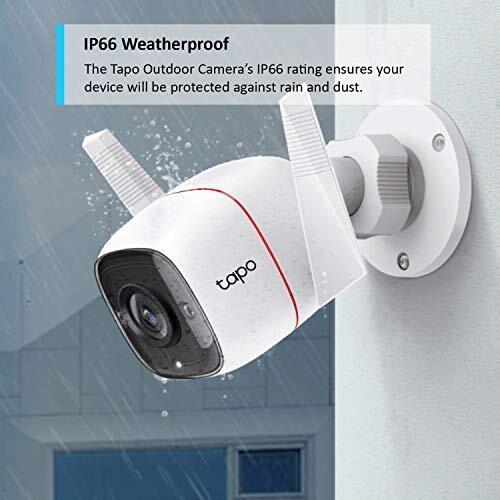
IP66 weatherproof rating |
|
Ethernet LAN ports Represents the total count of Ethernet LAN (RJ‑45) interfaces available on a product. The value is an integer indicating how many physical Ethernet ports are present, regardless of speed or generation.
|
1 |
|
Form factor Specifies the physical configuration or design of a product, such as ATX, Micro‑ATX, Mini‑ITX, tower, case with cover, etc. It describes how the device is built and what mounting or expansion options it supports.
|
Cube |
|
Harmonized System HS code The Harmonized System (HS) code is a standardized numerical identifier used internationally to classify traded goods. It consists of up to six digits, where each pair of digits represents progressively more specific product categories. The HS code facilitates customs duties, trade statistics, and regulatory compliance by providing a common language for describing products across borders.
|
85258900 |
| Interfaces | 1 x RJ45 10/100M Self-Adaptive Ethernet Port |
|
LED type The specific kind of light-emitting diode technology used in the product, such as IR LED, RGB LED, COB LED, or addressable RGB LED. It indicates the emission characteristics and typical applications of the LED component.
|
IR |
|
Maximum memory card size The largest capacity of a removable memory card that the device can support, expressed as a digital storage size (e.g., megabytes or gigabytes). It indicates the maximum amount of data that can be stored on an inserted card and is useful for comparing devices with different card slot capabilities.
|
131072 MB |
|
Maximum resolution The highest pixel dimensions that a device can output or support, expressed as width by height (e.g., 1920x1080). It indicates the maximum resolution available for display content on the product.
|
2304x1296 |
|
Mounting type The method or system by which a product is physically attached or supported, such as wall, desk, ceiling, floor, rack, or free‑standing. It indicates the intended installation location and any required hardware or mounting accessories.
|
Wall |
|
Network A list of the networking protocols and standards that a device can support or comply with, such as IEEE 802.11 variants for wireless, IEEE 802.3 for Ethernet, or other relevant networking specifications. The values are typically separated by commas and may include both technical identifiers and consumer‑friendly labels.
|
2.4 GHz11 Mbps (802.11 b)54 Mbps (802.11 g)150 Mbps (802.11 n) |
| Networking standards | IEEE 802.11b, IEEE 802.11g, IEEE 802.11n |
|
Noise reduction Indicates whether the product includes a feature that reduces or eliminates unwanted ambient noise, such as active noise cancellation or built‑in sound‑absorbing technology.
|
3D DNR |
|
Operating relative humidity The range of relative humidity (in percentage) within which the product is designed to operate reliably. Values are expressed as a minimum–maximum interval such as "20 - 80 %" and indicate the acceptable environmental moisture level for optimal performance.
|
10 - 90 % |
|
Optical sensor size The physical dimensions of a camera’s image sensor, typically expressed as two measurements (width × height) with units in millimeters and inches. This attribute indicates the size of the sensor that captures light for each frame, influencing resolution, depth‑of‑field, and low‑light performance.
|
2.7" |
|
Placement supported A list of the positions or mounting options where a product can be installed, such as indoor, outdoor, wall, desk, floor, ceiling, or universal. Each value represents a distinct placement scenario that the device supports.
|
Outdoor |
|
Power source type The main electrical supply that powers the device, such as mains electricity (AC), battery, USB power, PoE, or a combination of these options.
|
AC, DC |
|
Protection features A comma‑separated list of protective characteristics that a product offers, such as resistance to dust, water, shock, heat, or other environmental factors.
|
Dust resistant, Rain proof |
|
Refresh rate The number of times per second that a display updates its image, expressed in hertz (Hz). It indicates the smoothness and responsiveness of motion on the screen; higher rates generally provide a more fluid visual experience.
|
60Hz 2Ms Response Time |
|
Security algorithms A list of cryptographic and authentication methods that a device can use for secure communication or data protection. Each entry represents a distinct algorithm or protocol, such as encryption ciphers (e.g., AES, WEP), authentication mechanisms (e.g., RADIUS, WPA‑PSK), or network security protocols (e.g., HTTPS, SSL/TLS). The values are typically separated by commas and may include both technical identifiers and consumer‑friendly labels.
|
128-bit AES, SSL/TLS, WPA, WPA2-PSK |
|
Storage relative humidity The range of relative humidity (expressed as a percentage) within which the storage device is designed to operate reliably. Values are given as a minimum–maximum interval such as "10 - 90 %" and indicate the acceptable environmental moisture level for optimal performance.
|
5 - 90% |
|
Type The general category or style of the product, such as laptop, printer cartridge, or cooling fan. It helps buyers quickly identify the nature of the item and compare similar products.
|
IP security camera |
|
Video formats supported A list of video file formats that the product can play or record, including both the compression codec and the file extension. Each value represents a valid combination of technology and format supported by the device’s hardware or software.
|
H.264 |
|
Wi-Fi standards A list of the wireless networking protocols and frequency bands that a device can connect to, such as 802.11a, 802.11b, 802.11g, Wi‑Fi 4 (802.11n), Wi‑Fi 5 (802.11ac) or Wi‑Fi 6 (802.11ax). The values are typically separated by commas and may include both the technical name and a consumer‑friendly label.
|
802.11b, 802.11g, Wi-Fi 4 (802.11n) |

TP-Link is a brand of networking products that was founded in 1996. The company is headquartered in China, and manufactures a wide range of networking products, including routers, switches, and adapters. TP-Link has a large global presence, and is one of the most popular networking brands in the world.
