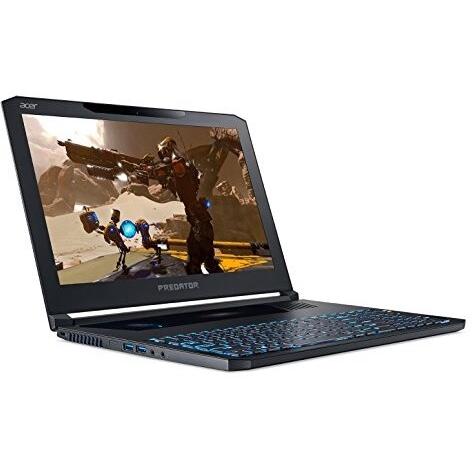
Acer Predator Triton 700 PT715-51 Gaming Notebook - Intel Core i7-7700HQ




Sponsored This site contains affiliate links for which we may receive compensation. More information
Find other available options:

| Identifiers | |
|---|---|
| MPN | Acer NH.Q2LEK.005 |
| Dimensions / Weight | |
| Key Features | |
|
AC adapter frequency The operating frequency of the alternating current supplied to an AC adapter, expressed in hertz (Hz). It indicates the mains frequency range that the charger can handle and ensures proper operation with the connected device.
|
50 - 60 Hz |
|
AC adapter included Indicates whether the product comes with an AC power adapter included in the package. A value of "Yes" means a charger is supplied, while "No" indicates that no charger is provided and the user must obtain one separately.
|
Yes |
| AC adapter power | 230 W |
|
Battery capacity The total amount of electrical energy a battery can store, expressed as a numeric value with an appropriate unit such as mAh or Ah. It indicates how long the device can operate between charges and allows users to compare power supplies across products.
|
4670 mAh |
|
Battery technology The chemical composition or classification of a battery, such as lithium‑ion, lithium‑polymer, nickel‑metal hydride, sealed lead acid, alkaline, zinc‑air, etc. It indicates the type of electrochemical reaction that stores and delivers energy in the device.
|
Lithium Polymer (LiPo) |
| Bluetooth | Yes |
|
Built-in microphone Indicates whether the product includes at least one built‑in microphone. A value of "Yes" means that the device has an integrated microphone, while "No" indicates it does not.
|
Yes |
|
Bus Type The interface or communication bus that a component uses to connect with other parts of a system, such as PCI Express, USB, SATA, or legacy buses like FSB and QPI. It indicates the protocol and physical connection used for data transfer between devices.
|
DMI3 |
|
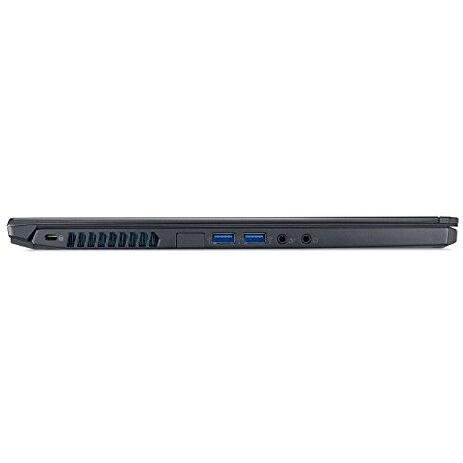
Cable lock slot Indicates whether the product includes a slot for inserting a cable lock, such as a Kensington or similar security device.
|
Yes |
|
Cable lock slot type Specifies the type of interface or mechanism used to secure a cable in its port, such as Kensington, Noble, IBM, or other standard lock slots. This attribute helps users identify compatibility and security features of the device.
|
Kensington |
|
Card reader integrated Indicates whether the device includes a built‑in card reader that can read removable memory cards such as SD, microSD, MMC or similar formats.
|
No |
|
Charging port type The physical connector used to charge the device, such as USB Type‑C, DC‑in jack, Micro‑USB, or proprietary connectors. It indicates the type of port that supplies power to the product and helps users identify compatible chargers or accessories.
|
DC-in jack |
|
Configurable TDP-down The maximum electrical power that a device can consume or supply when its thermal design power is configured to a lower setting, expressed in watts (W). This value indicates the energy capacity of the product under reduced operating conditions and helps users compare efficiency, size power supplies, and estimate operational costs.
|
35 W |
|
Conflict-free processor Indicates whether the processor in a device is designed to operate without conflicts, ensuring reliable performance and compatibility with other components. A value of "Yes" means the processor has been certified or tested for conflict-free operation, while "No" indicates it may not have undergone such verification.
|
Yes |
|
Depth The linear measurement of an object from front to back or top to bottom, expressed in a physical unit such as millimeters, centimeters, inches, etc. It indicates how deep the item is and can be used for fitting, compatibility, or spatial planning.
|
266 mm |
|
Discrete graphics adapter Indicates whether the product includes a dedicated graphics adapter (discrete GPU) separate from any integrated graphics. A value of "Yes" means a discrete GPU is present, while "No" indicates only integrated graphics are available.
|
Yes |
| Discrete graphics adapter model | NVIDIA® GeForce® GTX 1080 |
|
Display Diagonal The measurement of a display’s diagonal, expressed in inches or centimeters. It represents the overall visual area available for content and is commonly used to compare monitors, televisions, laptops, tablets, and other electronic devices.
|
39.6 cm (15.6") |
|
Display resolution The pixel dimensions of a display or image, expressed as width by height (e.g., 1920x1080). It indicates how many pixels are used to render visual content and is commonly used for monitors, TVs, smartphones, cameras, and digital images.
|
1920 x 1080 pixels |
|
DisplayPorts quantity Number of DisplayPort connectors available on the device. This value indicates how many separate DisplayPort outputs can be used to connect external displays or other peripherals.
|
1 |
|
DVI port Indicates how many DVI connectors are present on the product. The value is a simple integer representing the total count of DVI ports, regardless of type or version.
|
No |
|
ECC supported by processor Indicates whether the processor in a device supports Error Correcting Code (ECC) memory, allowing detection and correction of single-bit errors during data storage or transfer.
|
No |
|
Embedded options available Indicates whether the product includes embedded options such as firmware features, hardware modules or configuration settings that are built into the device and available for use without external accessories.
|
No |
| Enhanced intel speedstep technology | Yes |
|
Ethernet LAN Indicates whether the product has an Ethernet interface for wired network connectivity, allowing data transmission over RJ‑45 or compatible cables.
|
Yes |
|
Ethernet LAN data rates Maximum theoretical speed at which a device can send or receive data over its Ethernet LAN interface, expressed in megabits per second (Mbps) or gigabits per second (Gbps). It represents the upper bound of throughput under optimal conditions and is useful for comparing network performance between devices with wired connectivity.
|
10,100,1000 Mbit/s |
|
Execute disable bit Indica si la función de desactivar el bit de ejecución está habilitada en el dispositivo o componente. Un valor afirmativo significa que se permite bloquear la ejecución de código no autorizado, mientras que un valor negativo indica que esta protección no está activa.
|
Yes |
|
Form Factor The physical configuration or shape of a product, such as clamshell, tower, rack‑mount, or compact form. It indicates how the device is built and what mounting or expansion options it supports.
|
Clamshell |
|
Front camera Indicates whether the product is equipped with a front-facing camera. The value can be "Yes" or "No", representing the presence or absence of this camera.
|
Yes |
|
Front camera resolution The pixel dimensions of the front-facing camera, expressed as width by height (e.g., 1920x1080). It indicates how many pixels the camera can capture, affecting image and video quality.
|
1280 x 720 pixels |
|
Graphics & IMC lithography The minimum feature size that can be etched onto a semiconductor chip, expressed in nanometers (nm). It indicates the manufacturing technology generation and influences performance, power consumption, and integration density of the processor.
|
14 nm |
|
HD type The pixel dimensions of a screen’s display expressed as width by height (e.g., 1920×1080). It indicates the number of pixels that can be shown on the monitor or device, affecting image sharpness and clarity.
|
Full HD |
|
Height The vertical dimension of a product measured from its lowest to highest point. It is expressed in a physical unit such as millimetres, centimetres or inches and applies to any item where height is relevant, including books, electronics, furniture and other objects.
|
18.9 mm |
|
Idle states Elenco dei vari stati di basso consumo o modalità standby che un dispositivo può entrare per ridurre il consumo energetico quando non è in uso attivo.
|
Yes |
|
Intel 64 Indicates whether the product is compatible with Intel® 64 architecture, enabling it to run operating systems and applications designed for x86‑64 processors.
|
Yes |
|
Intel clear video technology Indicates whether the product incorporates Intel’s Clear Video HD technology, a hardware feature that enhances video playback and capture quality by providing smoother motion, reduced artifacts, and improved color accuracy.
|
Yes |
|
Intel enhanced halt state Indicates whether the processor includes Intel’s Enhanced Halt State feature, which allows the CPU to enter a low‑power idle mode when not actively executing instructions, thereby reducing energy consumption without compromising performance.
|
Yes |
|
Intel flex memory access Indicates whether the product supports Intel’s flexible memory access feature, which allows dynamic allocation and sharing of memory resources between the CPU and other components to improve performance and power efficiency.
|
Yes |
|
Intel Identity Protection Technology version Indicates the specific version number of Intel’s Identity Protection Technology that a product supports or implements. The value is typically a numeric string such as "1.00" or "0.00", representing the major and minor revision of the feature set.
|
1.00 |
|
Intel Stable Image Platform Program (SIPP) Indica se il prodotto è certificato dal programma Intel Stable Image Platform (SIPP), che garantisce stabilità, sicurezza e compatibilità delle immagini di sistema durante l'installazione e l'esecuzione. Un valore "Si" significa che la piattaforma supporta le funzionalità SIPP; un valore "No" indica il contrario.
|
No |
|
Intel trusted execution technology Indicates whether the product incorporates Intel’s Trusted Execution Technology, a security feature that creates isolated execution environments to protect sensitive code and data from tampering or unauthorized access.
|
No |
|
Intel TSX-NI Indicates whether the product incorporates Intel Transactional Synchronization Extensions – No Interlock (TSX‑NI), a hardware feature that enables efficient transaction processing and concurrency control in compatible processors.
|
No |
|
Intel TSX-NI version The specific version of Intel Transactional Synchronization Extensions – No Interlock (TSX‑NI) supported by the processor, indicating its capability to handle transactional memory operations efficiently.
|
0.00 |
| Intel Virtualization Technology (VT-x) | Yes |
|
Internal memory The total amount of internal memory available in a device, expressed as a data size such as megabytes (MB) or gigabytes (GB). It indicates how much information the component can hold for active processes and affects multitasking performance.
|
16 GB |
|
Internal memory type The type of memory physically installed inside a device, such as DDR4 SDRAM, LPDDR3, or other RAM variants. It indicates the architecture and generation of the internal memory modules that the product uses or supports.
|
DDR4-SDRAM |
| Keyboard backlit | Yes |
|
Keyboard layout The arrangement of keys on a keyboard, indicating the language or region it supports (e.g., QWERTY, UK QWERTZ, AZERTY). This attribute helps users identify which typing layout is available for the device.
|
QWERTY |
|
Led backlight Indicates whether a device is equipped with an LED backlighting system behind its display panel. A value of "Yes" means the screen has a built‑in LED backlight that provides uniform illumination for image rendering; a value of "No" indicates no LED backlight.
|
Yes |
|
Manual Indicates whether a user manual—physical or digital—is provided with the product. A value of "Yes" means that a manual is included, while a value of "No" indicates that no manual is supplied.
|
Yes |
|
Market positioning A classification that indicates the target audience or use case for a product, such as Business, Gaming, Home & Office, Education, etc. It helps customers quickly identify which products are best suited to their needs.
|
Gaming |
|
Maximum internal memory The largest amount of internal random‑access memory that a device can support, expressed as a data size such as megabytes or gigabytes. It indicates the maximum capacity for active processes and multitasking performance.
|
32 GB |
|
Maximum on-board graphics adapter memory The maximum amount of dedicated video memory that the integrated graphics adapter built into a device can provide, expressed as a data size (e.g., megabytes or gigabytes). This value indicates how much graphical processing power is available for rendering, gaming, and other GPU‑intensive tasks.
|
64 GB |
|
Memory slots The count of physical memory slots available on a device for installing RAM modules. It indicates how many separate memory sticks can be installed or upgraded.
|
2x SO-DIMM |
|
Native aspect ratio The proportion between the width and height of a screen or image, expressed as two numbers separated by a colon (e.g., 16:9). It indicates whether content is designed for widescreen, square, or other aspect ratios and helps users match devices to their media formats.
|
16:9 |
|
Numeric keypad Indicates whether the product includes a numeric keypad area on its keyboard, typically found in full-size or laptop keyboards with an integrated numeric section.
|
Yes |
|
On-board graphics adapter The model name or number of the integrated graphics adapter built into a device, such as a laptop, desktop, or motherboard. It identifies the specific GPU variant used for rendering and video processing, allowing users to compare visual performance and compatibility across products.
|
Yes |
|
On-board graphics adapter base frequency The clock speed at which the integrated graphics processor runs under normal conditions, expressed in hertz (Hz). It indicates how many cycles per second the GPU performs and is useful for comparing visual performance across devices that use an on‑board graphics solution.
|
350 MHz |
|
On-board graphics adapter DirectX version The version number of the DirectX graphics API supported by a device, indicating its graphical capabilities and compatibility with software that relies on specific DirectX features.
|
12.0 |
|
On-board graphics adapter dynamic frequency (max) The operating speed at which the integrated graphics processor in a device runs, expressed in hertz (Hz). It indicates how many cycles per second the GPU can perform and is used to assess visual performance, power consumption, and compatibility with display refresh rates.
|
1100 MHz |
|
On-board graphics adapter ID The unique identifier of the integrated graphics adapter built into a device, typically expressed as a hexadecimal string such as "0x5916" or a numeric code like "1916". This value allows users and systems to distinguish between different GPU models and versions across laptops, desktops, and motherboards.
|
0x591B |
|
On-board graphics adapter model The model name or number of the integrated graphics adapter built into a device, such as a laptop or motherboard. It identifies the specific GPU variant used for rendering and video processing, allowing users to compare visual performance and compatibility across products.
|
Intel® HD Graphics 630 |
|
On-board graphics adapter OpenGL version The specific version of the OpenGL graphics API supported by a device, indicating its rendering capabilities and compatibility with software that relies on this standard.
|
4.4 |
|
Operating system installed The operating system that is installed on the device, indicating the software platform that manages hardware resources and provides services for applications. It can be a commercial OS such as Windows or macOS, an open‑source distribution like Linux, or a proprietary firmware used in embedded devices.
|
Windows 10 Home |
|
Optical drive type The type of optical drive included in a device, such as DVD‑RW, DVD‑Writer, Blu‑Ray RW, or no optical drive. This attribute indicates whether the product can read or write optical media and specifies the particular model or capability when available.
|
No |
|
Panel type The underlying display panel technology used in a visual device, such as IPS, TN, VA, OLED, AMOLED, or other variants. It indicates the type of liquid crystal arrangement or organic light‑emitting structure that determines image quality, color accuracy, viewing angles and power consumption.
|
IPS |
|
Password Protection Indicates whether a device requires the entry of a password to access sensitive functions or data, providing an additional layer of security against unauthorized use.
|
Yes |
|
Password protection type The method or combination of methods used to secure a device or system with a password, such as requiring a password on boot, during user login, or for supervisor access. It indicates which security steps are enabled and can be listed separately.
|
BIOS, HDD, Supervisor, User |
|
PCI Express configurations A textual description of how PCI Express lanes are distributed across the available slots or interfaces in a device. The value typically lists groups of lanes separated by commas, where each group may contain a number of lanes and optional ‘+’ signs to indicate combined lanes that share the same speed (e.g., "1x16", "2x8", "1x8+2x4"). This attribute helps users understand the bandwidth capacity and compatibility of expansion slots.
|
1x16,1x8,2x4,2x8 |
| PCI Express slots version | 3.0 |
|
Pointing device The type of pointing device integrated into or used with the product, such as a touchpad, clickpad, trackpoint, or mouse. The value is a free‑text label that identifies the specific form factor or mechanism the user interacts with to move the cursor or select items.
|
Touchpad |
|
Power cord included Indicates whether a power cord is supplied with the product. A value of "Yes" means that a power cable is included in the package, while "No" indicates it is not provided and must be purchased separately.
|
Yes |
|
Processor ARK ID The Processor ARK ID is a numeric identifier assigned by Intel to each processor model. It uniquely distinguishes one CPU from another and can be used to look up detailed specifications, compatibility information, or firmware updates for that specific chip.
|
97185 |
|
Processor boost frequency The highest clock speed a processor can reach when its turbo or boost feature is active, expressed in hertz (Hz). This value indicates the peak performance capability of the CPU under load and helps users compare how fast a processor can run beyond its base clock speed.
|
3.8 GHz |
|
Processor cache The amount of internal memory reserved for a processor’s cache, expressed in units such as megabytes (MB) or gigabytes (GB). This value indicates how much data the CPU can store locally to accelerate access and improve performance.
|
6 MB |
|
Processor cache type The type or level of the internal cache memory in a processor, such as L1, L2, L3, or Smart Cache. This attribute indicates the hierarchical structure and naming convention used by the CPU manufacturer to describe its cache organization.
|
Smart Cache |
| Processor codename | Kaby Lake |
|
Processor family The processor family identifies the group or series of CPU models that share a common architecture, design, and performance characteristics. It helps users compare processors across brands and generations by indicating the underlying technology used in the chip.
|
7th gen Intel® Core™ i7 |
|
Processor frequency The fundamental operating frequency of a processor, expressed in hertz (Hz). It indicates the speed at which the CPU runs under normal conditions and is typically reported in gigahertz (GHz) or megahertz (MHz). This value helps users compare performance potential across different models.
|
2.8 GHz |
|
Processor manufacturer The company that designs and produces the central processing unit (CPU) used in a device. This value identifies the brand of the processor, such as Intel, AMD, Qualcomm, or ARM Holdings, allowing users to assess compatibility, performance expectations, and support resources.
|
Intel |
|
Processor model Identifies the exact model of the central processing unit used in a device, including brand and numeric designation such as "Intel Core i5-8250U" or "AMD Ryzen 7 3700X". This value allows users to distinguish between different processor families, generations, and performance levels.
|
i7-7700HQ |
|
Processor package size The overall dimensions of a processor’s physical package, expressed as length × width × height in millimetres or inches. It indicates the size that must fit within a motherboard socket or mounting area and helps users compare compatibility across different CPU models.
|
42 x 28 mm |
| Processor threads | 8 |
|
Product colour The colour(s) that a product displays, which may be a single dominant hue or a combination of hues such as "Black, Silver". The value is expressed in common colour names and can include multiple colours separated by commas.
|
Black |
|
Product Type Indicates the general classification or type of an item, such as "laptop", "projector", "router" or "paint". It helps users quickly identify the nature of the product and compare similar items across categories.
|
Notebook |
| SSD Capacity | 256 GB |
|
Storage media The type of storage medium used in the product, such as SSD, HDD, eMMC, Flash, or hybrid combinations. It indicates whether the device uses solid‑state, magnetic, or other forms of memory and helps users understand the underlying technology.
|
SSD |
|
Supported instruction sets A list of processor instruction set extensions that a CPU can execute, such as AVX, AVX2, SSE4.1, SSE4.2, and AVX‑512. Each value represents an individual extension or group of extensions supported by the hardware.
|
AVX 2.0,SSE4.1,SSE4.2 |
| Thermal monitoring technologies | Yes |
|
Total storage capacity The overall amount of digital storage that can be held by the device, including all built‑in and removable options. The value is expressed as a numeric quantity followed by an appropriate unit such as GB, MB, or TB.
|
512 GB |
|
Touchscreen Indicates whether a device has a touchscreen interface that can detect touch input. The value is "Yes" if the device includes a functional touchscreen, and "No" otherwise.
|
No |
|
Weight The mass of the product expressed in a standard unit such as grams or kilograms. It represents how heavy the item is and can be used for shipping calculations, handling instructions, or consumer information.
|
2.4 kg |
|
Wi-Fi Indicates whether the product has built‑in Wi‑Fi capability, allowing it to connect to wireless networks without requiring external adapters or dongles.
|
Yes |
|
Wi-Fi standards A list of the wireless networking protocols and frequency bands that a device can connect to, such as 802.11a, 802.11b, 802.11g, Wi‑Fi 4 (802.11n), Wi‑Fi 5 (802.11ac) or Wi‑Fi 6 (802.11ax). The values are typically separated by commas and may include both the technical name and a consumer‑friendly label.
|
Wi-Fi 5 (802.11ac) |
|
Width The horizontal measurement of a component or part, expressed in a linear unit such as millimetres or inches. It indicates how wide the item is from one side to the other and is used for sizing, fitting, and compatibility purposes.
|
393 mm |
|
Windows keys The total count of individual key switches present on a keyboard or similar input device, including all standard, function, and special keys. This value indicates how many separate keys are available for typing, gaming, shortcuts, or other functions, regardless of layout or branding.
|
Yes |

Acer is a Taiwanese multinational hardware and electronics corporation, specializing in the production of personal computers, tablet computers, smartphones, and servers. Acer's products include desktop PCs, laptop PCs, tablets, servers, storage devices, displays, and smartphones.


