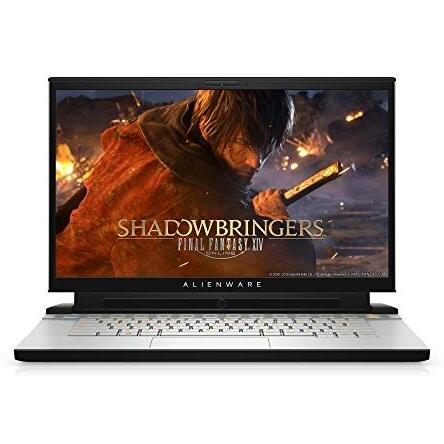
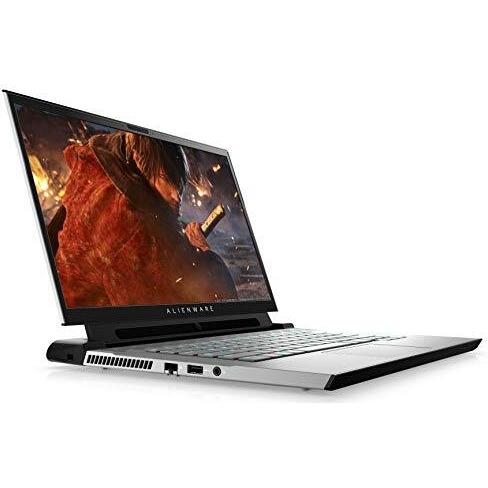
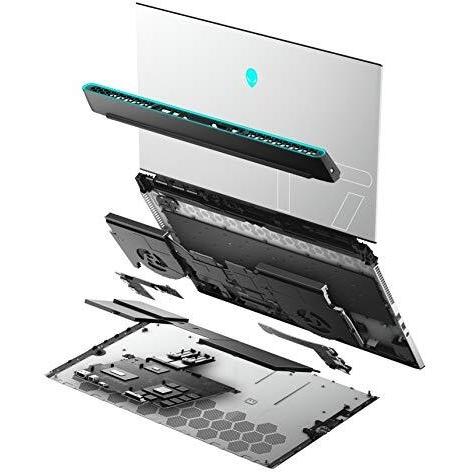
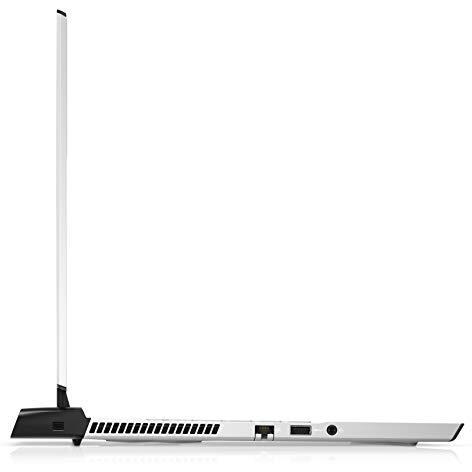
Alienware m15 R2 Lunar Light Gaming Laptop





Sponsored This site contains affiliate links for which we may receive compensation. More information
Find other available options:

| Identifiers | |
|---|---|
| MPN | Alienware Alienware m15 R2 |
| Dimensions / Weight | |
| Key Features | |
|
AC adapter frequency The operating frequency of the alternating current supplied to an AC adapter, expressed in hertz (Hz). It indicates the mains frequency range that the charger can handle and ensures proper operation with the connected device.
|
50 - 60 Hz |
|
AC adapter included Indicates whether the product comes with an AC power adapter included in the package. A value of "Yes" means a charger is supplied, while "No" indicates that no charger is provided and the user must obtain one separately.
|
Yes |
|
AC adapter input voltage The range of alternating current voltage that an AC adapter can accept, expressed in volts (V). It specifies the minimum and maximum supply voltages compatible with the device, ensuring safe operation across different regions and power standards.
|
100 - 240 V |
|
AC adapter output current The electrical current supplied by an AC power adapter to a device, expressed in amperes (A). It indicates the maximum output current that the adapter can provide under normal operating conditions and helps users verify compatibility with devices or accessories that require a specific input current.
|
9.23 A |
|
AC adapter output voltage The electrical potential difference supplied by the AC adapter to a device, expressed in volts (V). It indicates the nominal voltage that the charger outputs and is used to match the adapter with compatible equipment.
|
19.5 V |
| AC adapter power | 180 W |
|
Antenna type The classification of an antenna used in a device, indicating its physical configuration or mounting style such as external, internal, integrated, directional, omnidirectional, or multi‑antenna setups (e.g., "2x2", "4 x External"). It helps buyers understand how the antenna is attached and what signal coverage it may provide.
|
2x2 |
|
Aspect ratio The proportion between the width and height of a display, image or video, expressed as two numbers separated by a colon (e.g., 16:9). It indicates whether content is designed for widescreen, square, or other aspect ratios.
|
16:9 |
|
Audio chip The model of the audio processing chip integrated into a device, indicating the specific hardware responsible for sound generation and decoding.
|
Realtek ALC3281-CG |
| Battery recharge time | 4 h |
|
Battery voltage The electrical potential difference supplied to or measured across a battery’s terminals, expressed in volts (V). It represents the battery’s nominal operating voltage and is used to match power sources, chargers, and devices that require a specific voltage level.
|
11.4 V |
|
Battery weight The mass of a battery expressed in a standard unit such as grams or kilograms. It indicates how heavy the battery is and can be used for shipping calculations, handling instructions, or consumer information.
|
320 g |
| Bluetooth | Yes |
|
Bluetooth version The specific version of the Bluetooth standard supported by a product, expressed as a numeric value (e.g., 4.2, 5.0) or with additional descriptors such as "+HS" or feature lists. This attribute indicates the capabilities and compatibility for wireless communication.
|
4.2 |
|
Built-in microphone Indicates whether the product includes at least one built‑in microphone. A value of "Yes" means that the device has an integrated microphone, while "No" indicates it does not.
|
Yes |
|
Bundled software A list of software applications, operating systems, drivers, or utilities that are pre-installed or bundled with the product. The values may include antivirus suites, productivity tools, device management utilities, and other essential software components.
|
Financial Tracker & Retail Information |
|
Cable lock slot Indicates whether the product includes a slot for inserting a cable lock, such as a Kensington or similar security device.
|
Yes |
|
Cable lock slot type Specifies the type of interface or mechanism used to secure a cable in its port, such as Kensington, Noble, IBM, or other standard lock slots. This attribute helps users identify compatibility and security features of the device.
|
Noble |
|
Card reader integrated Indicates whether the device includes a built‑in card reader that can read removable memory cards such as SD, microSD, MMC or similar formats.
|
No |
|
Charging port type The physical connector used to charge the device, such as USB Type‑C, DC‑in jack, Micro‑USB, or proprietary connectors. It indicates the type of port that supplies power to the product and helps users identify compatible chargers or accessories.
|
DC-in jack |
|
Colour name The main colour(s) that a product is available in, expressed as common names such as "Black", "Silver" or comma‑separated lists like "Black, White". This attribute indicates the visual appearance of the item for consumers.
|
Lunar Light |
|
CUDA Indica si el producto es compatible con la tecnología de cómputo paralelo CUDA, desarrollada por NVIDIA para acelerar tareas de procesamiento en tarjetas gráficas.
|
Yes |
|
CUDA Cores The total count of CUDA cores present in a graphics processing unit (GPU). Each core is an independent execution unit that can perform parallel computations, enabling accelerated performance for tasks such as rendering, machine learning, and scientific simulations.
|
1920 |
|
Depth The linear measurement of an object from front to back or top to bottom, expressed in a physical unit such as millimeters, centimeters, inches, etc. It indicates how deep the item is and can be used for fitting, compatibility, or spatial planning.
|
276 mm |
|
Discrete graphics adapter Indicates whether the product includes a dedicated graphics adapter (discrete GPU) separate from any integrated graphics. A value of "Yes" means a discrete GPU is present, while "No" indicates only integrated graphics are available.
|
Yes |
|
Discrete graphics adapter memory The amount of dedicated video memory (VRAM) available on a discrete graphics adapter, expressed as a data size such as megabytes (MB) or gigabytes (GB). It indicates how much graphical data can be stored for textures, frame buffers, and other GPU tasks, affecting performance in gaming, rendering, and high‑resolution displays.
|
6 GB |
| Discrete graphics adapter model | NVIDIA® GeForce RTX™ 2060 |
|
Display brightness The amount of light emitted per unit area from a display surface, measured in candela per square meter (cd/m²). It indicates how bright the screen will appear under typical viewing conditions and allows users to compare brightness levels across devices.
|
300 cd/m² |
|
Display Diagonal The measurement of a display’s diagonal, expressed in inches or centimeters. It represents the overall visual area available for content and is commonly used to compare monitors, televisions, laptops, tablets, and other electronic devices.
|
39.6 cm (15.6") |
|
Display resolution The pixel dimensions of a display or image, expressed as width by height (e.g., 1920x1080). It indicates how many pixels are used to render visual content and is commonly used for monitors, TVs, smartphones, cameras, and digital images.
|
1920 x 1080 pixels |
|
Dual-screen Indicates whether a product has two separate displays or screens, such as a laptop with an additional secondary monitor or a device that supports dual-screen operation. The value is "Yes" if the product includes two distinct screens and "No" otherwise.
|
No |
|
Energy Star certified Indicates whether the product has been certified by Energy Star, a recognized standard for energy efficiency in appliances and electronics.
|
No |
|
EPEAT Compliance The level of a product’s compliance with the EPEAT (Electronic Product Environmental Assessment Tool) program, indicating how well it meets environmental and sustainability criteria. Typical levels are "Gold", "Silver" or "Bronze".
|
Yes |
|
Ethernet LAN Indicates whether the product has an Ethernet interface for wired network connectivity, allowing data transmission over RJ‑45 or compatible cables.
|
Yes |
|
Ethernet LAN data rates Maximum theoretical speed at which a device can send or receive data over its Ethernet LAN interface, expressed in megabits per second (Mbps) or gigabits per second (Gbps). It represents the upper bound of throughput under optimal conditions and is useful for comparing network performance between devices with wired connectivity.
|
1000,2500 Mbit/s |
|
Form Factor The physical configuration or shape of a product, such as clamshell, tower, rack‑mount, or compact form. It indicates how the device is built and what mounting or expansion options it supports.
|
Clamshell |
|
Front camera Indicates whether the product is equipped with a front-facing camera. The value can be "Yes" or "No", representing the presence or absence of this camera.
|
Yes |
|
Front camera HD type The pixel count of the device’s front-facing camera expressed in megapixels (MP). It indicates how many pixels the camera can capture, affecting image and video quality.
|
HD |
|
Front camera resolution The pixel dimensions of the front-facing camera, expressed as width by height (e.g., 1920x1080). It indicates how many pixels the camera can capture, affecting image and video quality.
|
1280 x 720 pixels |
| Front camera signal format | 720p |
|
HD type The pixel dimensions of a product’s screen, expressed as width by height (e.g., 1920x1080). It indicates the total number of pixels that compose the display and is used to assess image sharpness and clarity across devices such as monitors, TVs, laptops, and cameras.
|
Full HD |
| HDMI ports quantity | 1 |
|
HDMI version The specific version of the HDMI standard that a product supports, such as "2.0", "2.1" or "1.4b". This value indicates the capabilities and compatibility of the HDMI interfaces on the device.
|
2.0 |
|
Internal memory The total amount of internal memory available in a device, expressed as a data size such as megabytes (MB) or gigabytes (GB). It indicates how much information the component can hold for active processes and affects multitasking performance.
|
16 GB |
| Keyboard backlit | Yes |
|
Keyboard language The natural language that the keyboard layout is designed for, indicating which regional or linguistic variant of key labels and input methods are available on the device.
|
UK English |
|
LED backlight The illumination source used behind a display panel, such as LED, WLED, CCFL or LCD. It determines the brightness, energy efficiency and color accuracy of the screen.
|
Yes |
|
Manual Indicates whether a user manual—physical or digital—is provided with the product. A value of "Yes" means that a manual is included, while a value of "No" indicates that no manual is supplied.
|
Yes |
|
Market positioning A classification that indicates the target audience or use case for a product, such as Business, Gaming, Home & Office, Education, etc. It helps customers quickly identify which products are best suited to their needs.
|
Gaming |
|
Maximum refresh rate The highest number of times per second that a display can update its image, expressed in hertz (Hz). It indicates the maximum refresh capability of the device and is useful for comparing visual performance across monitors, TVs, laptops, and other screen‑based products.
|
144 Hz |
|
Memory clock speed The maximum operating frequency of a memory module, expressed in hertz (Hz). It indicates how many cycles per second the RAM can perform and is typically reported as MHz or GHz. This value helps users compare performance potential across different memory types and system configurations.
|
2666 MHz |
|
Memory form factor The physical configuration or size classification of a memory module, such as SO‑DIMM, UDIMM, RDIMM, or on‑board. It indicates the form factor that determines compatibility with motherboards and other hardware components.
|
On-board |
|
MIMO Number of spatial streams supported by a wireless device for MIMO technology, expressed as two integers separated by "x" (e.g., 4 x 4). The first number indicates maximum transmit streams and the second maximum receive streams.
|
Yes |
|
Motherboard chipset The model of the motherboard’s chipset, indicating the family of supported processors and integrated features such as I/O interfaces, memory support, and peripheral connectivity.
|
Intel® HM370 |
|
Non-operating altitude The altitude interval (in meters) at which a product or component ceases to function correctly due to environmental factors such as reduced atmospheric pressure, temperature changes, or other elevation‑related effects. The value is expressed as a minimum–maximum range and applies to any device that has documented limits for operation above or below certain heights.
|
-15.2 - 10668 m |
|
Non-operating shock The mass of a component or device measured while it is not operating, expressed in grams. This value represents the total weight that the unit can sustain during shock testing and includes any internal parts and packaging if specified.
|
160 G |
| Non-operating vibration | 1.3 G |
|
Number of built-in speakers The total count of speaker units that are integrated into the product’s chassis or casing. This value indicates how many separate audio output elements are built‑in, allowing users to compare the device’s internal sound capability across models.
|
2 |
|
Numeric keypad Indicates whether the product includes a numeric keypad area on its keyboard, typically found in full-size or laptop keyboards with an integrated numeric section.
|
No |
| NVIDIA GameWorks VR | Yes |
|
On-board graphics adapter The model name or number of the integrated graphics adapter built into a device, such as a laptop, desktop, or motherboard. It identifies the specific GPU variant used for rendering and video processing, allowing users to compare visual performance and compatibility across products.
|
Yes |
|
On-board graphics adapter model The model name or number of the integrated graphics adapter built into a device, such as a laptop or motherboard. It identifies the specific GPU variant used for rendering and video processing, allowing users to compare visual performance and compatibility across products.
|
Intel® UHD Graphics 630 |
|
Operating altitude The range of altitudes (in meters) at which a product or component can operate reliably without performance degradation due to changes in atmospheric pressure, temperature, or other altitude‑related effects.
|
-15.2 - 3048 m |
| Operating shock | 110 G |
|
Operating system architecture The architecture of the operating system installed on a device, indicating whether it is 32‑bit or 64‑bit (or other variants). This attribute helps users determine compatibility with hardware and software that requires a specific OS architecture.
|
64-bit |
|
Operating system installed The operating system that is installed on the device, indicating the software platform that manages hardware resources and provides services for applications. It can be a commercial OS such as Windows or macOS, an open‑source distribution like Linux, or a proprietary firmware used in embedded devices.
|
Windows 10 Home |
|
Operating system language A list of natural languages in which the operating system installed on a device is available or supported, allowing users to identify the language options for the OS interface and documentation.
|
English |
|
Operating vibration The mass of a device measured while it is in normal operation, expressed in grams (g). This value indicates the amount of material that contributes to vibration during use and can help assess mechanical stability or compliance with vibration standards.
|
0.66 G |
|
Optical drive type The type of optical drive included in a device, such as DVD‑RW, DVD‑Writer, Blu‑Ray RW, or no optical drive. This attribute indicates whether the product can read or write optical media and specifies the particular model or capability when available.
|
No |
|
Package depth The linear measurement from front to back or top to bottom of a product’s packaging, expressed in a physical unit such as millimeters, centimeters, inches, etc. It indicates how deep the packaged item is and can be used for fitting, compatibility, or spatial planning.
|
455 mm |
|
Package Height The vertical dimension of a product’s packaging measured from its lowest to highest point. It is expressed in a physical unit such as millimetres, centimetres or inches and helps customers assess how tall the package will be when stored or shipped.
|
117 mm |
|
Package width The horizontal measurement of a product’s packaging, expressed in a linear unit such as millimetres or inches. It indicates how wide the package is from one side to the other and helps customers assess fit for storage, shipping, or display.
|
408 mm |
|
Pallet length The linear dimension of a pallet measured in a standard unit such as meters, centimeters or inches. It represents the overall length from one end to the other and is used to compare the size of pallets across different products and logistics contexts.
|
120 cm |
|
Pallet width The horizontal measurement of a pallet, expressed in a linear unit such as millimetres or inches. It indicates how wide the pallet is from one side to the other and helps customers assess fit for storage, shipping, or display.
|
100 cm |
|
Panel type The specific technology used to construct the display panel, such as IPS, TN, VA, OLED, or LCD. It indicates how pixels are controlled and affects image quality, color accuracy, viewing angles, and power consumption.
|
WVA |
|
Password Protection Indicates whether a device requires the entry of a password to access sensitive functions or data, providing an additional layer of security against unauthorized use.
|
Yes |
|
Pixel density The number of pixels per inch on a display, expressed as points‑per‑inch (ppi). This metric indicates how sharp and detailed the screen appears, allowing comparison across monitors, smartphones, tablets, and other pixelated devices.
|
141 ppi |
|
Pixel pitch Represents the physical dimensions of a single pixel on a display or imaging device, expressed as width and height in a length unit (e.g., millimeters). This attribute allows comparison of the physical resolution across screens, cameras, and other pixel‑based technologies.
|
0.17925 x 0.17925 mm |
|
Pointing device The type of pointing device integrated into or used with the product, such as a touchpad, clickpad, trackpoint, or mouse. The value is a free‑text label that identifies the specific form factor or mechanism the user interacts with to move the cursor or select items.
|
Touchpad |
|
Power cord included Indicates whether a power cord is supplied with the product. A value of "Yes" means that a power cable is included in the package, while "No" indicates it is not provided and must be purchased separately.
|
Yes |
| PowerShare | Yes |
|
Processor boost frequency The highest clock speed a processor can reach when its turbo or boost feature is active, expressed in hertz (Hz). This value indicates the peak performance capability of the CPU under load and helps users compare how fast a processor can run beyond its base clock speed.
|
4.5 GHz |
|
Processor cache The amount of internal memory reserved for a processor’s cache, expressed in units such as megabytes (MB) or gigabytes (GB). This value indicates how much data the CPU can store locally to accelerate access and improve performance.
|
12 MB |
|
Processor cache type The type or level of the internal cache memory in a processor, such as L1, L2, L3, or Smart Cache. This attribute indicates the hierarchical structure and naming convention used by the CPU manufacturer to describe its cache organization.
|
Smart Cache |
|
Processor family The processor family identifies the group or series of CPU models that share a common architecture, design, and performance characteristics. It helps users compare processors across brands and generations by indicating the underlying technology used in the chip.
|
9th gen Intel® Core™ i7 |
|
Processor frequency The fundamental operating frequency of a processor, expressed in hertz (Hz). It indicates the speed at which the CPU runs under normal conditions and is typically reported in gigahertz (GHz) or megahertz (MHz). This value helps users compare performance potential across different models.
|
2.6 GHz |
|
Processor manufacturer The company that designs and produces the central processing unit (CPU) used in a device. This value identifies the brand of the processor, such as Intel, AMD, Qualcomm, or ARM Holdings, allowing users to assess compatibility, performance expectations, and support resources.
|
Intel |
|
Processor model Identifies the exact model of the central processing unit used in a device, including brand and numeric designation such as "Intel Core i5-8250U" or "AMD Ryzen 7 3700X". This value allows users to distinguish between different processor families, generations, and performance levels.
|
i7-9750H |
|
Product Type Indicates the general classification or type of an item, such as "laptop", "projector", "router" or "paint". It helps users quickly identify the nature of the product and compare similar items across categories.
|
Notebook |
|
Quantity per pallet Represents the number of individual items or units that can be placed on a single pallet. This value indicates how many pieces, packages, or components are stored or shipped together on one pallet, helping users assess storage capacity and logistics planning.
|
40 pc(s) |
| SSD Capacity | 512 GB |
|
SSD interface List of physical or logical interfaces that a solid‑state drive can use to connect with other components, such as PCI Express (PCIe), Serial ATA (SATA), NVMe, U.2 or other standard connections.
|
PCI Express |
|
Storage media The type of storage medium used in the product, such as SSD, HDD, eMMC, Flash, or hybrid combinations. It indicates whether the device uses solid‑state, magnetic, or other forms of memory and helps users understand the underlying technology.
|
SSD |
|
Top Wi-Fi standard A list of the wireless networking protocols and frequency bands that a device can connect to, such as IEEE 802.11a, IEEE 802.11b, IEEE 802.11g, Wi‑Fi 4 (802.11n), Wi‑Fi 5 (802.11ac) or Wi‑Fi 6 (802.11ax). The values are typically separated by commas and may include both the technical name and a consumer‑friendly label.
|
Wi-Fi 5 (802.11ac) |
|
Touchscreen Indicates whether a device has a touchscreen interface that can detect touch input. The value is "Yes" if the device includes a functional touchscreen, and "No" otherwise.
|
No |
|
Video capturing speed The maximum frame rate at which a device can record video, expressed as frames per second (fps). This value indicates how many individual images the camera captures each second during recording and helps users compare the smoothness of motion that can be captured by different devices.
|
30 fps |
|
Weight The mass of the product expressed in a standard unit such as grams or kilograms. It represents how heavy the item is and can be used for shipping calculations, handling instructions, or consumer information.
|
2.16 kg |
|
Wi-Fi Indicates whether the product has built‑in Wi‑Fi capability, allowing it to connect to wireless networks without requiring external adapters or dongles.
|
Yes |
|
Width The horizontal measurement of a product, expressed in a linear unit such as millimetres or inches. It indicates how wide the item is from one side to the other and is used for sizing, fitting, and compatibility purposes.
|
360.5 mm |
|
Windows keys The total count of individual key switches present on a keyboard or similar input device, including all standard, function, and special keys. This value indicates how many separate keys are available for typing, gaming, shortcuts, or other functions, regardless of layout or branding.
|
Yes |
Alienware
