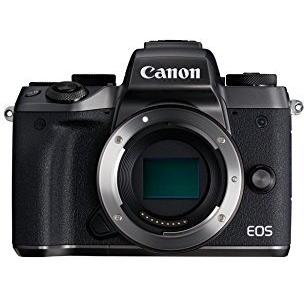
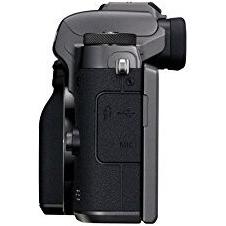
EOS M5 24.2 MP Compact System Camera



Sponsored This site contains affiliate links for which we may receive compensation. More information
Find other available options:

| Identifiers | |
|---|---|
| Model | Canon 1279C002 |
| MPN | Canon 1279C002 |
| Dimensions / Weight | |
| Key Features | |
|
Audio system Specifies the audio system installed or supported by the product, such as Dolby Audio, SonicMaster, MaxxAudio Pro, or other proprietary audio processing technologies. The value is a free‑text string that identifies the main audio engine or brand used for sound playback and processing.
|
Stereo |
|
Battery technology The chemical composition or classification of a battery, such as lithium‑ion, lithium‑polymer, nickel‑metal hydride, sealed lead acid, alkaline, zinc‑air, etc. It indicates the type of electrochemical reaction that stores and delivers energy in the device.
|
Lithium-Ion (Li-Ion) |
|
Battery type The chemical composition or classification of a battery, such as alkaline, lithium‑ion, NiMH, or lead‑acid. It indicates the energy storage technology used in the product and helps users identify compatibility with devices that require specific battery chemistries.
|
LP-E17 |
|
Battery voltage The electrical potential difference supplied to a battery or measured across its terminals, expressed in volts (V). It indicates the nominal operating voltage of the battery and is used to match power sources, chargers, and devices that require a specific voltage level.
|
7.2 V |
| Bluetooth | Yes |
|
Brightness adjustment Indicates whether the device supports adjusting its brightness level. A value of "Yes" means the user can change the display or camera exposure brightness, while "No" indicates a fixed setting.
|
Yes |
|
Built-in microphone Indicates whether the product includes at least one built‑in microphone. A value of "Yes" means that the device has an integrated microphone, while "No" indicates it does not.
|
Yes |
|
Built-in processor Indicates whether the product contains a built‑in central processing unit (CPU) that can execute instructions without requiring an external processor module. A value of "Yes" means the device has such a CPU; "No" means it does not.
|
Yes |
|
Camera file system A list of the image and metadata file formats that a camera can capture or store, such as DPOF, Exif, RAW, MPF, or DCF. Each entry represents a distinct format supported by the device, allowing users to understand what types of files they will receive when using the camera.
|
DCF 2.0,DPOF,Exif 2.3,RAW |
|
Camera playback The types of media playback that the camera can handle, such as movies, single images, slide shows, or thumbnails. Each value represents a distinct mode in which captured content can be viewed directly on the device.
|
Single image,Slide show |
| Camera shutter type | Electronic |
|
Camera type The general classification of a camera, such as compact, single‑lens reflex (SLR), mirrorless interchangeable lens camera (MILC), bridge, or video camera. It indicates the form factor and primary use case of the device.
|
MILC Body |
|
Compatible memory cards List of the memory card types that a device can read or write, such as MicroSD (TransFlash), SD, MMC, CompactFlash, and others. Each value represents a format that the device’s slot or reader supports for storage expansion.
|
SD,SDHC,SDXC |
| Contrast adjustment | Yes |
|
Depth The linear measurement of an object from front to back or top to bottom, expressed in a physical unit such as millimeters, centimeters, inches, etc. It indicates how deep the item is and can be used for fitting, compatibility, or spatial planning.
|
60.6 mm |
|
Dioptre correction Indicates whether a camera or optical device offers diopter adjustment for its viewfinder, and if so, the range of that adjustment expressed in diopters (D). A value of "Yes" means the device supports some level of diopter tuning; a numeric range such as "-3 to +1 D" specifies the minimum and maximum adjustments available.
|
Yes |
|
Direct printing Indicates whether the device can print directly from mobile devices, network shares or other sources without requiring additional drivers or software installation. A value of "Yes" means the printer supports direct printing technologies such as AirPrint, Mopria Print Service, or similar solutions; a value of "No" indicates that direct printing is not supported.
|
Yes |
|
Display The visual technology used by the product’s screen, such as LCD, LED, OLED, TFT or analog. It indicates the underlying display panel that determines image quality, color reproduction and power consumption.
|
LCD |
|
Display aspect ratio The proportion between the width and height of a display or image, expressed as two numbers separated by a colon (e.g., 16:9). It indicates whether content is designed for widescreen, square, or other aspect ratios.
|
3:2 |
|
Display Diagonal The measurement of a display’s diagonal, expressed in inches or centimeters. It represents the overall visual area available for content and is commonly used to compare monitors, televisions, laptops, tablets, and other electronic devices.
|
8.13 cm (3.2") |
|
External flash connector Indicates whether the product includes an external flash connector that can be used to attach a separate flash unit for additional lighting. A value of "Yes" means such a connector is present; a value of "No" (or equivalent) means it is absent.
|
Yes |
|
Fastest camera shutter speed The maximum duration that a camera’s shutter remains open to expose the sensor or film, expressed in seconds or fractions of a second (e.g., 1/4000 s). It determines how motion is captured and affects exposure; shorter times freeze action while longer times allow more light for low‑light situations.
|
1/4000 s |
|
Field of view The proportion or angular extent that a device, such as a camera or binocular, can capture or display. Values may be expressed as a percentage of coverage (e.g., 100 %) or in degrees for horizontal/vertical angles (e.g., 160°). The attribute indicates how wide the field of view is relative to the sensor or lens.
|
100% |
|
Flash exposure compensation Indicates whether the camera’s flash exposure compensation feature is enabled. A value of "Yes" means the device can adjust the flash output to compensate for lighting conditions, while "No" indicates this feature is not available.
|
Yes |
|
Flash exposure correction The adjustment applied to a camera’s sensor exposure to compensate for lighting conditions, expressed in Exposure Value (EV) units. Positive values increase brightness, negative values decrease it, and the step size indicates how finely the adjustment can be tuned.
|
±2EV (1/3 EV step) |
|
Flash exposure lock Indicates whether a camera or imaging device has the ability to lock the flash exposure setting, preventing automatic changes during shooting.
|
Yes |
|
Flash guide number The maximum distance, expressed in metres, at which a camera’s flash can illuminate a subject with sufficient light for proper exposure when the flash is used at its full power and the camera is set to ISO 100. It represents the effective range of the flash unit under standard conditions.
|
5 m |
|
Flash modes A list of the available settings for a camera or imaging device’s flash system, such as Auto, Manual, Flash off, Flash on, Red‑eye reduction, Slow synchronization, and other manufacturer‑specific options. Each value represents a selectable mode that determines how the flash is activated during image capture.
|
Auto,Manual,Red-eye reduction |
|
Flash sync-speed The longest duration that a camera’s shutter remains open during exposure, expressed in seconds or fractions of a second (e.g., 30 s, 0.5 s). This value indicates the maximum time the sensor is exposed to light for each frame and helps users understand how long a camera can capture motion before freezing it.
|
1/200 s |
|
Flip-out screen Indicates whether the device has a screen that can be rotated or flipped out from its main body, allowing easier viewing of images or video while shooting. The value is "Yes" if such a feature exists and "No" otherwise.
|
Yes |
|
Focus adjustment Specifies whether the camera’s focusing system operates automatically or requires manual adjustment. Common values include "Auto", "Manual", and combinations such as "Auto/Manual".
|
Auto/Manual |
|
HD type The pixel dimensions of a screen’s display expressed as width by height (e.g., 1920×1080). It indicates the number of pixels that can be shown on the monitor or device, affecting image sharpness and clarity.
|
Full HD |
|
HDMI A list of the HDMI ports available on the product, each entry indicating the number of ports and their specific HDMI version or additional features (e.g., "2 x HDMI 2.0b", "1 x HDMI 1.4 with CEC"). This attribute helps users understand both the quantity and capabilities of the HDMI connections.
|
Yes |
| HDMI connector type | Micro |
|
Height The vertical dimension of a product measured from its lowest to highest point. It is expressed in a physical unit such as millimetres, centimetres or inches and applies to any item where height is relevant, including books, electronics, furniture and other objects.
|
89.2 mm |
|
Histogram Indicates whether the camera includes a histogram display in its viewfinder or LCD screen, allowing users to assess exposure distribution.
|
Yes |
|
Image formats supported A list of the file extensions and codecs that a product can read or write for images. Each value represents a valid format such as JPG, PNG, BMP, GIF, HEIF, WebP, etc., and may include multiple formats separated by commas.
|
JPG,RAW |
|
Image processor The name or designation of the image‑processing unit used in a camera or imaging device, such as DIGIC 4+, BIONZ X, EXPEED 4, or similar. This value identifies the specific processor that handles image capture, processing, and encoding, allowing users to compare performance, features, and compatibility across products.
|
DIGIC 7 |
|
Image stabilizer Indicates whether the device includes an image stabilization system, either optical or electronic, that reduces camera shake to produce sharper photos and smoother video recordings.
|
No |
|
ISO Sensitivity The ISO sensitivity setting of a camera, indicating the sensor’s sensitivity to light. Values are typically numeric (e.g., 100, 200, 400) and may include an "Auto" option where the camera selects the appropriate ISO automatically.
|
100,200,400,800,1600,3200,6400,12800,25600,Auto |
|
Languages support A list of natural languages in which a product is available or supported, including user interface, documentation, and audio options.
|
Multi |
|
Lens mount interface List of lens mount interfaces supported by a camera or lens, such as Canon EF, Nikon F, Sony E‑mount, Micro Four Thirds, etc. The value can be a single interface name or a comma‑separated list of multiple compatible mounts.
|
Canon EF-M |
|
Light exposure control A set of selectable camera settings that determine how the sensor is exposed to light. Each value represents a mode such as Auto, Aperture priority, Shutter priority, Manual or combinations thereof, controlling shutter speed, aperture, ISO and other exposure parameters.
|
Program AE |
|
Light exposure correction The adjustment applied to a camera’s sensor exposure to compensate for lighting conditions, expressed in Exposure Value (EV) units. Positive values increase brightness, negative values decrease it, and the step size indicates how finely the adjustment can be tuned.
|
± 3EV (1/3EV step) |
|
Light exposure modes The set of camera settings that determine how the sensor is exposed to light. Common values include Auto, Aperture priority, Shutter priority, Manual and combinations thereof. Each value represents a selectable mode that controls shutter speed, aperture, ISO or a combination of these parameters.
|
Aperture priority AE,Auto,Manual |
|
Light metering The method used by a camera to determine the appropriate exposure settings based on the scene’s lighting conditions. Common modes include Centre‑weighted, Spot, Evaluative (Multi‑pattern), and Highlight‑weighted. The value is typically a single mode or a comma‑separated list of modes that can be applied simultaneously.
|
Centre-weighted,Partial,Spot |
|
Mac operating systems supported A list of macOS operating system versions that the product supports or is compatible with, such as "macOS 10.15 Catalina", "macOS 11 Big Sur" or newer releases. Each entry represents a distinct OS version that can run on or be supported by the device.
|
Yes |
|
Maximum image resolution The highest pixel dimensions of an image or display that a product can output, capture, or support, expressed as width by height (e.g., 1920x1080). It indicates the maximum resolution available for visual content on the device.
|
6000 x 4000 pixels |
|
Maximum video resolution The highest pixel dimensions that a device can output or support for video playback or recording, expressed as width by height (e.g., 1920x1080). It indicates the maximum resolution available for visual content on the product.
|
1920 x 1080 pixels |
|
Megapixel The total number of megapixels that a camera sensor can capture, expressed as a numeric value without units. Higher values generally indicate greater detail and image quality.
|
24.2 MP |
|
Memory slots The count of physical memory slots available on a device for installing RAM modules. It indicates how many separate memory sticks can be installed or upgraded.
|
1 |
|
Motion JPEG frame rate The number of frames captured per second by a Motion JPEG video stream, expressed in frames per second (fps). This value indicates the smoothness and temporal resolution of the recorded motion, with higher rates providing more fluid playback.
|
59.94 fps |
|
Multi-shot Indicates whether a device can capture multiple photos in quick succession without manual intervention, such as burst mode on cameras or smartphones. The value is "Yes" if the product supports this feature and "No" otherwise.
|
Yes |
|
Orientation sensor Indicates whether the product is equipped with an orientation sensor, a device that detects its position relative to gravity or the Earth's magnetic field. A value of "Yes" means the sensor is present; "No" means it is absent.
|
Yes |
|
Photo effects A list of photographic effects that can be applied to images, such as black‑and‑white, sepia, vivid, or other stylistic filters. Each value represents a distinct effect that may be available in the product’s software or hardware.
|
Black&White,Neutral,Sepia,Vivid |
|
PictBridge Indicates whether the product can send images directly to a printer that supports the PictBridge standard without requiring an intermediate computer.
|
Yes |
|
Playback modes A list of the playback modes that a device can handle, such as single image view, slideshow, video play, or thumbnail preview. Each value represents a distinct mode in which captured content can be viewed directly on the product.
|
Next,Previous,Zoom |
|
Power source type The type of electrical supply that powers the device, such as mains electricity, batteries, USB power, or a combination of these options.
|
Battery |
|
Quick start guide Indicates whether a quick‑start guide is provided with the product. A value of "Yes" means that a brief, introductory manual or overview is included to help users get started quickly; "No" indicates that no such guide is supplied.
|
Yes |
|
Resolution at capture speed The pixel dimensions of a screen when captured or recorded, expressed as width by height (e.g., 1920x1080). It indicates the resolution that can be obtained from a device’s display during capture or recording sessions and is useful for comparing visual quality across devices.
|
640x480@60fps,1920x1080@60fps |
|
Scene modes A set of predefined camera settings that automatically adjust exposure, white balance, focus and other parameters to suit specific shooting situations such as portrait, landscape, night or sports. Each value represents a selectable mode that the user can choose from when capturing images.
|
Close-up (macro),Night portrait,Panorama,Portrait,Sports |
|
Self-timer delay The amount of time, in seconds, that the device waits after a trigger before performing an action such as taking a photo or starting a recording. It represents the delay period configured by the user and is expressed as a numeric value or a set of values separated by commas.
|
10 s |
| Sensor type | CMOS |
|
Shoe mounting point Indicates whether a product is equipped with a standard camera shoe mounting point, allowing accessories such as lenses or flashes to be attached securely.
|
Yes |
|
Shoe mounting point type The type of hot‑shoe mounting interface used by a camera or accessory, indicating whether it supports the standard hot‑shoe, an extended version, or no hot‑shoe at all. This attribute helps buyers determine compatibility with lenses, flashes, and other accessories that rely on a hot‑shoe connection.
|
Hot |
|
Shooting modes A set of selectable camera settings that determine how the sensor is exposed to light and other shooting parameters. Each value represents a mode such as Auto, Aperture priority, Shutter priority, Manual or combinations thereof, controlling shutter speed, aperture, ISO and other exposure parameters.
|
Auto,Manual,Program,Scene |
|
Slowest camera shutter speed The longest duration that a camera’s shutter remains open during exposure, expressed in seconds or fractions of a second (e.g., 30 s, 0.5 s). This value indicates the maximum time the sensor is exposed to light for each frame and helps users understand how long a camera can capture motion before freezing it.
|
30 s |
|
Supported aspect ratios A list of the width‑to‑height proportions that a display or video format can use, expressed as two numbers separated by a colon (e.g., 16:9). This attribute indicates which aspect ratios are compatible with the product and helps users match content to the device.
|
3:2,4:3,16:9 |
|
Total megapixels The total number of megapixels that a camera sensor can capture, expressed as a numeric value without units. Higher values generally indicate greater detail and image quality.
|
25.8 MP |
|
Touchscreen Indicates whether a device has a touchscreen interface that can detect touch input. The value is "Yes" if the device includes a functional touchscreen, and "No" otherwise.
|
Yes |
|
USB connector The physical interface of the main USB port on a device, such as USB‑A, USB‑B, USB‑C, Micro‑USB or Mini‑USB. It indicates the shape and electrical characteristics that determine compatibility with cables, adapters and peripherals.
|
Micro-USB |
|
USB Version The specific version of the USB standard that a product supports, expressed as a generation number and optional descriptive suffix (e.g., "3.2 Gen 1" or simply "3.0"). This attribute indicates the data‑transfer capabilities and compatibility with USB devices.
|
2.0 |
|
User guide The mass of the product expressed in a standard unit such as grams or kilograms. It represents how heavy the item is and can be used for shipping, handling, or user information purposes.
|
Yes |
|
Vari-angle LCD display Indicates whether the product includes a built‑in LCD screen that can be tilted or rotated to provide an adjustable viewing angle. A value of "Yes" means the device has such a display; "No" means it does not.
|
Yes |
|
Video formats supported A list of video file formats and codecs that a product can play or record, such as MP4, AVI, H.264, or 4K. Each entry represents a supported combination of compression technology and file extension.
|
MP4 |
|
Video recording Indicates whether the product has the capability to record video. A value of "Yes" means the device can capture video, while a value of "No" indicates that it cannot.
|
Yes |
|
Video resolutions The pixel dimensions of a video image, expressed as width by height (e.g., 1920x1080). It indicates the resolution that a device can display or record.
|
640 x 480,1280 x 720,1920 x 1080 |
|
Viewfinder screen size The diagonal measurement of a camera’s viewfinder display, expressed in inches or centimeters. It indicates the overall visual area available for composing shots and is commonly used to compare cameras, camcorders, and other optical devices.
|
0.39" |
|
Voice recording Indicates whether the product is able to record audio voice signals. A value of "Yes" means the device has a built‑in microphone and recording function, while a value of "No" indicates that it does not support voice recording.
|
Yes |
|
Weight The mass of the product expressed in a standard unit such as grams or kilograms. It represents how heavy the item is and can be used for shipping calculations, handling instructions, or consumer information.
|
380 g |
|
White balance The set of white‑balance settings available for a camera or imaging device. Each mode adjusts the color temperature and tint to compensate for different lighting conditions (e.g., Auto, Cloudy, Daylight, Flash, Tungsten). The attribute may contain a single value or a list of selectable modes.
|
Auto,Cloudy,Custom modes,Daylight,Flash,Fluorescent,Fluorescent L,Lamp,Shade |
|
Wi-Fi Indicates whether the product has built‑in Wi‑Fi capability, allowing it to connect to wireless networks without requiring external adapters or dongles.
|
Yes |
|
Wi-Fi standards A list of the wireless networking protocols and frequency bands that a device can connect to, such as 802.11a, 802.11b, 802.11g, Wi‑Fi 4 (802.11n), Wi‑Fi 5 (802.11ac) or Wi‑Fi 6 (802.11ax). The values are typically separated by commas and may include both the technical name and a consumer‑friendly label.
|
802.11b,802.11g,Wi-Fi 4 (802.11n) |
|
Width The horizontal measurement of a product, expressed in a linear unit such as millimetres or inches. It indicates how wide the item is from one side to the other and is used for sizing, fitting, and compatibility purposes.
|
115.6 mm |

Canon is a Japanese multinational corporation that specializes in the manufacture of imaging and optical products, including cameras, camcorders, photocopiers, steppers, and medical equipment. It has a wide range of products for both personal and business use, and is one of the leading brands in the digital camera market.


