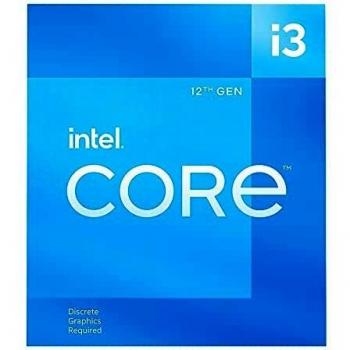
Intel Core I3-7100 3.90 GHz CPU - Black


Sponsored This site contains affiliate links for which we may receive compensation. More information
Find other available options:

| Identifiers | |
|---|---|
| Model | Intel BX80677I37100 |
| MPN | Intel BX80677I37100 |
| Dimensions / Weight | |
| Key Features | |
|
Architecture A concise list of the specific processor micro‑architecture or generation used by a CPU, such as "Kaby Lake", "Comet Lake", "Zen 2" or "Rocket Lake‑S". This attribute helps users identify compatibility with software, performance characteristics and hardware requirements.
|
64-bit |
|
Box Indicates whether a product comes packaged in a closed box or container. A value of "Yes" means the item is supplied with protective packaging; "No" indicates it is not.
|
Yes |
|
Bus bandwidth The maximum frequency at which a system bus can transfer data, expressed in hertz (Hz). It indicates the theoretical throughput capability of the bus and allows users to compare performance across different processors or components.
|
8 |
|
Bus Type The interface or communication bus that a component uses to connect with other parts of a system, such as PCI Express, USB, SATA, or legacy buses like FSB and QPI. It indicates the protocol and physical connection used for data transfer between devices.
|
DMI3 |
|
Bus type units The interface speed or bandwidth specification of a computer component, such as a processor or memory bus. Common units include GT/s (giga‑transfers per second) for PCIe lanes and MHz for clock frequencies. It indicates the maximum data transfer rate that the component can achieve under ideal conditions.
|
GT/s |
|
Cache The amount of internal memory reserved for a processor’s cache, expressed in units such as megabytes (MB) or gigabytes (GB). This value indicates how much data the CPU can store locally to accelerate access and improve performance.
|
4 MB |
|
Component for Specifies the type of device or system that the product is intended to be used with, such as a PC, server, notebook, surveillance system, or other electronic equipment. The value represents a single category and can be used to filter or group products by their target platform.
|
PC |
|
Conflict free processor Indicates whether the processor in the device is certified as conflict‑free, meaning it has been tested and confirmed to operate without conflicts or incompatibilities with other system components. A value of "Yes" means the processor meets the conflict‑free standard; "No" indicates it does not.
|
Yes |
|
Cooling The type of cooling mechanism used by a product, such as active fan‑based cooling, passive heat sinks, liquid cooling, or no active cooling. It indicates whether the device relies on airflow, conduction, or other methods to dissipate heat and helps users assess thermal performance and noise levels.
|
Cooler included |
|
Core count The total number of physical cores in a processor, expressed either as a numeric value or in descriptive terms such as "Quad Core" or "Hexa Core". This attribute captures the core count information regardless of whether it is presented numerically or textually.
|
Dual Core |
|
Core name The designation of the processor core architecture or family, such as "Skylake", "Kaby Lake" or "Vishera". It identifies the specific micro‑architecture used in a CPU and helps users compare performance characteristics across different generations.
|
Kaby Lake |
|
CPU Brand The company that designs and produces the central processing unit (CPU) used in a device. This value identifies the brand of the processor, such as Intel, AMD, Qualcomm, or ARM Holdings, allowing users to assess compatibility, performance expectations, and support resources.
|
Intel |
|
CPU Socket The physical connector used by a processor to attach to a motherboard or other compatible platform, such as LGA 1151, BGA 1440, Socket AM4, or LGA 1200. This attribute indicates the exact socket designation required for proper CPU installation and compatibility with other hardware components.
|
Socket 1151 |
|
CPU Speed The maximum operating frequency of a central processing unit (CPU), expressed in hertz (Hz). This value indicates how many cycles per second the CPU can execute under normal conditions and is useful for comparing performance potential across different models.
|
3.9 GHz |
|
ECC Indicates whether the memory module or component supports Error‑Correcting Code (ECC) for detecting and correcting single-bit errors during operation. A value of "Yes" means ECC is enabled, allowing automatic correction of data corruption; a value of "No" indicates no ECC support.
|
Yes |
|
ECC supported by processor Indicates whether the processor in a device supports Error Correcting Code (ECC) memory, allowing detection and correction of single-bit errors during data storage or transfer.
|
Yes |
|
Embedded options available Indicates whether the product includes embedded options such as firmware features, hardware modules or configuration settings that are built into the device and available for use without external accessories.
|
No |
| Enhanced intel speedstep technology | Yes |
|
Execute disable bit Indicates whether the processor’s Execute Disable bit is enabled, allowing the CPU to prevent execution of code from memory regions marked as non-executable.
|
Yes |
|
Form factor Specifies the physical configuration or design of a product, such as ATX, Micro‑ATX, Mini‑ITX, tower, case with cover, etc. It describes how the device is built and what mounting or expansion options it supports.
|
Processor |
|
Generation The generation of a central‑processing unit indicates the cohort or family of CPU models that share common architecture, performance characteristics, and feature sets. It is typically expressed as an ordinal number (e.g., "1st Generation", "10th Gen") followed by the manufacturer name and model series, helping users compare processors across brands and time periods.
|
7th Generation |
|
Graphics chipset The exact model or designation of the graphics processing unit (GPU) installed in a device, such as "Intel UHD Graphics 620", "NVIDIA GeForce RTX 2070" or "AMD Radeon RX 580". It identifies the specific GPU variant used for rendering and video processing, allowing users to compare visual performance and compatibility across products.
|
Intel HD 630 |
|
Harmonized System HS code The Harmonized System (HS) code is a standardized numerical identifier used internationally to classify traded goods. It consists of up to six digits, where each pair of digits represents progressively more specific product categories. The HS code facilitates customs duties, trade statistics, and regulatory compliance by providing a common language for describing products across borders.
|
8542310001 |
|
Idle states A list of the various low‑power or standby modes that a device can enter to conserve energy when not actively performing tasks.
|
Yes |
|
Integrated Graphics Indicates whether a device includes an integrated graphics processor, and if so, provides the model or resolution it supports. Typical values are "Yes" or "No", but may also include specific GPU models (e.g., "Intel UHD Graphics 620") or screen resolutions (e.g., "1920x1080"). This attribute helps users determine whether a device can render graphics without a discrete GPU and what performance level to expect.
|
Yes |
|
Intel 64 Indicates whether the processor is compatible with the Intel® 64 architecture, enabling it to run operating systems and applications designed for x86‑64 processors.
|
Yes |
|
Intel clear video technology Indicates whether the product incorporates Intel’s Clear Video HD technology, a hardware feature that enhances video playback and capture quality by providing smoother motion, reduced artifacts, and improved color accuracy.
|
Yes |
|
Intel enhanced halt state Indicates whether the processor includes Intel’s Enhanced Halt State feature, which allows the CPU to enter a low‑power idle mode when not actively executing instructions, thereby reducing energy consumption without compromising performance.
|
Yes |
|
Intel Identity Protection Technology version Indicates the specific version number of Intel’s Identity Protection Technology that a product supports or implements. The value is typically a numeric string such as "1.00" or "0.00", representing the major and minor revision of the feature set.
|
1.00 |
|
Intel Optane Memory Ready Indicates whether the product is compatible with Intel Optane memory, a technology that accelerates storage performance by caching frequently accessed data in high‑speed non‑volatile memory.
|
Yes |
|
Intel Software Guard Extensions Indicates whether the product incorporates Intel Software Guard Extensions (SGX), a hardware feature that provides isolated execution environments for secure code and data protection.
|
Yes |
| Intel Stable Image Platform Program | No |
|
Intel Stable Image Platform Program SIPP version The version number of Intel’s Stable Image Platform Program (SIPP), indicating the specific release of the platform that a product supports. It is typically expressed as a decimal value (e.g., 0.00, 1.00) and helps users identify compatibility with Intel’s image stability features.
|
0.00 |
|
Intel trusted execution technology Indicates whether the product incorporates Intel’s Trusted Execution Technology, a security feature that creates isolated execution environments to protect sensitive code and data from tampering or unauthorized access.
|
No |
|
Intel TSX-NI Indicates the specific version of Intel Transactional Synchronization Extensions – No Interlock (TSX‑NI) supported by a processor, which determines its capability for efficient transaction processing and concurrency control.
|
No |
|
Intel Virtualization Technology Indicates whether the product supports Intel’s virtualization technology, which enables efficient execution of virtual machines by providing hardware‑assisted features such as VT‑x and VT‑d for CPU instruction set extensions.
|
Yes |
|
Intel Virtualization Technology for Directed I/O Indicates whether the product supports Intel Virtualization Technology for Directed I/O, a feature that enables efficient virtualization of input/output operations by allowing virtual machines to directly access hardware devices.
|
Yes |
| Intel VT-x with Extended Page Tables | Yes |
|
Intel® AES New instructions Indicates whether the product’s processor supports the Intel® Advanced Encryption Standard (AES) instruction set, which enables faster and more efficient cryptographic operations.
|
Yes |
| Intel® Clear Video HD Technology | Yes |
|
Intel® Clear Video Technology for Mobile Internet Devices Indicates whether the product incorporates Intel’s Clear Video HD technology, a hardware acceleration feature that improves video playback and capture quality by optimizing decoding and rendering pipelines.
|
Yes |
|
Intel® Hyper Threading Technology Indicates whether the processor supports Intel® Hyper‑Threading Technology, allowing each physical core to handle multiple execution threads simultaneously for improved multitasking performance.
|
Yes |
|
Intel® Identity Protection Technology Indicates whether the product incorporates Intel® Identity Protection Technology, a security feature that protects user identities and credentials by providing secure authentication and credential management.
|
Yes |
|
Intel® InTru™ 3D Technology Indicates whether the product incorporates Intel® InTru™ 3D technology, a feature that enables efficient generation and rendering of three‑dimensional content with improved performance and visual quality.
|
Yes |
|
Intel® OS Guard Indicates whether the product incorporates Intel® OS Guard, a security feature that protects the operating system from attacks and ensures software integrity.
|
Yes |
|
Intel® Quick Sync Video Technology Indicates whether the product incorporates Intel Quick Sync Video, a hardware‑accelerated video processing feature that enables faster encoding and decoding of common formats such as H.264, H.265, and VP9 while reducing power consumption.
|
Yes |
|
Intel® Secure Key Indicates whether the product includes Intel Secure Key support, a hardware feature that allows secure generation and storage of cryptographic keys within the processor. Presence of this capability enhances protection against physical attacks and simplifies key management for sensitive data.
|
Yes |
|
Intel® Turbo Boost Technology The maximum operating frequency that a processor can reach when its turbo or boost feature is active, expressed in hertz (Hz). This value indicates the peak performance capability of the CPU under load and helps users compare how fast a processor can run beyond its base clock speed.
|
No |
|
Intel® vPro™ Technology Indicates whether the product incorporates Intel® vPro technology, a suite of features that provide enhanced security, remote management, and performance optimization for business environments.
|
No |
|
Launch date The calendar date on which a product was first made available to the public or released for sale. It is expressed in the format YYYY-MM-DD and can be used to filter, sort, or display the launch timeline of the item.
|
Q1'17 |
|
Market segment The target market segment for a product, such as "Business", "Home", or "Small‑medium business". This attribute helps customers quickly identify the intended user group and typical use case of the item.
|
DT |
|
Maximum CPU configuration The highest number of physical or logical processor cores that a computer system can support or is configured with. It indicates the maximum parallel processing capacity available for running applications and workloads.
|
1 |
|
Maximum internal memory The largest amount of internal random‑access memory that a device can support, expressed as a data size such as megabytes or gigabytes. It indicates the maximum capacity for active processes and multitasking performance.
|
65536 MB |
|
Maximum number of PCI Express lanes The total count of PCI Express lanes available on a device or component, indicating the maximum number of high‑speed communication channels that can be used simultaneously for peripherals such as graphics cards, storage devices, and networking adapters.
|
16 |
|
Maximum resolution & refresh rate (DisplayPort) The highest pixel resolution and refresh rate that a product can output through its DisplayPort interface, expressed as width × height followed by the maximum supported refresh rate (e.g., 4096x2304@60Hz). This value indicates the best visual performance achievable on displays connected via DisplayPort.
|
4096x2304@60Hz |
|
Memory channels The configuration of memory channels supported by a device, indicating how many independent memory paths the system can use for data transfer (e.g., Dual‑channel, Quad‑channel). This attribute helps users understand the potential bandwidth and performance characteristics of the memory subsystem.
|
Dual |
|
Memory clock speeds supported by processor The set of operating frequencies that a processor can run at, expressed in hertz (Hz). Values are typically listed as individual frequencies or ranges separated by commas, indicating the base clock and any boost or turbo options available for the CPU.
|
1333,1600,2133,2400 MHz |
|
Memory types supported by processor A list of the types of memory modules that a device can use, such as DDR4 SDRAM, LPDDR3, or other compatible standards. Each entry represents a distinct memory technology supported by the hardware.
|
DDR3L-SDRAM,DDR4-SDRAM |
|
Name The official name or title of the product as it appears in catalogs, listings, and marketing materials. It is free‑text without units and may include brand, model number, or descriptive terms.
|
Intel Core i3-7100 |
|
Number of cores The total count of processing cores present in a CPU or GPU. This value indicates how many independent execution units are available for parallel processing, which can affect performance and multitasking capability.
|
2 |
|
On-board graphics adapter The model name or number of the integrated graphics adapter built into a device, such as a laptop, desktop, or motherboard. It identifies the specific GPU variant used for rendering and video processing, allowing users to compare visual performance and compatibility across products.
|
Yes |
|
On-board graphics adapter 4K support Indicates whether the device’s integrated graphics adapter can output a 4K resolution (3840×2160) image or video. A value of "Yes" means the hardware and drivers support 4K playback or rendering; "No" indicates that 4K is not supported.
|
Yes |
|
On-board graphics adapter base frequency The clock speed at which the integrated graphics processor runs under normal conditions, expressed in hertz (Hz). It indicates how many cycles per second the GPU performs and is useful for comparing visual performance across devices that use an on‑board graphics solution.
|
350 MHz |
|
On-board graphics adapter DirectX version The version number of the DirectX graphics API supported by a device, indicating its graphical capabilities and compatibility with software that relies on specific DirectX features.
|
12.0 |
|
On-board graphics adapter dynamic frequency The operating speed at which the integrated graphics processor in a device runs, expressed in hertz (Hz). It indicates how many cycles per second the GPU can perform and is used to assess visual performance, power consumption, and compatibility with display refresh rates.
|
1100 MHz |
|
On-board graphics adapter ID The unique identifier of the integrated graphics adapter built into a device, typically expressed as a hexadecimal string such as "0x5916" or a numeric code like "1916". This value allows users and systems to distinguish between different GPU models and versions across laptops, desktops, and motherboards.
|
0x5912 |
| On-board graphics adapter maximum resolution (eDP - Integrated Flat Panel) | 4096 x 2304 pixels |
|
On-board graphics adapter OpenGL version The specific version of the OpenGL graphics API supported by a device, indicating its rendering capabilities and compatibility with software that relies on this standard.
|
4.4 |
|
On-board graphics adapter outputs supported A comma‑separated list of the video output ports that an integrated or onboard graphics adapter can provide, such as DisplayPort, HDMI, DVI, VGA, or Embedded DisplayPort (eDP). The values indicate which external displays can be connected directly to the device without additional adapters.
|
DisplayPort,Embedded DisplayPort (eDP),HDMI |
|
On-board graphics adapter refresh rate at maximum resolution (DisplayPort) The highest refresh rate that the integrated graphics adapter can output at its maximum supported resolution over a DisplayPort connection. It indicates how many times per second the image is refreshed on the display, affecting motion smoothness and visual quality.
|
60 Hz |
| On-board graphics adapter refresh rate at maximum resolution (HDMI) | 24 Hz |
|
Package depth The linear measurement from front to back or top to bottom of a product’s packaging, expressed in a physical unit such as millimeters, centimeters, inches, etc. It indicates how deep the packaged item is and can be used for fitting, compatibility, or spatial planning.
|
116 mm |
|
Package Height The vertical dimension of a product’s packaging measured from its lowest to highest point. It is expressed in a physical unit such as millimetres, centimetres or inches and helps customers assess how tall the package will be when stored or shipped.
|
101 mm |
|
Package type The form of packaging used for a product, such as box, blister pack, bag, or pallet. It indicates how the item is contained and protected during shipping and storage.
|
Retail |
|
Package width The horizontal measurement of a product’s packaging, expressed in a linear unit such as millimetres or inches. It indicates how wide the package is from one side to the other and helps customers assess fit for storage, shipping, or display.
|
70 mm |
|
PCI Express CEM Revision The PCI Express Common Extensible Module (CEM) revision indicates the version of the PCI Express specification supported by a device or component. It is expressed as a numeric value such as 2.0, 3.0, or 4.0 and determines compatibility with PCIe devices and the maximum achievable bandwidth.
|
3.0 |
|
PCI Express configurations A textual description of how PCI Express lanes are distributed across the available slots or interfaces in a device. The value typically lists groups of lanes separated by commas, where each group may contain a number of lanes and optional ‘+’ signs to indicate combined lanes that share the same speed (e.g., "1x16", "2x8", "1x8+2x4"). This attribute helps users understand the bandwidth capacity and compatibility of expansion slots.
|
1x16,1x8+2x4,2x8 |
|
Processor ARK ID The Processor ARK ID is a numeric identifier assigned by Intel to each processor model. It uniquely distinguishes one CPU from another and can be used to look up detailed specifications, compatibility information, or firmware updates for that specific chip.
|
97455 |
|
Processor brand name The name of the company that designs and produces the central processing unit used in a device, such as Intel, AMD or Qualcomm. It identifies the manufacturer so users can quickly see which brand’s processors are supported by the product.
|
7th Gen Intel Core i3 processors |
|
Processor cache type The type or level of the internal cache memory in a processor, such as L1, L2, L3, or Smart Cache. This attribute indicates the hierarchical structure and naming convention used by the CPU manufacturer to describe its cache organization.
|
Smart Cache |
|
Processor code A unique identifier that represents the specific model or variant of a computer processor. The code is typically an alphanumeric string (e.g., "SR2ZU", "SR3LA") used by manufacturers to distinguish between different CPU models, generations, and configurations. It can be entered as free text and may appear in product listings, technical specifications, or inventory records.
|
SR35C |
|
Processor lithography The lithography process defines the minimum feature size that can be etched onto a semiconductor chip, expressed in nanometers (nm). It indicates the manufacturing technology generation and influences performance, power consumption, and integration density of the processor.
|
14 nm |
|
Processor number The unique model designation of a computer processor, such as "8250U" or "i7-1165G7". It identifies the specific CPU used in a device and can be compared across products to infer performance, generation, and compatibility.
|
7100 |
|
Processor package size The overall dimensions of a processor’s physical package, expressed as length × width × height in millimetres or inches. It indicates the size that must fit within a motherboard socket or mounting area and helps users compare compatibility across different CPU models.
|
37.5 x 37.5 mm |
|
Processor socket The physical connector used by a processor to attach to a motherboard or other compatible platform. Common examples include LGA 1151, BGA 1440, Socket AM4, and LGA 1200. This attribute indicates the exact socket designation required for proper CPU installation and compatibility.
|
LGA 1151 (Socket H4) |
| Status | Launched |
|
Stepping Der CPU‑Stepping bezeichnet die interne Version eines Prozessormodells, die bei jeder neuen Fertigungsrunde geändert wird. Er gibt an, welche Revision des Chips verwendet wurde und kann Einfluss auf Leistung, Energieverbrauch oder Kompatibilität haben.
|
S0 |
|
Supported instruction sets A list of processor instruction set extensions that a CPU can execute, such as AVX, AVX2, SSE4.1, SSE4.2, and AVX‑512. Each value represents an individual extension or group of extensions supported by the hardware.
|
AVX 2.0,SSE4.1,SSE4.2 |
|
Thermal design power The maximum amount of power, expressed in watts (W), that a processor or other electronic component is designed to dissipate as heat under typical operating conditions. It represents the thermal load the cooling system must handle and is used by manufacturers and users to assess performance, energy consumption, and suitability for specific environments.
|
51 W |
| Thermal monitoring technologies | Yes |
|
Thermal solution specification A short alphanumeric code that identifies the thermal solution or cooling configuration used in a computer component such as a processor, motherboard, or chassis. The identifier is typically assigned by the manufacturer and can be referenced to determine compatibility, performance characteristics, or warranty information for the cooling system.
|
PCG 2015C |
|
Video decoding Indicates whether the product can decode and play video content using its hardware or software capabilities. A value of "Yes" means that the device supports decoding for common video formats, while a value of "No" indicates that it does not.
|
Yes |

Intel is a computer chip manufacturer that also produces motherboard chipsets, network interface controllers and other integrated circuits. It is the world's largest semiconductor company.