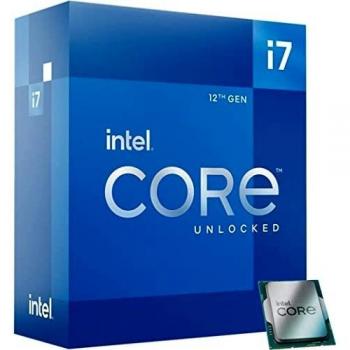
Intel Core i7 Broadwell-Extreme Edition LGA2011-3 Processors


Sponsored This site contains affiliate links for which we may receive compensation. More information
Find other available options:

| Identifiers | |
|---|---|
| Model | Intel BX80671I76900K |
| MPN | Intel BX80671I76900K |
| Dimensions / Weight | |
| Key Features | |
|
Box Indicates whether a product comes packaged in a closed box or container. A value of "Yes" means the item is supplied with protective packaging; "No" indicates it is not.
|
Yes |
|
Component for Specifies the type of device or system that the product is intended to be used with, such as a PC, server, notebook, surveillance system, or other electronic equipment. The value represents a single category and can be used to filter or group products by their target platform.
|
PC |
|
Conflict free processor Indicates whether the processor in the device is certified as conflict‑free, meaning it has been tested and confirmed to operate without conflicts or incompatibilities with other system components. A value of "Yes" means the processor meets the conflict‑free standard; "No" indicates it does not.
|
Yes |
|
ECC Indicates whether the memory module or component supports Error‑Correcting Code (ECC) for detecting and correcting single-bit errors during operation. A value of "Yes" means ECC is enabled, allowing automatic correction of data corruption; a value of "No" indicates no ECC support.
|
No |
|
ECC supported by processor Indicates whether the processor in a device supports Error Correcting Code (ECC) memory, allowing detection and correction of single-bit errors during data storage or transfer.
|
No |
|
Embedded options available Indicates whether the product includes embedded options such as firmware features, hardware modules or configuration settings that are built into the device and available for use without external accessories.
|
No |
| Enhanced intel speedstep technology | Yes |
|
Execute disable bit Indicates whether the processor’s Execute Disable bit is enabled, allowing the CPU to prevent execution of code from memory regions marked as non-executable.
|
Yes |
|
Generation The generation of a central‑processing unit indicates the cohort or family of CPU models that share common architecture, performance characteristics, and feature sets. It is typically expressed as an ordinal number (e.g., "1st Generation", "10th Gen") followed by the manufacturer name and model series, helping users compare processors across brands and time periods.
|
6th Generation |
|
Idle states A list of the various low‑power or standby modes that a device can enter to conserve energy when not actively performing tasks.
|
Yes |
|
Intel 64 Indicates whether the processor is compatible with the Intel® 64 architecture, enabling it to run operating systems and applications designed for x86‑64 processors.
|
Yes |
|
Intel enhanced halt state Indicates whether the processor includes Intel’s Enhanced Halt State feature, which allows the CPU to enter a low‑power idle mode when not actively executing instructions, thereby reducing energy consumption without compromising performance.
|
Yes |
|
Intel Smart Response Technology version The specific version of Intel Smart Response Technology supported by the product, indicating its capability to accelerate disk performance using cache memory. The value is typically a decimal number such as 1.00 or 0.00 that represents the feature level enabled on the device.
|
1.00 |
|
Intel trusted execution technology Indicates whether the product incorporates Intel’s Trusted Execution Technology, a security feature that creates isolated execution environments to protect sensitive code and data from tampering or unauthorized access.
|
No |
|
Intel Turbo Boost Max Technology 3.0 Indicates whether the processor supports Intel Turbo Boost Max Technology 3.0, a feature that dynamically selects the fastest cores for peak performance and improves efficiency during demanding workloads.
|
Yes |
|
Intel Virtualization Technology Indicates whether the product supports Intel’s virtualization technology, which enables efficient execution of virtual machines by providing hardware‑assisted features such as VT‑x and VT‑d for CPU instruction set extensions.
|
Yes |
|
Intel Virtualization Technology for Directed I/O Indicates whether the product supports Intel Virtualization Technology for Directed I/O, a feature that enables efficient virtualization of input/output operations by allowing virtual machines to directly access hardware devices.
|
Yes |
| Intel VT-x with Extended Page Tables | Yes |
|
Intel® AES New instructions Indicates whether the product’s processor supports the Intel® Advanced Encryption Standard (AES) instruction set, which enables faster and more efficient cryptographic operations.
|
Yes |
|
Intel® Hyper Threading Technology Indicates whether the processor supports Intel® Hyper‑Threading Technology, allowing each physical core to handle multiple execution threads simultaneously for improved multitasking performance.
|
Yes |
|
Intel® Smart Response Technology Indicates whether the product incorporates Intel Smart Response, a technology that accelerates hard‑disk performance by using a portion of system memory as a cache for frequently accessed data.
|
Yes |
|
Intel® Turbo Boost Technology The maximum operating frequency that a processor can reach when its turbo or boost feature is active, expressed in hertz (Hz). This value indicates the peak performance capability of the CPU under load and helps users compare how fast a processor can run beyond its base clock speed.
|
2.0 |
|
Intel® vPro™ Technology Indicates whether the product incorporates Intel® vPro technology, a suite of features that provide enhanced security, remote management, and performance optimization for business environments.
|
No |
|
Launch date The calendar date on which a product was first made available to the public or released for sale. It is expressed in the format YYYY-MM-DD and can be used to filter, sort, or display the launch timeline of the item.
|
Q2'16 |
|
Market segment The target market segment for a product, such as "Business", "Home", or "Small‑medium business". This attribute helps customers quickly identify the intended user group and typical use case of the item.
|
DT |
|
Maximum CPU configuration The highest number of physical or logical processor cores that a computer system can support or is configured with. It indicates the maximum parallel processing capacity available for running applications and workloads.
|
1 |
|
Maximum internal memory The largest amount of internal random‑access memory that a device can support, expressed as a data size such as megabytes or gigabytes. It indicates the maximum capacity for active processes and multitasking performance.
|
131072 MB |
|
Maximum internal memory supported by processor The largest amount of internal random‑access memory (RAM) that a processor can address and support, expressed as a data size such as megabytes or gigabytes. It indicates the upper limit of memory capacity for active processes and multitasking performance on devices using this CPU.
|
128 GB |
|
Maximum number of PCI Express lanes The total count of PCI Express lanes available on a device or component, indicating the maximum number of high‑speed communication channels that can be used simultaneously for peripherals such as graphics cards, storage devices, and networking adapters.
|
40 |
|
Memory channels The configuration of memory channels supported by a device, indicating how many independent memory paths the system can use for data transfer (e.g., Dual‑channel, Quad‑channel). This attribute helps users understand the potential bandwidth and performance characteristics of the memory subsystem.
|
Quad-channel |
|
Memory channels supported by processor The total count of independent memory channels supported by a processor or motherboard, indicating how many separate memory paths can be used simultaneously. This value helps users understand the potential for parallel memory access and overall system performance.
|
Quad |
|
Memory clock speeds supported by processor The set of operating frequencies that a processor can run at, expressed in hertz (Hz). Values are typically listed as individual frequencies or ranges separated by commas, indicating the base clock and any boost or turbo options available for the CPU.
|
2133,2400 MHz |
|
Memory types supported by processor A list of the types of memory modules that a device can use, such as DDR4 SDRAM, LPDDR3, or other compatible standards. Each entry represents a distinct memory technology supported by the hardware.
|
DDR4-SDRAM |
|
On-board graphics adapter The model name or number of the integrated graphics adapter built into a device, such as a laptop, desktop, or motherboard. It identifies the specific GPU variant used for rendering and video processing, allowing users to compare visual performance and compatibility across products.
|
No |
|
Package depth The linear measurement from front to back or top to bottom of a product’s packaging, expressed in a physical unit such as millimeters, centimeters, inches, etc. It indicates how deep the packaged item is and can be used for fitting, compatibility, or spatial planning.
|
116 mm |
|
Package Height The vertical dimension of a product’s packaging measured from its lowest to highest point. It is expressed in a physical unit such as millimetres, centimetres or inches and helps customers assess how tall the package will be when stored or shipped.
|
101 mm |
|
Package width The horizontal measurement of a product’s packaging, expressed in a linear unit such as millimetres or inches. It indicates how wide the package is from one side to the other and helps customers assess fit for storage, shipping, or display.
|
44 mm |
|
PCI Express CEM Revision The PCI Express Common Extensible Module (CEM) revision indicates the version of the PCI Express specification supported by a device or component. It is expressed as a numeric value such as 2.0, 3.0, or 4.0 and determines compatibility with PCIe devices and the maximum achievable bandwidth.
|
3.0 |
|
Processor ARK ID The Processor ARK ID is a numeric identifier assigned by Intel to each processor model. It uniquely distinguishes one CPU from another and can be used to look up detailed specifications, compatibility information, or firmware updates for that specific chip.
|
94196 |
|
Processor brand name The name of the company that designs and produces the central processing unit used in a device, such as Intel, AMD or Qualcomm. It identifies the manufacturer so users can quickly see which brand’s processors are supported by the product.
|
Intel Core i7 X-series Intel Core i7 X-series processor |
|
Processor cache type The type or level of the internal cache memory in a processor, such as L1, L2, L3, or Smart Cache. This attribute indicates the hierarchical structure and naming convention used by the CPU manufacturer to describe its cache organization.
|
Smart Cache |
| Processor codename | Broadwell |
|
Processor cores The total number of physical processing units in a single central processing unit (CPU). This value indicates how many independent tasks the CPU can handle simultaneously, influencing multitasking and parallel performance.
|
8 |
|
Processor family The processor family identifies the group or series of CPU models that share a common architecture, design, and performance characteristics. It helps users compare processors across brands and generations by indicating the underlying technology used in the chip.
|
Intel High End Desktop Processors |
|
Processor frequency The fundamental operating frequency of a processor, expressed in hertz (Hz). It indicates the speed at which the CPU runs under normal conditions and is typically reported in gigahertz (GHz) or megahertz (MHz). This value helps users compare performance potential across different models.
|
3.2 GHz |
|
Processor lithography The lithography process defines the minimum feature size that can be etched onto a semiconductor chip, expressed in nanometers (nm). It indicates the manufacturing technology generation and influences performance, power consumption, and integration density of the processor.
|
14 nm |
|
Processor manufacturer The company that designs and produces the central processing unit (CPU) used in a device. This value identifies the brand of the processor, such as Intel, AMD, Qualcomm, or ARM Holdings, allowing users to assess compatibility, performance expectations, and support resources.
|
Intel |
|
Processor model Identifies the exact model of the central processing unit used in a device, including brand and numeric designation such as "Intel Core i5-8250U" or "AMD Ryzen 7 3700X". This value allows users to distinguish between different processor families, generations, and performance levels.
|
i7-6900K |
|
Processor operating modes The set of instruction set architectures or execution modes that a processor can operate in, such as 32‑bit or 64‑bit. This attribute indicates the architectural mode(s) supported by the CPU and helps users determine compatibility with software that requires a specific bitness.
|
64-bit |
|
Processor socket The physical connector used by a processor to attach to a motherboard or other compatible platform. Common examples include LGA 1151, BGA 1440, Socket AM4, and LGA 1200. This attribute indicates the exact socket designation required for proper CPU installation and compatibility.
|
LGA 2011-v3 |
|
Processor threads The number of independent execution units (threads) that a processor can handle simultaneously. This value indicates how many parallel tasks the CPU can process at once, which affects multitasking performance and workload distribution.
|
16 |
|
Product Type Indicates the general classification or type of an item, such as "laptop", "projector", "router" or "paint". It helps users quickly identify the nature of the product and compare similar items across categories.
|
Processor |
| Status | End of Life |
|
Thermal design power The maximum amount of power, expressed in watts (W), that a processor or other electronic component is designed to dissipate as heat under typical operating conditions. It represents the thermal load the cooling system must handle and is used by manufacturers and users to assess performance, energy consumption, and suitability for specific environments.
|
140 W |

Intel is a computer chip manufacturer that also produces motherboard chipsets, network interface controllers and other integrated circuits. It is the world's largest semiconductor company.