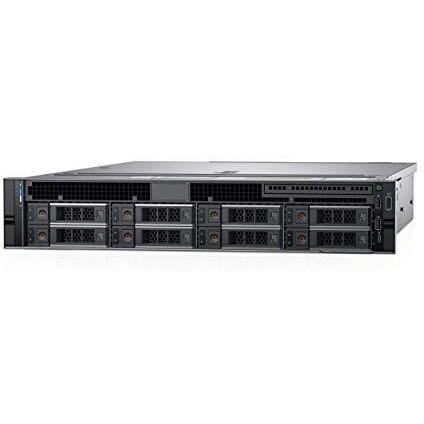
PE R540 Intel Xeon Bronze 3204 Rack Server


Sponsored This site contains affiliate links for which we may receive compensation. More information
Find other available options:

| Identifiers | |
|---|---|
| Dimensions / Weight | |
| Key Features | |
|
Cables included A list of the cable types that are supplied with the product, such as USB, HDMI, VGA, DisplayPort, LAN (RJ‑45), SATA, audio or other relevant connectors.
|
AC |
|
Chassis type The physical configuration or shape of a computer chassis, such as tower, rack‑mount (e.g., 1U, 2U), desktop, mini‑PC, or other compact designs. It indicates the overall size and mounting style that determines compatibility with motherboards, power supplies, and case accessories.
|
Rack (2U) |
|
Ethernet interface type A list of the Ethernet standards that a product supports, such as Fast Ethernet (10/100 Mbps), Gigabit Ethernet (1 Gbps), 2.5 GbE, 10 GbE, and other variants. Each value is a free‑text label describing one supported interface; multiple values are separated by commas when the device offers more than one speed or generation.
|
Gigabit Ethernet |
|
Ethernet LAN Indicates whether the product includes an Ethernet LAN interface for wired network connectivity, allowing data transmission over RJ‑45 or compatible cables.
|
Yes |
|
Height The vertical dimension of a product measured from its lowest to highest point. It is expressed in a physical unit such as millimetres, centimetres or inches and applies to any item where height is relevant, including books, electronics, furniture and other objects.
|
86.8 mm |
|
Hot-Plug support Indicates whether the product can be connected or removed while it is powered on without requiring a shutdown or reboot. A value of "Yes" means the device supports hot‑plugging, allowing components such as drives, peripherals or expansion cards to be added or removed safely during operation; "No" indicates that the device must be powered down before any hardware changes.
|
Yes |
|
Internal memory The total amount of internal memory available in a device, expressed as a data size such as megabytes (MB) or gigabytes (GB). It indicates how much information the component can hold for active processes and affects multitasking performance.
|
16 GB |
|
Internal memory type The type of memory physically installed inside a device, such as DDR4 SDRAM, LPDDR3, or other RAM variants. It indicates the architecture and generation of the internal memory modules that the product uses or supports.
|
DDR4-SDRAM |
|
Maximum internal memory The largest amount of internal random‑access memory that a device can support, expressed as a data size such as megabytes or gigabytes. It indicates the maximum capacity for active processes and multitasking performance.
|
512 GB |
|
Non-operating altitude The altitude interval (in meters) at which a product or component ceases to function correctly due to environmental factors such as reduced atmospheric pressure, temperature changes, or other elevation‑related effects. The value is expressed as a minimum–maximum range and applies to any device that has documented limits for operation above or below certain heights.
|
0 - 12000 m |
|
Number of HDDs supported The total count of hard disk drives that the product can accommodate or support. It indicates how many separate HDD units are physically installable or usable within the device, regardless of size, interface type, or capacity.
|
8 |
|
Number of main power supplies The total count of primary power supply units included with the product. This value indicates how many separate power sources are available to provide electrical power, allowing for redundancy or increased capacity.
|
1 |
|
Operating altitude The range of altitudes (in meters) at which a product or component can operate reliably without performance degradation due to changes in atmospheric pressure, temperature, or other altitude‑related effects.
|
0 - 3048 m |
|
Operating system installed The operating system that is installed on the device, indicating the software platform that manages hardware resources and provides services for applications. It can be a commercial OS such as Windows or macOS, an open‑source distribution like Linux, or a proprietary firmware used in embedded devices.
|
No |
|
Optical drive type The type of optical drive included in a device, such as DVD‑RW, DVD‑Writer, Blu‑Ray RW, or no optical drive. This attribute indicates whether the product can read or write optical media and specifies the particular model or capability when available.
|
No |
|
Package depth The linear measurement from front to back or top to bottom of a product’s packaging, expressed in a physical unit such as millimeters, centimeters, inches, etc. It indicates how deep the packaged item is and can be used for fitting, compatibility, or spatial planning.
|
614 mm |
|
Package Height The vertical dimension of a product’s packaging measured from its lowest to highest point. It is expressed in a physical unit such as millimetres, centimetres or inches and helps customers assess how tall the package will be when stored or shipped.
|
284 mm |
|
Package width The horizontal measurement of a product’s packaging, expressed in a linear unit such as millimetres or inches. It indicates how wide the package is from one side to the other and helps customers assess fit for storage, shipping, or display.
|
918 mm |
|
Power supply The electrical power consumption or output of the product, expressed in watts (W). It indicates how much energy the device uses during operation or how much power it can deliver to connected equipment.
|
495 W |
|
Processor boost frequency The maximum operating frequency that a processor can reach when its turbo or boost feature is active, expressed in hertz (Hz). This value indicates the peak performance capability of the CPU under load and helps users compare how fast a processor can run beyond its base clock speed.
|
1.9 GHz |
|
Processor cache The amount of internal memory reserved for a processor’s cache, expressed in units such as megabytes (MB) or gigabytes (GB). This value indicates how much data the CPU can store locally to accelerate access and improve performance.
|
8.25 MB |
|
Processor cores The total number of physical processing units in a single central processing unit (CPU). This value indicates how many independent tasks the CPU can handle simultaneously, influencing multitasking and parallel performance.
|
6 |
|
Processor family The processor family identifies the group or series of CPU models that share a common architecture, design, and performance characteristics. It helps users compare processors across brands and generations by indicating the underlying technology used in the chip.
|
Intel Xeon Bronze |
|
Processor model Identifies the exact model of the central processing unit used in a device, including brand and numeric designation such as "Intel Core i5-8250U" or "AMD Ryzen 7 3700X". This value allows users to distinguish between different processor families, generations, and performance levels.
|
3204 |
|
Rack mounting Indicates whether a product is designed to be mounted in a rack system. The value can be "Yes" or "No", or it may specify the height occupied by the device using rack units (U) such as "1U", "2U", or a numeric measurement with unit, e.g., "61.25 mm".
|
Yes |
| Rack rails | Yes |
|
RAID support A comma‑separated list of RAID levels that a storage device or controller can support, such as 0, 1, 5, 10, JBOD, and other proprietary configurations. Each value represents a distinct RAID mode the system is capable of creating or managing.
|
Yes |
| Redundant fans support | Yes |
|
Remote administration Indicates the specific remote administration solution or interface that a device supports, such as iLO, iDRAC, or other proprietary management controllers. The value typically names the model or product line of the controller, allowing users to identify compatibility with their infrastructure and management tools.
|
iDRAC9 Enterprise |
| SSD Capacity | 240 GB |
|
Supported HDD sizes A list of the physical dimensions of hard drives that a product can accommodate, expressed in inches or millimeters (e.g., "2.5", "3.5", "M.2"). The values are typically separated by commas and indicate which drive form factors fit within the device’s bays or slots.
|
3.5" |
|
Supported RAID controllers A comma‑separated list of the RAID controller models or families that a storage system can host, such as Dell PERC H330, HP Smart Array P255i, or Fujitsu PRIDE EP420i. Each value represents a distinct controller capable of managing multiple disks and providing features like mirroring, striping, or parity. The list may include model numbers with optional suffixes (e.g., "H730P+ 2GB") that indicate specific variants or memory configurations. Users can reference this attribute to determine which RA
|
PERC H330 |
|
Supported storage drive interfaces List of physical or logical interfaces that allow an internal storage drive to communicate with the system, such as SATA, M.2 PCIe, U.2, SAS, NVMe, or other standard connections.
|
SAS,Serial ATA |

Dell is a computer technology company that was founded by Michael Dell in 1984. The company is headquartered in Texas and is one of the largest technology companies in the world. Dell manufactures and sells personal computers, servers, data storage devices, network switches, software, and computer peripherals.


