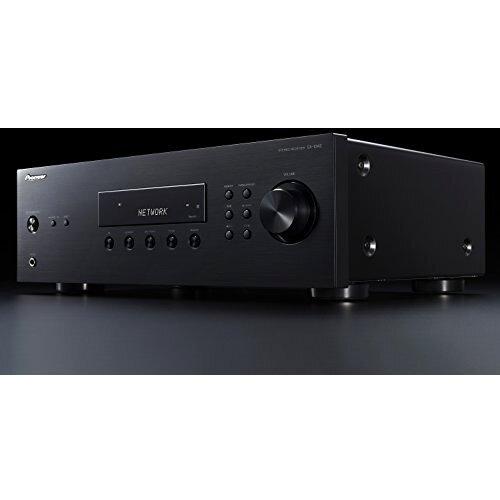
Pioneer SX-10AE Black Stereo Receiver



Sponsored This site contains affiliate links for which we may receive compensation. More information
Find other available options:

| Identifiers | |
|---|---|
| Model | Pioneer SX-10AE-B |
| MPN | Pioneer SX-10AE-B |
| Dimensions / Weight | |
| Key Features | |
|
3D Indicates whether the product has built‑in support for 3‑dimensional (3D) content or displays. A value of "Yes" means the device can render or display 3D images, videos, or games; a value of "No" means it does not have native 3D capability.
|
Nee |
|
AC input frequency The frequency of the alternating current supplied to a power supply or charger, expressed in hertz (Hz). It indicates the acceptable operating range for the electrical mains that powers the device, ensuring proper functionality and safety.
|
50/60 Hz |
|
AC input voltage The range of alternating current voltage that the product accepts from its power source, expressed in volts (V). It indicates the minimum and maximum supply voltages compatible with the device across different regions.
|
220-240 V |
|
AC power in Indicates whether the product requires an AC mains power supply. A value of "Yes" means the device can be powered from a standard electrical outlet, while "No" indicates it does not use AC mains power (e.g., battery‑powered or USB‑only devices).
|
Ja |
|
Audio (L,R) in Indicates the total number of audio input channels that a product can receive, such as left and right stereo inputs or additional surround‑sound inputs. The value is an integer representing how many separate audio input paths are available for connecting external devices.
|
4 |
|
Audio formats supported A list of audio codecs and file formats that the product can play or output, such as AAC, MP3, FLAC, Dolby Digital, DTS, etc. Each value represents a supported combination of compression technology and file extension.
|
AAC,SBC |
|
Audio output channels Indicates the total number of independent audio channels that a product can produce or process, including sub‑channels such as those used in surround sound configurations (e.g., 5.1, 7.2). The value may be an integer or a decimal to represent fractional channel groups.
|
4.1 kanalen |
| Bluetooth profiles | A2DP,AVRCP |
|
Bluetooth version The specific version of the Bluetooth standard supported by a product, expressed as a numeric value (e.g., 4.2, 5.0) or with additional descriptors such as "+HS" or feature lists. This attribute indicates the capabilities and compatibility for wireless communication.
|
4.2 |
|
Certification A list of official certifications or compliance marks that the product has received from regulatory bodies, safety organizations, or industry standards groups. Each entry represents a distinct certification such as CE, FCC, RoHS, UL, or WEEE, and may include additional details like version numbers or specific test reports.
|
CE |
|
Colour The colour or combination of colours that a product is available in, expressed as common names such as "Black", "Silver" or comma‑separated lists like "Black, White". It indicates the visual appearance of the item for consumers.
|
Zwart |
|
Connectivity technology The network and data interface technologies supported by the product, such as Wired, Wireless, USB, Bluetooth, or combinations thereof. Each value represents a distinct technology that can be used for communication or power delivery.
|
Bedraad |
| Display | VFL |
|
Frequency Range The span of frequencies, expressed in hertz (Hz), that a device can operate within or respond to. It may be given as a single value, a numeric range (e.g., "20 000‑50 000 Hz"), or an open‑ended interval such as "2.4 GHz+" indicating the lower bound only.
|
20 - 20000 Hz |
|
Headphone connectivity Indicates the types of headphone or earphone connections available on a product, such as wired jacks (e.g., 3.5 mm), USB‑C, Lightning, or wireless Bluetooth. The value may list one or more connection types separated by commas.
|
3,5 mm |
|
Headphone outputs Represents how many separate headphone output ports a product provides, such as the number of 3.5 mm jacks or other audio connectors available for headphones or earphones.
|
1 |
|
Impedance The impedance value indicates the resistance that a component or circuit offers to alternating current, expressed in ohms (Ω). It is used to characterize speakers, microphones, audio cables and other electronic equipment to ensure optimal compatibility with the source signal.
|
6 Ohm |
| Power consumption | 160 W |
| Power consumption (StandBy) | 0,4 W |
|
Receiver type The type of wireless receiver that accompanies a keyboard or mouse, such as Nano, Micro, Unifying, Standard, or other specialized receivers. It indicates the form factor and compatibility with the device’s wireless protocol.
|
Stereo |
|
Signal-to-Noise Ratio SNR The ratio of the desired signal level to the background noise level, expressed in decibels (dB). It indicates how clearly a device can transmit or receive audio or other signals relative to unwanted interference. A higher value means better clarity and fidelity.
|
100 dB |
|
Supported radio bands A list of the radio frequency bands that a device can receive or transmit, such as FM, AM, DAB, DAB+, UHF, VHF, and other standard radio services. Each entry represents a distinct band; the list allows users to understand the radio capabilities of the product.
|
AM,FM |
|
Total Harmonic Distortion THD The overall distortion introduced by a device, expressed as a percentage of the total output signal. It represents the ratio of all harmonic components to the fundamental frequency and indicates how much the waveform deviates from a perfect sine wave.
|
0,08 procent |
|
Weight The mass of the product expressed in a standard unit such as grams or kilograms. It represents how heavy the item is and can be used for shipping calculations, handling instructions, or consumer information.
|
7 kg |

Pioneer is a Japanese electronics company that produces a wide range of electronics products, including home theater systems, car audio systems, and DJ equipment. The company has a strong reputation for quality and innovation, and its products are popular among consumers and professionals alike.

