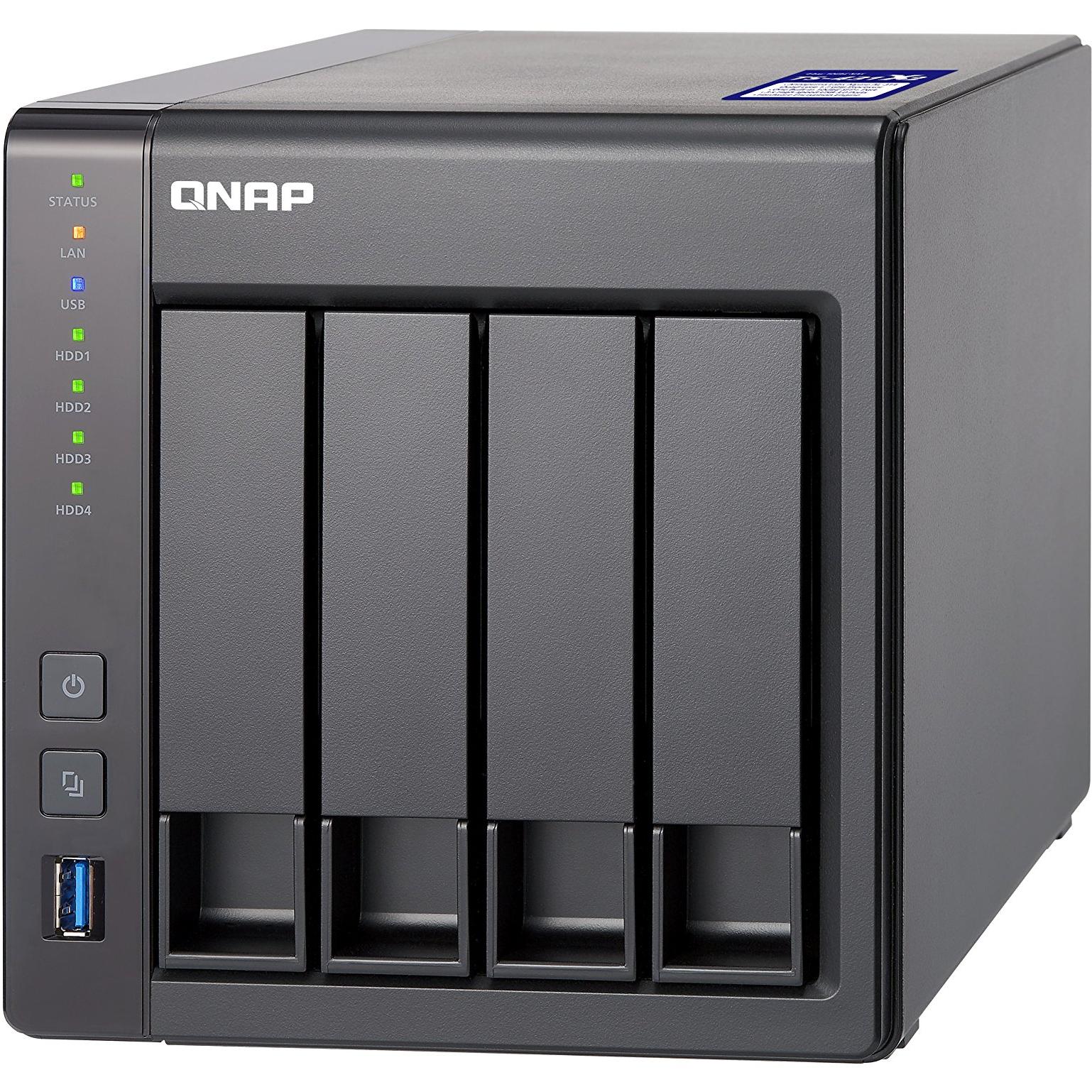
QNAP TS-431X2-8G 10GbE Ready NAS


Sponsored This site contains affiliate links for which we may receive compensation. More information
Find other available options:

| Identifiers | |
|---|---|
| Model | QNAP TS-431X2-8G |
| MPN | QNAP TS-431X2-8G |
| Dimensions / Weight | |
| Key Features | |
| Backup features | Cloud,iSCSI LUN |
|
Backup function Indicates whether a device has the capability to create backups of its data or settings, allowing restoration in case of loss, failure, or interruption.
|
Yes |
|
Built-in display Indicates whether the product includes a built‑in screen or display unit that can be used directly for viewing content, such as a monitor on a laptop, an integrated display on a device, or a built‑in screen on appliances. A value of "Yes" means the product has such a display; "No" means it does not.
|
No |
|
Built-in FTP server Indicates whether the product includes a built‑in FTP server that allows file transfer and management over the network without requiring an external device.
|
Yes |
| Built-in iTunes server | Yes |
|
Built-in UPnP AV media server Indicates whether the product includes a built‑in Universal Plug and Play (UPnP) Audio/Video media server that can stream audio or video content to other devices on the network. A value of "Yes" means the device has this capability; "No" means it does not.
|
Yes |
| Buzzer | Yes |
|
Cable lock slot Indicates whether the product includes a slot for inserting a cable lock, such as a Kensington or similar security device.
|
Yes |
|
Cables included A list of the cable types that are supplied with the product, such as USB, HDMI, VGA, DisplayPort, LAN (RJ‑45), SATA, audio or other relevant connectors.
|
AC,LAN (RJ-45) |
|
Chassis type The physical form factor of a computer chassis, indicating its size and layout such as Tower, Desktop, Mini‑PC, or rack units (e.g., 1U, 2U). This attribute helps users identify the footprint, mounting options, and compatibility with other hardware.
|
Tower |
|
Cooling type The method used to dissipate heat from a component or system, such as active cooling (fans or liquid loops), passive heat sinks, or no active cooling. It indicates whether the product relies on airflow, conduction, or other mechanisms to maintain safe operating temperatures.
|
Active |
|
Depth The linear measurement of an object from front to back or top to bottom, expressed in a physical unit such as millimeters, centimeters, inches, etc. It indicates how deep the item is and can be used for fitting, compatibility, or spatial planning.
|
160 mm |
|
Device class A free‑text label that identifies the general category or type of a device, such as "NAS", "Server", "Router", "Storage Enclosure" or any other descriptive class used by manufacturers to classify their products. The value is intended to help users quickly understand the primary function or form factor of the item.
|
Home & Home Office |
|
DHCP Client Indicates whether the device supports the DHCP client function, meaning it can automatically request an IP address and related network settings from a DHCP server.
|
Yes |
|
DHCP server Indicates whether the device supports acting as a DHCP server, allowing it to assign IP addresses and network configuration settings to clients on the network.
|
Yes |
|
Ethernet LAN Indicates whether the product has an Ethernet interface for wired network connectivity, allowing data transmission over RJ‑45 or compatible cables.
|
Yes |
|
Ethernet LAN data rates Maximum theoretical speed at which a device can send or receive data over its Ethernet LAN interface, expressed in megabits per second (Mbps) or gigabits per second (Gbps). It represents the upper bound of throughput under optimal conditions and is useful for comparing network performance between devices with wired connectivity.
|
10,100,1000,10000 Mbit/s |
|
External power adapter Indicates whether the product comes with an external power adapter in its packaging. A value of "Yes" means a charger is supplied; a value of "No" means no charger is included and the user must obtain one separately.
|
Yes |
|
Fan diameter The linear measurement across the widest part of a fan, expressed in units such as millimeters (mm), centimeters (cm) or inches (in). It represents the overall width of the fan and is useful for determining fit, compatibility with cases, and airflow characteristics.
|
12 cm |
| Fiber optic connector | SFP+ |
|
Fiber ports quantity Represents how many fiber optic connectors are available on the product. The value is a simple integer indicating the total count of fiber ports, regardless of type or version.
|
1 |
|
Height The vertical dimension of a product measured from its lowest to highest point. It is expressed in a physical unit such as millimetres, centimetres or inches and applies to any item where height is relevant, including books, electronics, furniture and other objects.
|
219 mm |
|
Hot-swap drive bays Indicates whether the product’s drive bays support hot‑swap, meaning drives can be inserted or removed while the device is powered on without shutting down or rebooting.
|
Yes |
| Installed storage drive type | No |
|
Internal memory The total amount of internal memory available in a device, expressed as a data size such as megabytes (MB) or gigabytes (GB). It indicates how much information the component can hold for active processes and affects multitasking performance.
|
8 GB |
|
Internal memory type The type of memory physically installed inside a device, such as DDR4 SDRAM, LPDDR3, or other RAM variants. It indicates the architecture and generation of the internal memory modules that the product uses or supports.
|
DDR3 |
| iSCSI support | Yes |
| Jumbo frames support | Yes |
|
LED indicators A list of the functions or statuses that an LED indicator on a device can display, such as power status, activity, link, and other operational signals.
|
HDD,LAN,Status,USB |
| Noise level | 19.5 dB |
|
Number of storage drives supported The total count of individual storage drives that a product can accommodate or support. This includes internal and external hard disks, solid‑state drives, or other removable media devices. The value is an integer representing how many separate drive units the system can host, install, or connect.
|
4 |
|
On/off switch Indicates whether the product includes an on/off switch that allows the user to power it on or off manually.
|
Yes |
|
Operating system installed The operating system that is installed on the device, indicating the software platform that manages hardware resources and provides services for applications. It can be a commercial OS such as Windows or macOS, an open‑source distribution like Linux, or a proprietary firmware used in embedded devices.
|
QNAP Turbo System |
|
Operating system version The specific version of the operating system that a product supports or runs, expressed as a numeric revision (e.g., 10, 11) or a descriptive name (e.g., Nougat). This attribute helps users determine compatibility with software and updates.
|
4.3 |
|
Power supply location The physical position where the power supply unit is installed or mounted within a device, such as top, bottom, rear, side, front, or built‑in. This attribute helps users understand where to find the power source and plan cable routing or ventilation.
|
External |
|
Processor family The processor family identifies the group or series of CPU models that share a common architecture, design, and performance characteristics. It helps users compare processors across brands and generations by indicating the underlying technology used in the chip.
|
Annapurna Labs |
|
Processor frequency The fundamental operating frequency of a processor, expressed in hertz (Hz). It indicates the speed at which the CPU runs under normal conditions and is typically reported in gigahertz (GHz) or megahertz (MHz). This value helps users compare performance potential across different models.
|
1.7 GHz |
|
Processor model Identifies the exact model of the central processing unit used in a device, including brand and numeric designation such as "Intel Core i5-8250U" or "AMD Ryzen 7 3700X". This value allows users to distinguish between different processor families, generations, and performance levels.
|
AL314 |
|
Quick start guide Indicates whether a quick‑start guide is provided with the product. A value of "Yes" means that a brief, introductory manual or overview is included to help users get started quickly; "No" indicates that no such guide is supplied.
|
Yes |
|
RAID levels A comma‑separated list that specifies the RAID configurations supported by a storage controller or device. Each entry can be a numeric level (e.g., 0, 1, 5, 10) or a special label such as JBOD. This attribute indicates which disk arrangements the system can manage.
|
0,1,5,6,10,JBOD |
|
RAID support A comma‑separated list of RAID levels that a storage device or controller can support, such as 0, 1, 5, 10, JBOD, and other proprietary configurations. Each value represents a distinct RAID mode the system is capable of creating or managing.
|
Yes |
|
Reset button Indicates whether the device has a physical reset button that restores factory settings or original configuration when pressed.
|
Yes |
|
Storage drive interface List of physical or logical interfaces that allow communication between a hard drive and other devices, such as SATA, M.2 PCIe, U.2, SAS, NVMe, or other standard connections.
|
Serial ATA II,Serial ATA III |
|
Storage drive size A list of the physical drive sizes that are compatible with the product, such as "2.5"", "3.5"", and "M.2". This attribute helps users determine which external or internal drives can be used with the device.
|
2.5/3.5" |
|
Storage drives installed The total count of individual storage devices (hard disk drives or solid‑state drives) that are physically present in the product. It indicates how many separate drives are installed, regardless of capacity or interface type.
|
No |
|
Supported file systems A comma‑separated list of file system formats that the product can read or write, such as FAT32, NTFS, ext4, exFAT, HFS+, and others. Each value represents a distinct storage format supported by the device’s firmware or operating system.
|
FAT32,HFS+,NTFS,ext3,ext4 |
|
Supported storage drive types A list of the types of storage drives that a product can accommodate or use, such as HDD, SSD, or hybrid configurations. Each entry indicates a distinct drive type that is supported by the device’s bays, slots, or external interfaces.
|
HDD,SSD |
|
Type The general category or style of the product, such as laptop, printer cartridge, or cooling fan. It helps buyers quickly identify the nature of the item and compare similar products.
|
NAS |
|
USB port Indicates the presence and quantity of USB connectors on a product. The value is typically an integer representing how many USB ports are available, regardless of type or version.
|
Yes |
|
Wake-on-LAN ready Indicates whether the device can be powered on remotely via Wake‑on‑LAN, allowing a network administrator or user to start it from sleep or off state using a network packet.
|
Yes |
|
Wi-Fi Indicates whether the product has built‑in Wi‑Fi capability, allowing it to connect to wireless networks without requiring external adapters or dongles.
|
No |
|
Width The horizontal measurement of a product, expressed in a linear unit such as millimetres or inches. It indicates how wide the item is from one side to the other and is used for sizing, fitting, and compatibility purposes.
|
169 mm |

QNAP is a Taiwanese technology company that produces network-attached storage (NAS) devices. The company was founded in 2004 and is headquartered in Taipei. QNAP's products are used by consumers, small businesses, and enterprises, and include NAS devices, surveillance solutions, and cloud storage services.