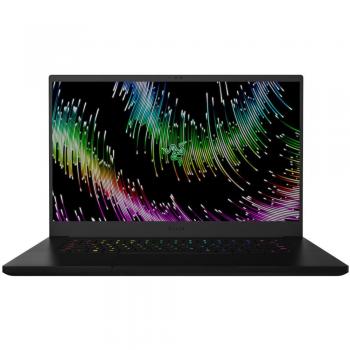
Razer Blade 15 Base Gaming Laptop


Sponsored This site contains affiliate links for which we may receive compensation. More information
 svp.co.uk
GradeB - RAZER Blade 15 Base 15.6in Gaming Laptop - Intel i7-9750U 16GB RAM 512GB SSD RTX 2060 6GB - Windows 10 | Full HD screen / 144 Hz
1220.95 GBP
Price updated on: 07-10-2025 12:16:56
1220.95 GBP
Price updated on: 07-10-2025 12:16:56 Find other available options:

| Identifiers | |
|---|---|
| MPN | Razer RZ09-03006W92-R3W1 |
| Dimensions / Weight | |
| Key Features | |
|
AMD FreeSync Technology Indicates whether the product supports AMD FreeSync, an adaptive sync technology that synchronizes a display’s refresh rate with a graphics card to reduce screen tearing and stuttering.
|
No |
|
Battery pack The total amount of electrical energy a battery can store, expressed in watt‑hours (Wh). This value indicates how long the device can operate between charges and allows users to compare power supplies across products.
|
65Wh |
|
Card reader A list of the card reader capabilities supported by a device. Each entry describes a specific type of memory card or interface that the product can read, such as SD, microSD, MMC, or USB On‑The-Go. If a device has no card reader, the list is empty.
|
No |
|
Colours A colour is a visual attribute that describes the hue or shade of an object or surface. It can be a single dominant colour, a combination of colours, or a range such as "Black, White". The value may be expressed in common names (e.g., Black, Silver) or descriptive terms (e.g., One Colour, Assorted).
|
Black |
|
CPU Boost The maximum operating frequency that a CPU can reach when its turbo or boost feature is active, expressed in hertz (Hz). This value indicates the peak performance capability of the processor under load and helps users compare how fast a CPU can run beyond its base clock speed.
|
4.5 GHz |
|
CPU Cores The total count of physical processing units (cores) present in a central processing unit (CPU). This integer value indicates how many independent execution threads the CPU can handle simultaneously, influencing multitasking performance and computational throughput.
|
6 Core |
|
CPU Speed The maximum operating frequency of a central processing unit (CPU), expressed in hertz (Hz). This value indicates how many cycles per second the CPU can execute under normal conditions and is useful for comparing performance potential across different models.
|
2.6 GHz |
|
CPU Threads The total number of independent execution units (threads) that a CPU can handle simultaneously. This value indicates how many parallel tasks the processor can process at once, affecting multitasking performance and workload distribution.
|
12 |
|
CPU Type The specific name or designation of the central processing unit installed in a device, such as "Intel Core i5-11400" or "AMD Ryzen 7 5800X." It identifies the exact processor variant and helps users compare performance, compatibility, and features across products.
|
Intel Core i7 9750H |
|
Docking station included Indicates whether the product comes with a docking station included in its standard package. A value of "Yes" means a docking station is supplied, while a value of "No" indicates that no docking station is provided and the user must obtain one separately.
|
No |
|
GPU Cores The total count of processing cores present in a graphics processing unit (GPU). This value indicates how many independent execution units are available for parallel rendering, compute tasks, and other GPU‑accelerated operations.
|
1920 |
|
Graphics Boost Clock The maximum operating frequency that a graphics processing unit can reach when its turbo or boost feature is active, expressed in hertz (Hz). This value indicates the peak performance capability of the GPU under load and helps users compare how fast a graphics card can run beyond its base clock speed.
|
1200 MHz |
|
Graphics chipset The exact model or designation of the graphics processing unit (GPU) installed in a device, such as "Intel UHD Graphics 620", "NVIDIA GeForce RTX 2070" or "AMD Radeon RX 580". It identifies the specific GPU variant used for rendering and video processing, allowing users to compare visual performance and compatibility across products.
|
NVIDIA GeForce RTX 2060 |
|
Graphics Core Clock The maximum operating frequency of the graphics processing unit (GPU), expressed in hertz (Hz). This value indicates how many cycles per second the GPU can execute and helps users compare visual performance across different models.
|
960 MHz |
|
Graphics Memory Bus The width of the data bus that connects the graphics processing unit (GPU) to its memory, expressed in bits. A wider bus allows more data to be transferred per clock cycle, which can improve rendering performance and bandwidth between the GPU and its dedicated video memory.
|
192 Bit |
|
Graphics Memory Clock The operating frequency of the graphics memory (VRAM) in a device, expressed in hertz (Hz). It indicates how many cycles per second the video RAM can perform and is useful for comparing performance potential across different GPUs or integrated graphics solutions.
|
14000 MHz |
|
Keyboard Type/Language The form factor, connectivity, and illumination features of a product’s keyboard, such as Chiclet, mechanical, backlit with RGB or single‑color LEDs, or non‑backlit. It indicates how the keys are arranged, whether they provide visual feedback, and what lighting options are available.
|
Chiclet / UK / Illuminated |
|
Maximum Memory Supported The largest amount of random‑access memory that a device or component can support, expressed as a data size such as megabytes or gigabytes. It indicates the upper limit of memory capacity for active processes and multitasking performance.
|
32GB |
|
Memory The amount of random‑access memory (RAM) physically installed in a device, expressed as a data size such as megabytes or gigabytes. It indicates how much information the system can hold for active processes and affects multitasking performance.
|
16GB |
|
Memory speed The maximum operating frequency of a memory module, expressed in hertz (Hz). It indicates how many cycles per second the RAM can perform and is typically reported as MHz or GHz. This value helps users compare performance potential across different memory types and system configurations.
|
DDR4 - 2666 |
|
Memory type The classification of the memory technology used in a device, such as DDR4 SDRAM, LPDDR3, GDDR6, or other variants. It indicates the architecture and generation of the RAM modules installed or supported by the product.
|
DDR4 |
|
Multi-GPU NVIDIA SLi Indicates whether the product supports NVIDIA SLI (Scalable Link Interface) for connecting multiple GPUs in parallel. The value is "Yes" if the device can configure or operate with SLI, and "No" otherwise.
|
No |
|
NVIDIA G-Sync Technology Indicates whether the product supports NVIDIA G‑Sync technology, which dynamically synchronizes a monitor’s refresh rate with the graphics card to eliminate screen tearing and reduce input lag.
|
No |
|
NVIDIA Max-Q Design Indicates whether a product incorporates NVIDIA Max‑Q design, a technology that optimizes power consumption and thermal performance for mobile GPUs while maintaining gaming or professional graphics capabilities.
|
No |
|
Operating system The operating system installed on the device, indicating the software platform that manages hardware resources and provides services for applications. It can be a commercial OS such as Windows or macOS, an open‑source distribution like Linux, or a proprietary firmware used in embedded devices.
|
Windows 10 Home (64 bit) |
|
Optical drive The type of optical drive included in the product, such as DVD‑RW, DVD‑Writer, or no optical drive. This attribute indicates whether the device can read or write optical media and specifies the particular model or capability when available.
|
N/A |
|
Overclockable CPU Indicates whether the central processing unit (CPU) can be run at a higher clock speed than its default specification, typically to achieve better performance.
|
No |
|
Rays cast The number of rays emitted by a graphics component per second, expressed in billions (Giga Rays/sec). This metric indicates the rendering throughput capability of the device and is useful for comparing performance across similar models.
|
3.5 Giga Rays/s |
|
Real-time ray tracing Indicates whether a graphics card or device can perform real‑time ray tracing, a rendering technique that simulates realistic lighting and shadows by tracing the paths of light rays in a virtual scene. A value of "Yes" means the hardware and drivers support this feature for games, simulations, or professional applications; "No" indicates it is not supported.
|
Yes |
|
Refresh rate The number of times per second that a display updates its image, expressed in hertz (Hz). It indicates the smoothness and responsiveness of motion on the screen; higher rates generally provide a more fluid visual experience.
|
144 Hz |
|
Resolution The pixel dimensions that a device can output or support, expressed as width by height (e.g., 1920x1080). It indicates the maximum resolution available for display content on the product.
|
1920x1080 |
|
Screen type The pixel dimensions of a display or image, expressed as width by height (e.g., 1920x1080). It indicates how many pixels are used to render the visual content and is commonly used for monitors, TVs, smartphones, cameras, and digital images.
|
IPS-Level |
|
Security Features A list of security‑related capabilities that a device supports, such as encryption methods, authentication mechanisms, physical locks, and network security protocols. Each entry describes a distinct feature or combination of features that the product offers.
|
TPM 2.0 |
|
Solid state drive interface The physical or logical interface used by a solid‑state drive to connect with other components, such as M.2 PCIe, NVMe, SATA, U.2, or other standard connections.
|
M.2 |
| SSD Capacity | 524288 MB |
|
VR Ready Indicates whether the graphics card is compatible with virtual reality systems and can support VR applications or experiences.
|
Yes |
|
Webcam The pixel resolution of a built‑in camera on a device, expressed in megapixels (e.g., 5.0 MP). It indicates the image detail capability for video calls, recordings, and other visual functions.
|
Yes |

Razer is a brand that specializes in gaming peripherals, including mice, keyboards, headsets, and controllers. The company was founded in 1998 by Min-Liang Tan and Robert Krakoff, and is headquartered in San Francisco, California. Razer is one of the most popular gaming brands in the world, and its products are used by professional gamers and enthusiasts alike.