Samsung Galaxy A8 (2018) SM-A530F


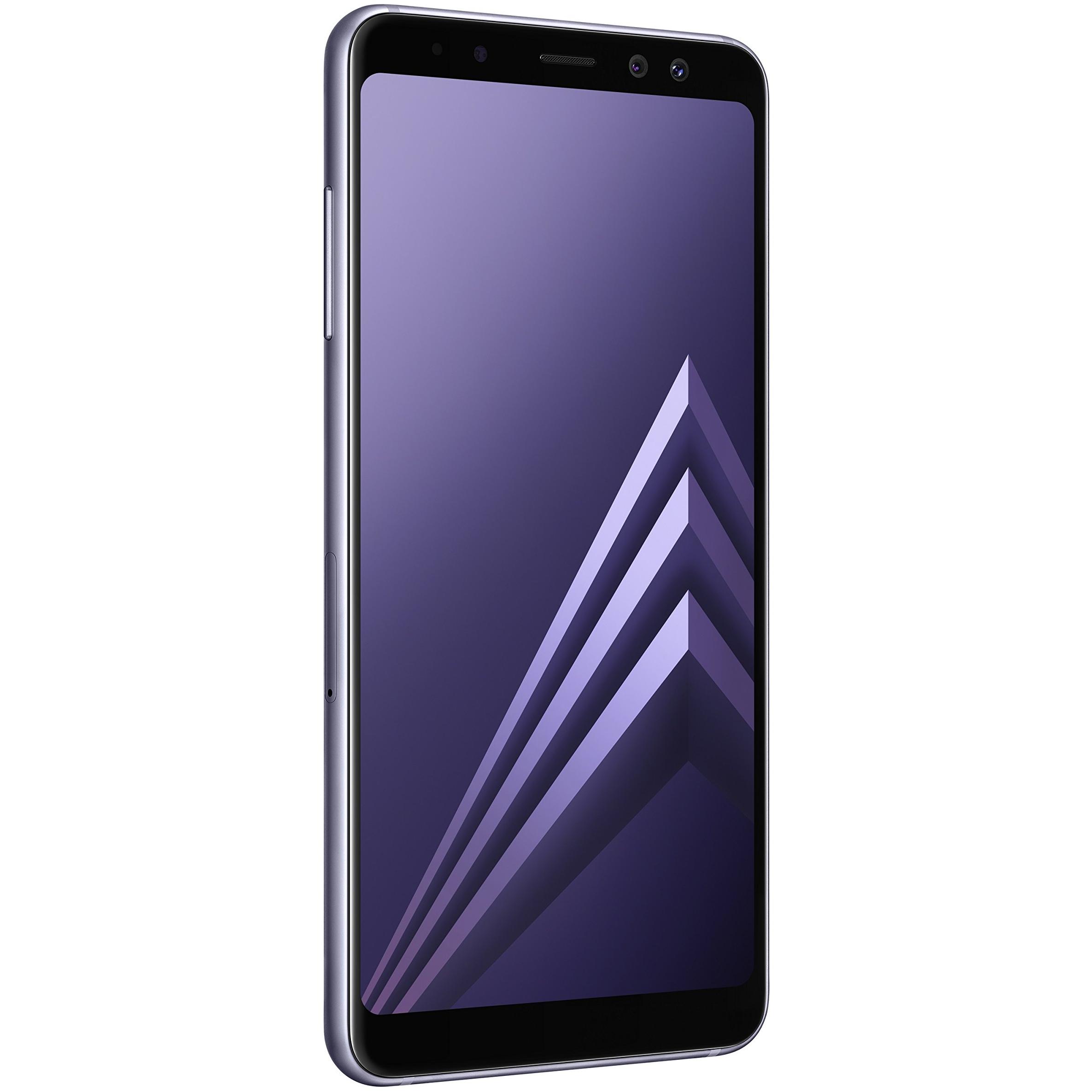
Sponsored This site contains affiliate links for which we may receive compensation. More information

Find other available options:

| Identifiers | |
|---|---|
| Model | Samsung SM-A530FZVABTU |
| MPN | Samsung SM-A530FZVABTU |
| Dimensions / Weight | |
| Key Features | |
|
2G Band A comma‑separated list of the cellular network frequency bands that a device supports in the 2G GSM technology. Each band is typically identified by its numeric designation (e.g., 850 MHz, 900 MHz, 1800 MHz, 1900 MHz). The attribute indicates which specific radio frequencies are available for mobile connectivity.
|
GSM 850/900/1800/1900 |
|
3g UMTS band Una lista separada por comas de las bandas de frecuencia 3G (UMTS) que un dispositivo móvil soporta, como "Band 1", "Band 2" o "Band 5". Cada elemento identifica una banda específica y permite al usuario conocer la compatibilidad del teléfono con redes móviles 3G.
|
Band 1, Band 2, Band 4, Band 5, Band 8 |
|
3G UMTS Frequency A comma‑separated list of the radio frequency bands (in MHz) that a mobile device can receive or transmit on the 3G UMTS network. The values represent individual frequency bands and help users determine compatibility with carriers and coverage areas.
|
2100, 1900, 1700, 850, 900 |
|
64-bit architecture Indicates whether the product can run or is compatible with a 64‑bit processor architecture, allowing it to execute operating systems and applications that require 64‑bit processing.
|
Yes |
|
Aspect ratio The proportion between the width and height of a display, image or video, expressed as two numbers separated by a colon (e.g., 16:9). It indicates whether content is designed for widescreen, square, or other aspect ratios.
|
18.5:9 |
|
Body colour The visual hue or shade that characterises the exterior surface of a product, such as a mobile phone, printer, appliance or other consumer item. It is expressed using common colour names (e.g., "Black", "White", "Gold") and represents the dominant appearance that customers will see when viewing the product.
|
Orchid grey |
|
Camera modes A list of the different shooting or recording settings available on a camera, such as night mode, slow‑motion video, manual mode, beauty mode, and other specialized modes that alter image capture parameters.
|
Night mode, wide selfie mode, Beauty mode, Live Focus mode |
|
Capacity The total amount of space or volume that a product can hold, expressed in an appropriate unit such as GB, MB, TB for digital storage or L, ml, cl for liquid capacity. This attribute helps users compare how much content a device or container can accommodate.
|
3000 mAh |
|
Clock speed The maximum operating frequency of a central processing unit (CPU) as specified by the manufacturer, expressed in hertz (Hz). This value indicates how many cycles per second the CPU can execute under normal conditions and is useful for comparing performance potential across different models.
|
2.2 GHz |
|
Colour depth The number of bits used to represent each pixel’s colour on a display or image, indicating how many distinct colours can be shown. A higher bit count allows smoother gradients and more accurate colour reproduction.
|
16.7 million colours |
| Compliant Standards | IP68 |
|
Data transmission A comma‑separated list of the physical or logical interfaces through which a device can send or receive data, such as cellular technologies (GPRS, LTE), wired connections (USB, HDMI) or wireless protocols (Wi‑Fi). It indicates all available data transfer options for the product.
|
GPRS, EDGE, HSDPA, HSUPA, HSPA+, FDD-LTE, TDD-LTE |
|
Depth The linear measurement of an object from front to back or top to bottom, expressed in a physical unit such as millimeters, centimeters, inches, etc. It indicates how deep the item is and can be used for fitting, compatibility, or spatial planning.
|
8.4 mm |
|
Diagonal size The diagonal measurement of a display screen expressed in inches or centimeters. It indicates the overall visual area available for content and is commonly used to compare monitors, televisions, laptops, tablets, and other electronic devices.
|
5.6" |
|
Digital zoom Represents the multiplier that indicates how many times an image or field of view is enlarged by digital zoom. The value is expressed as a number without units, such as "4x" or "1.5x", where the numeric part indicates the factor of increase.
|
4 |
|
Display resolution The pixel dimensions of a display or image, expressed as width by height (e.g., 1920x1080). It indicates how many pixels are used to render visual content and is commonly used for monitors, TVs, smartphones, cameras, and digital images.
|
2220 x 1080 pixels |
|
Face detection Indicates whether the device is capable of detecting one or more faces in an image or video stream. A value of "Yes" means that face detection functionality is built into the product, while a value of "No" indicates its absence.
|
Face detection |
|
Focus adjustment Specifies whether the camera’s focusing system operates automatically or requires manual adjustment. Common values include "Auto", "Manual", and combinations such as "Auto/Manual".
|
Automatic |
|
Form factor Specifies the physical configuration or design of a product, such as ATX, Micro‑ATX, Mini‑ITX, tower, case with cover, etc. It describes how the device is built and what mounting or expansion options it supports.
|
Touch |
|
Height The vertical dimension of a product measured from its lowest to highest point. It is expressed in a physical unit such as millimetres, centimetres or inches and applies to any item where height is relevant, including books, electronics, furniture and other objects.
|
149.2 mm |
|
Included accessories A list of items that come with the product as part of its standard package. Each entry describes a component or accessory such as cables, adapters, batteries, or manuals. The list helps customers understand what they will receive without needing to purchase additional accessories.
|
Power adapter |
|
Input device A list of the types of input devices that a product supports, such as "Keyboard", "Touch screen", or "Multi-touch". Each value represents a distinct input method that can be used with the device, allowing users to understand which interaction options are available.
|
Multi-touch |
|
Integrated Components A list of hardware or software features that are built into a device, such as cameras, microphones, radios, sensors, graphics processors, or other integrated modules. The value is a comma‑separated collection of component names and can include optional descriptors (e.g., "Bluetooth interface", "FM radio"). This attribute helps users identify the native capabilities available without external accessories.
|
Rear-facing camera, voice recorder, navigation, dual front-facing camera, digital player |
|
Intelligent assistant Indicates whether the product supports an intelligent assistant feature, such as voice control or AI‑driven assistance. The value is a simple yes/no answer that tells users if the device can interact with assistants like Alexa, Google Assistant, Siri, or similar services.
|
Bixby |
|
Internal memory capacity The total amount of digital storage available inside the device for holding data, applications and media, expressed as a numeric value with an appropriate unit such as GB or MB. This attribute indicates how much information can be stored on the internal flash memory component and helps users compare devices based on their built‑in storage capacity.
|
32 GB |
|
Lens aperture The f‑number (aperture value) of a camera lens or optical system, indicating the size of the aperture opening. It determines how much light enters the sensor and affects depth‑of‑field. Values are typically expressed as a numeric value prefixed with "F" (e.g., F1.2, F2.8) or as a single numeric value when the "F" is omitted.
|
F/1.9 |
|
Light source The main illumination source used by the product, such as LED, laser, CCFL, or other light-emitting technologies. It indicates whether the device uses a single light source or multiple sources and helps users understand the lighting characteristics of the item.
|
LED flash |
|
Messaging services A list of messaging protocols or services that the product can send and receive, such as SMS, MMS, e‑mail, push notifications, iMessage, WhatsApp, Telegram, Signal, and other supported instant‑messaging applications.
|
SMS, MMS |
|
Navigation A list of satellite navigation systems integrated into the device, such as GPS, GLONASS, BeiDou, Galileo or combinations thereof. The value indicates which positioning services are supported and can be used for location-based features.
|
GPS, GLONASS, BeiDou |
|
Operating system The operating system installed on the device, indicating the software platform that manages hardware resources and provides services for applications. It can be a commercial OS such as Windows or macOS, an open‑source distribution like Linux, or a proprietary firmware used in embedded devices.
|
Android 7.1.1 Nougat |
|
Pixel density The number of pixels per inch on a display, expressed as points‑per‑inch (ppi). This metric indicates how sharp and detailed the screen appears, allowing comparison across monitors, smartphones, tablets, and other pixelated devices.
|
440 ppi |
|
Processor core qty The total count of physical processing units (cores) in a device’s central processing unit (CPU). A higher core count generally allows better multitasking and parallel performance across compatible software.
|
8-core |
|
Processor number The unique model designation of a computer processor, such as "8250U" or "i7-1165G7". It identifies the specific CPU used in a device and can be compared across products to infer performance, generation, and compatibility.
|
7885 |
|
Protection A comma‑separated list of protective features that a product offers, such as resistance to dust, water, shock, heat, or other environmental factors.
|
Dustproof, waterproof |
|
SAR Value The Specific Absorption Rate (SAR) indicates the rate at which a device absorbs radiofrequency energy, expressed as watts per kilogram (W/kg). It is used to assess potential exposure levels for users and to compare compliance with regulatory limits.
|
1.25 W/kg (body) / 0.241 W/kg (head) |
|
Security devices A list of biometric authentication methods that the device supports, such as fingerprint readers and face recognition systems. Each entry describes a distinct biometric capability available for user identification or access control.
|
Fingerprint reader, face recognition |
|
Sensor Resolution The pixel resolution of a camera sensor, expressed in megapixels (e.g., 5 MP) or as width × height. It indicates the level of detail the sensor can capture for photos and videos.
|
16 Megapixel |
|
Sensor size The physical format or size of a camera’s image sensor, expressed as a descriptive label such as "Full Frame", "APS‑C (Crop)", "Micro Four Thirds" or an inch‑based designation like "1/3.1". It indicates the overall area available for light capture and influences resolution, depth of field and lens compatibility.
|
1/3.1" |
|
SIM Card Slot Qty The count of physical SIM card slots available on a device for inserting SIM cards. It indicates how many separate SIM cards can be used simultaneously or swapped between the device and other devices.
|
Single-SIM |
|
Sim card type The physical form factor of the SIM card that a device can accept, such as Nano‑SIM, Micro‑SIM, Mini‑SIM, or eSIM. It indicates which size and technology of SIM card is compatible with the product.
|
Nano SIM |
|
Special effects A comma‑separated list of photographic or image filters that the device can apply, such as HDR, Grid Line, Spot Colour, Black & White, Sepia, and other creative styles. Each entry represents a distinct effect available for users to select in the camera or photo editing settings.
|
HDR, Grid Line |
|
Supported Digital Audio Standards List of the digital audio formats that a product can play or record, such as WAV, MP3, AAC, FLAC, etc. Each value represents a codec or file extension that the device’s hardware or software supports for audio playback and recording.
|
WAV, WMA, AAC, AMR, MP3, FLAC, XMF, OGG, MIDI, M4A, MXMF, OGA, 3GA, AWB, IMY, RTTTL, RTX, OTA, MID |
|
Supported Digital Video Standards A list of the digital video standards that a device can play or record, including both codec names and file extensions (e.g., MPEG‑4, AVI, WMV). Each entry represents a supported combination of compression technology and container format.
|
MKV, FLV, AVI, MPEG-4, WMV, ASF, 3GP, M4V, WebM, 3G2 |
|
Supported Flash Memory Cards A list of the removable memory card types that a device can read or write, such as microSD, microSDHC, microSDXC, SD, SDHC, and SDXC. The values are typically separated by commas and may include size limits (e.g., up to 512 GB). This attribute helps users determine which external storage media are compatible with the product.
|
microSDXC - up to 256 GB |
|
Supported social networks and blogs Indicates whether the product can connect to or share content on social networking sites and blogging platforms such as Facebook, Twitter, Instagram, LinkedIn, or others.
|
Yes |
|
Talk time The maximum continuous duration a device can handle voice communication before needing recharge or power interruption, expressed in standard time units such as minutes or hours.
|
1140 minutes |
|
Technology The chemical composition of a battery that determines its performance, energy density, and suitability for different applications. Common chemistries include Lithium‑Ion, Nickel‑Metal Hydride, Alkaline, Lead‑Acid, and others.
|
WCDMA (UMTS) / GSM |
|
Type The general category or style of the product, such as laptop, printer cartridge, or cooling fan. It helps buyers quickly identify the nature of the item and compare similar products.
|
Samsung Exynos |
|
User Memory The amount of internal storage available for the user to save files, apps, and media, expressed as a data size such as megabytes (MB) or gigabytes (GB). It indicates how much information can be stored on the device’s built‑in flash memory.
|
22.7 GB |
|
Video resolutions The pixel dimensions of a video image, expressed as width by height (e.g., 1920x1080). It indicates the resolution that a device can display or record.
|
1920 x 1080 (1080p) at 30 fps, 1280 x 720 (720p) at 30 fps |
|
Water resistance The maximum depth or pressure a product can withstand without leaking or damage, expressed in meters or atmospheres. It indicates how well the item resists water penetration during use.
|
1.5 m |
|
Weight The mass of the product expressed in a standard unit such as grams or kilograms. It represents how heavy the item is and can be used for shipping calculations, handling instructions, or consumer information.
|
172 g |
|
Width The horizontal measurement of a product, expressed in a linear unit such as millimetres or inches. It indicates how wide the item is from one side to the other and is used for sizing, fitting, and compatibility purposes.
|
70.6 mm |
|
Wireless Interface List of wireless communication technologies supported by a product, such as Wi‑Fi standards (e.g., IEEE 802.11b/g/n/ac), Bluetooth versions, NFC, and other radio protocols. The value is a comma‑separated textual list that identifies all wireless capabilities the device offers.
|
NFC, IEEE 802.11a/b/g/n/ac, Bluetooth 5.0 LE, ANT+/ANT |

Samsung is a South Korean multinational conglomerate company. It is the world's largest information technology company, and the world's second-largest semiconductor company. Samsung Electronics, a subsidiary of Samsung Group, is the world's largest information technology company, and the world's second-largest semiconductor company.


