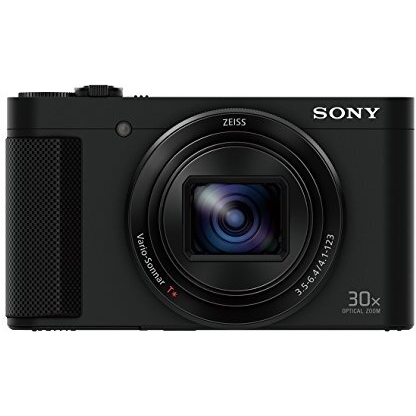
Sony DXC‑HX90V 30× Optical Zoom Mini Camera







Sponsored This site contains affiliate links for which we may receive compensation. More information
Find other available options:

| Identifiers | |
|---|---|
| Model | Sony DSC-HX90VB.CE3 |
| MPN | Sony DSC-HX90VB.CE3 |
| Dimensions / Weight | |
| Key Features | |
|
AC adapter included Indicates whether the product comes with an AC power adapter included in the package. A value of "Yes" means a charger is supplied, while "No" indicates that no charger is provided and the user must obtain one separately.
|
Yes |
|
Auto focusing AF modes A list of the available autofocus modes that a camera or imaging device can use, such as continuous autofocus, single-shot autofocus, face detection, tracking autofocus, contrast‑detection autofocus, servo‑autofocus, AI focus, and other manufacturer‑specific combinations. Each mode is represented by a free‑text string.
|
Continuous Auto Focus, Single Auto Focus |
|
Batteries included Indicates whether the product comes with batteries included in the package. A value of "Yes" means that batteries are supplied, while a value of "No" indicates that no batteries are provided and must be purchased separately.
|
Yes |
|
Battery capacity The total amount of electrical energy a battery can store, expressed as a numeric value with an appropriate unit such as mAh or Ah. It indicates how long the device can operate between charges and allows users to compare power supplies across products.
|
1240 mAh |
|
Battery life The duration a device can operate on a single charge before needing to be recharged, expressed in various time units such as hours, days or months.
|
390 shots |
|
Battery technology The chemical composition or classification of a battery, such as lithium‑ion, lithium‑polymer, nickel‑metal hydride, sealed lead acid, alkaline, zinc‑air, etc. It indicates the type of electrochemical reaction that stores and delivers energy in the device.
|
Lithium-Ion (Li-Ion) |
|
Battery type The chemical composition or classification of a battery, such as alkaline, lithium‑ion, NiMH, or lead‑acid. It indicates the energy storage technology used in the product and helps users identify compatibility with devices that require specific battery chemistries.
|
NP-BX1 |
|
Battery voltage The electrical potential difference supplied to or measured across a battery’s terminals, expressed in volts (V). It represents the battery’s nominal operating voltage and is used to match power sources, chargers, and devices that require a specific voltage level.
|
3.6 V |
|
Battery weight The mass of a battery expressed in a standard unit such as grams or kilograms. It indicates how heavy the battery is and can be used for shipping calculations, handling instructions, or consumer information.
|
25 g |
|
Built-in microphone Indicates whether the product includes at least one built‑in microphone. A value of "Yes" means that the device has an integrated microphone, while "No" indicates it does not.
|
Yes |
|
Bundle with lens Indicates whether a camera lens is supplied as part of the product bundle. A value of "Yes" means a lens is included, while a value of "No" indicates that no lens is provided and must be purchased separately.
|
Yes |
|
Cables included A list of the cable types that are supplied with the product, such as USB, HDMI, VGA, DisplayPort, LAN (RJ‑45), SATA, audio or other relevant connectors.
|
AC, Micro-USB |
|
Camera shutter speed The duration that a camera’s shutter remains open to expose the sensor or film, expressed in seconds or fractions of a second (e.g., 1/2000 s). It determines how motion is captured and affects exposure; shorter times freeze action while longer times allow more light for low‑light situations.
|
2000 s |
|
Camera type The general classification of a camera, such as compact, single‑lens reflex (SLR), mirrorless interchangeable lens camera (MILC), bridge, or video camera. It indicates the form factor and primary use case of the device.
|
Sony Cyber-shot DSC-HX90V |
|
Colour The colour or combination of colours that a product is available in, expressed as common names such as "Black", "Silver" or comma‑separated lists like "Black, White". It indicates the visual appearance of the item for consumers.
|
Black |
|
Compatible memory cards List of the memory card types that a device can read or write, such as MicroSD (TransFlash), SD, MMC, CompactFlash, and others. Each value represents a format that the device’s slot or reader supports for storage expansion.
|
MicroSD (TransFlash),MicroSDHC,MicroSDXC |
|
Depth The linear measurement of an object from front to back or top to bottom, expressed in a physical unit such as millimeters, centimeters, inches, etc. It indicates how deep the item is and can be used for fitting, compatibility, or spatial planning.
|
35.4 mm |
|
Digital zoom Represents the multiplier that indicates how many times an image or field of view is enlarged by digital zoom. The value is expressed as a number without units, such as "4x" or "1.5x", where the numeric part indicates the factor of increase.
|
120 x |
|
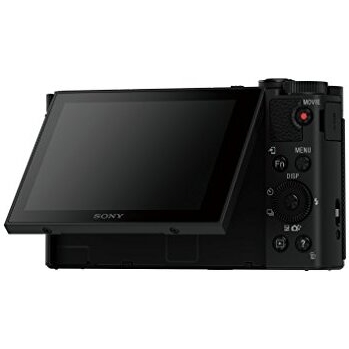
Display The visual technology used by the product’s screen, such as LCD, LED, OLED, TFT or analog. It indicates the underlying display panel that determines image quality, color reproduction and power consumption.
|
LCD |
|
Display aspect ratio The proportion between the width and height of a display or image, expressed as two numbers separated by a colon (e.g., 16:9). It indicates whether content is designed for widescreen, square, or other aspect ratios.
|
4:3 |
|
Display Diagonal The measurement of a display’s diagonal, expressed in inches or centimeters. It represents the overall visual area available for content and is commonly used to compare monitors, televisions, laptops, tablets, and other electronic devices.
|
7.62 cm (3") |
| Display diagonal | 3.0" |
|
Display resolution The pixel dimensions of a display or image, expressed as width by height (e.g., 1920x1080). It indicates how many pixels are used to render visual content and is commonly used for monitors, TVs, smartphones, cameras, and digital images.
|
921600 pixels |
|
Energy Star certified Indicates whether the product has been certified by Energy Star, a recognized standard for energy efficiency in appliances and electronics.
|
No |
|
Fastest camera shutter speed The maximum duration that a camera’s shutter remains open to expose the sensor or film, expressed in seconds or fractions of a second (e.g., 1/4000 s). It determines how motion is captured and affects exposure; shorter times freeze action while longer times allow more light for low‑light situations.
|
1/2000 s |
|
Flash modes A list of the available settings for a camera or imaging device’s flash system, such as Auto, Manual, Flash off, Flash on, Red‑eye reduction, Slow synchronization, and other manufacturer‑specific options. Each value represents a selectable mode that determines how the flash is activated during image capture.
|
Auto, Flash off, Flash on, Slow synchronization |
|
Flash range The minimum and maximum distance, expressed in meters, at which a camera’s flash can effectively illuminate a subject or scene. This range indicates the effective reach of the flash for proper exposure.
|
0.3 - 5.4 m |
|
Flash range (tele) The maximum distance at which the camera’s flash can effectively illuminate a subject, expressed as a numeric range in meters (e.g., "1 - 3 m"). This attribute indicates how far the flash light reaches under typical shooting conditions.
|
2.5 - 3 m |
|
Focal length range The minimum and maximum focal lengths that a camera lens or optical system can cover, expressed in millimetres (mm). It indicates the zoom capability of the device and helps users understand the field‑of‑view range available.
|
4.1 - 123 mm |
|
Focus adjustment Specifies whether the camera’s focusing system operates automatically or requires manual adjustment. Common values include "Auto", "Manual", and combinations such as "Auto/Manual".
|
Auto/Manual |
|
Full HD Indicates whether the product is capable of displaying or transmitting video at Full HD resolution (1920 × 1080 pixels). A value of "Yes" means that Full HD functionality is supported, while a value of "No" indicates it is not available.
|
Yes |
|
GPS Indicates whether the product includes built‑in GPS functionality, allowing it to determine geographic location without external devices.
|
Yes |
|
HD type The pixel dimensions of a screen’s display expressed as width by height (e.g., 1920×1080). It indicates the number of pixels that can be shown on the monitor or device, affecting image sharpness and clarity.
|
Full HD |
|
HDMI A list of the HDMI ports available on the product, each entry indicating the number of ports and their specific HDMI version or additional features (e.g., "2 x HDMI 2.0b", "1 x HDMI 1.4 with CEC"). This attribute helps users understand both the quantity and capabilities of the HDMI connections.
|
Yes |
| HDMI connector type | Micro |
|
Height The vertical dimension of a product measured from its lowest to highest point. It is expressed in a physical unit such as millimetres, centimetres or inches and applies to any item where height is relevant, including books, electronics, furniture and other objects.
|
58.1 mm |
|
Image formats supported A list of the file extensions and codecs that a product can read or write for images. Each value represents a valid format such as JPG, PNG, BMP, GIF, HEIF, WebP, etc., and may include multiple formats separated by commas.
|
EXIF,JPG |
|
Image sensor size The diagonal measurement of the image sensor in a camera or imaging device, expressed in inches or millimeters. It indicates the overall active area available for capturing light and is commonly used to compare sensor sizes such as 1/2.3", 1/1.7", APS‑C, Full‑Frame, etc.
|
2.3" |
|
Image stabilizer Indicates whether the device includes an image stabilization system, either optical or electronic, that reduces camera shake to produce sharper photos and smoother video recordings.
|
Yes |
|
ISO Sensitivity The ISO sensitivity setting of a camera, indicating the sensor’s sensitivity to light. Values are typically numeric (e.g., 100, 200, 400) and may include an "Auto" option where the camera selects the appropriate ISO automatically.
|
12800 |
|
Light exposure correction The adjustment applied to a camera’s sensor exposure to compensate for lighting conditions, expressed in Exposure Value (EV) units. Positive values increase brightness, negative values decrease it, and the step size indicates how finely the adjustment can be tuned.
|
3 EV ( |
|
Light exposure modes The set of camera settings that determine how the sensor is exposed to light. Common values include Auto, Aperture priority, Shutter priority, Manual and combinations thereof. Each value represents a selectable mode that controls shutter speed, aperture, ISO or a combination of these parameters.
|
Aperture priority AE, auto, manual, shutter priority AE |
|
Light metering The method used by a camera to determine the appropriate exposure settings based on the scene’s lighting conditions. Common modes include Centre‑weighted, Spot, Evaluative (Multi‑pattern), and Highlight‑weighted. The value is typically a single mode or a comma‑separated list of modes that can be applied simultaneously.
|
Centre-weighted, Evaluative (Multi-pattern), Spot |
|
Maximum image resolution The highest pixel dimensions of an image or display that a product can output, capture, or support, expressed as width by height (e.g., 1920x1080). It indicates the maximum resolution available for visual content on the device.
|
4896x3264 |
|
Megapixel Indica il numero totale di megapixel presenti nel sensore della fotocamera principale del dispositivo, espresso tipicamente come valore numerico (es. 12 MP). Un valore più alto corrisponde a una maggiore capacità di dettaglio e qualità dell’immagine.
|
18.2 MP |
|
Near field communication Indicates whether the product supports Near‑Field Communication (NFC), a short‑range wireless technology that allows data exchange between devices when they are in close proximity.
|
Yes |
|
Photo effects A list of photographic effects that can be applied to images, such as black‑and‑white, sepia, vivid, or other stylistic filters. Each value represents a distinct effect that may be available in the product’s software or hardware.
|
Black&White |
|
Photographer type The skill or experience level of the photographer, indicating whether they are a beginner, advanced, expert, or other proficiency category. This attribute helps buyers understand the expected expertise behind the product and can guide them in selecting equipment suitable for their own skill level.
|
Advanced |
|
Power source type The type of electrical supply that powers the device, such as mains electricity, batteries, USB power, or a combination of these options.
|
Battery |
|
Quick start guide Indicates whether a quick‑start guide is provided with the product. A value of "Yes" means that a brief, introductory manual or overview is included to help users get started quickly; "No" indicates that no such guide is supplied.
|
Yes |
|
Rechargeable Indicates whether the product contains a rechargeable battery or can be recharged via an external charger, allowing operation without disposable batteries.
|
Yes |
|
Scene modes A set of predefined camera settings that automatically adjust exposure, white balance, focus and other parameters to suit specific shooting situations such as portrait, landscape, night or sports. Each value represents a selectable mode that the user can choose from when capturing images.
|
Beach, Fireworks, Landscape, Night, Night portrait, PET, Portrait, Snow, Sports, Sunset |
|
Self-timer Indicates whether the device’s self‑timer function is available and can be activated by the user.
|
5.10 s |
|
Self-timer delay The amount of time, in seconds, that the device waits after a trigger before performing an action such as taking a photo or starting a recording. It represents the delay period configured by the user and is expressed as a numeric value or a set of values separated by commas.
|
2,5,10 s |
|
Sensor type The type of sensor technology used by a device to detect and measure physical quantities such as light, temperature, motion or pressure. Common values include CMOS, CCD, CIS, BSI, laser, ultrasonic, and other specialized sensor names.
|
CMOS |
|
Touchscreen Indicates whether a device has a touchscreen interface that can detect touch input. The value is "Yes" if the device includes a functional touchscreen, and "No" otherwise.
|
No |
|
USB version The specific version of the USB standard that a product supports, expressed as a generation number and optional descriptive suffix (e.g., "3.2 Gen 1" or simply "3.0"). This attribute indicates the data‑transfer capabilities and compatibility with USB devices.
|
2 |
|
USB Version The generation and version of the USB standard supported by a product, expressed as a numeric revision followed optionally by descriptive suffixes such as "Gen 1" or "Gen 2". This attribute indicates the maximum data transfer rate and compatibility with USB devices.
|
2.0 |
|
Variangle LCD Specifies the standard paper dimension used by a product or component, such as A4, A3, Letter, etc. The value is a free‑text label that identifies the size category without units.
|
A4 |
|
Video recording Indicates whether the product has the capability to record video. A value of "Yes" means the device can capture video, while a value of "No" indicates that it cannot.
|
Yes |
|
Viewfinder The type or presence of a viewfinder on the camera. It indicates whether the device has a built‑in optical or electronic viewfinder, and if so, what kind it is (e.g., real image finder, electronic viewfinder, etc.). Values can be "Yes" for a standard viewfinder, "No" when none is available, or a descriptive string that specifies the viewfinder model or feature.
|
Yes |
|
Viewfinder type The type of viewfinder used in a camera or similar device, such as optical, electronic, hybrid, pentaprism, or pentamirror. It indicates how the photographer sees through the camera and can affect image quality, field of view, and usability.
|
Electronic |
|
Weight The mass of the product expressed in a standard unit such as grams or kilograms. It represents how heavy the item is and can be used for shipping calculations, handling instructions, or consumer information.
|
218 g |
|
White balance The set of white‑balance settings available for a camera or imaging device. Each mode adjusts the color temperature and tint to compensate for different lighting conditions (e.g., Auto, Cloudy, Daylight, Flash, Tungsten). The attribute may contain a single value or a list of selectable modes.
|
Auto, Cloudy, Custom modes, Daylight, Flash, Fluorescent, Incandescent, Push, Shade |
|
Wi-Fi Indicates whether the product has built‑in Wi‑Fi capability, allowing it to connect to wireless networks without requiring external adapters or dongles.
|
52mm |
|
Width The horizontal measurement of a product, expressed in a linear unit such as millimetres or inches. It indicates how wide the item is from one side to the other and is used for sizing, fitting, and compatibility purposes.
|
102 mm |
|
Wrist strap included Indicates whether the product comes with a wrist strap that can be used to secure or carry it during use. A value of "Yes" means a wrist strap is supplied, while "No" indicates no wrist strap is provided and must be purchased separately.
|
Yes |

SONY is a Japanese multinational conglomerate corporation that specialises in electronics, gaming, entertainment and financial services. The company was founded in 1946 and is headquartered in Tokyo, Japan. SONY is one of the leading manufacturers of electronic products and is well-known for its gaming consoles, televisions and digital cameras.


