Sony VPL-PHZ60 Projector
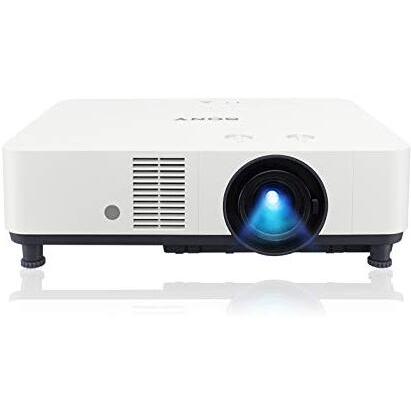


Sponsored This site contains affiliate links for which we may receive compensation. More information
Find other available options:

| Identifiers | |
|---|---|
| MPN | Sony VPL-PHZ60 |
| Dimensions / Weight | |
| Key Features | |
|
AC input voltage The range of alternating current voltage that the product accepts from its power source, expressed in volts (V). It indicates the minimum and maximum supply voltages compatible with the device across different regions.
|
100 - 240 V |
|
Ansi lumens The total luminous intensity of a projector expressed in ANSI lumens, which measures the light output under standardized conditions. This value indicates how bright the projected image will appear and is useful for comparing projectors across different models and use‑case scenarios.
|
6000 ANSI lumens |
|
Application A concise statement of the intended or most suitable use cases for a product, such as the type of environment (indoor or outdoor), activity (gaming, office work, media consumption) or general application category. It helps customers quickly determine whether the item fits their needs.
|
Business projector |
|
Aspect ratio The proportion between the width and height of a display, image or video, expressed as two numbers separated by a colon (e.g., 16:9). It indicates whether content is designed for widescreen, square, or other aspect ratios.
|
16:10 |
|
Builtin speakers The total number of integrated speaker units present in the product. This value indicates how many separate speaker elements are built into the device, helping users compare audio capabilities across models.
|
1 |
|
Colour The colour or combination of colours that a product is available in, expressed as common names such as "Black", "Silver" or comma‑separated lists like "Black, White". It indicates the visual appearance of the item for consumers.
|
Black, White |
|
Colours A colour is a visual attribute that describes the hue or shade of an object or surface. It can be a single dominant colour, a combination of colours, or a range such as "Black, White". The value may be expressed in common names (e.g., Black, Silver) or descriptive terms (e.g., One Colour, Assorted).
|
White |
|
Contrast The contrast ratio is the proportion between the brightest and darkest luminance a display can produce, expressed as a simple fraction such as 1000:1. It indicates how well a screen or projector can differentiate light from dark areas, affecting image clarity and color depth.
|
3000000 : 1 |
|
Current The highest electrical current a device draws from its power source during normal operation, expressed in amperes (A). It indicates the maximum current that the product requires and helps users verify compatibility with power supplies or sockets.
|
4.4 A |
|
Dimensions W x D x H The overall size of a product expressed as width, depth and height in a linear unit such as centimeters or inches. This attribute indicates the physical footprint that the item occupies and helps customers determine whether it will fit into a desired space, shipping container, or storage area.
|
422 x 333 x 100 mm |
|
Ethernet LAN ports Represents the total count of Ethernet LAN (RJ‑45) interfaces available on a product. The value is an integer indicating how many physical Ethernet ports are present, regardless of speed or generation.
|
2 |
|
Focus Specifies the focusing behavior of a camera or imaging device, indicating whether it uses automatic focus, manual focus, or a combination such as auto‑manual. The value is expressed as a free‑text string that describes the mode in use.
|
Manual |
| HDBaseT port | Yes |
| HDMI connector type | Full-size |
|
Horizontal keystone correction The horizontal keystone correction angle indicates the maximum range, expressed as a minimum‑maximum value pair in degrees, that a projector or screen can adjust horizontally to correct keystone distortion without losing image clarity. It helps users understand how much horizontal adjustment is possible and configure the device accordingly.
|
30 ° |
|
Horizontal lens shift The horizontal lens shift indicates the amount by which a projector’s or camera’s optical axis can be moved left or right relative to its mounting position, expressed as a percentage of the projected image width. Positive values move the image to the right, negative values to the left. This adjustment allows fine‑tuning of the projected image without physically repositioning the device.
|
15 % |
|
Image size The measurement of a display’s diagonal, expressed in inches or centimeters. It indicates the overall visual area available for content and is commonly used to compare monitors, televisions, laptops, tablets, and other electronic devices.
|
40" - 300" diag. |
|
Included accessories A list of items that come with the product as part of its standard package. Each entry describes a component or accessory such as cables, adapters, batteries, or manuals. The list helps customers understand what they will receive without needing to purchase additional accessories.
|
RM-PJ8 Remote Commander |
|
Keystone correction horizontal The horizontal keystone correction angle specifies the range of degrees by which a projector or screen can adjust horizontally to correct image distortion without loss of clarity. It is expressed as a minimum‑maximum value, such as –30° to +30°, and applies to any device that supports keystone adjustment.
|
-30 - 30° |
|
Lamp type The classification or technology of a lamp, such as LED, halogen, incandescent, laser, or other variants. The value is a textual label that identifies the light source used by the product and does not include units or numeric quantities.
|
Laser |
|
Market positioning A classification that indicates the target audience or use case for a product, such as Business, Gaming, Home & Office, Education, etc. It helps customers quickly identify which products are best suited to their needs.
|
Presentation |
|
Native resolution The pixel dimensions of a display or image, expressed as width by height (e.g., 1920x1080). It indicates how many pixels are used to render visual content and is commonly applied to monitors, TVs, projectors, laptops, tablets, and smartphones.
|
1920x1200 |
| Noise Level | 37 dB |
|
Number of OSD languages The total number of distinct languages that can be displayed on the screen‑on‑display (OSD) interface of a device, such as a monitor or TV. It indicates how many language options are available for menu navigation, subtitles, and other on‑screen text, allowing users to choose their preferred language when interacting with the product.
|
27 |
|
Operating relative humidity The range of relative humidity (in percentage) within which the product is designed to operate reliably. Values are expressed as a minimum–maximum interval such as "20 - 80 %" and indicate the acceptable environmental moisture level for optimal performance.
|
20 - 80 % |
|
Outputs Represents the total count of physical output connectors a product provides for transmitting signals, such as audio jacks, HDMI, DVI, VGA, USB‑C, optical or other interfaces. The value is an integer indicating how many separate output connections are available.
|
1 x 3.5mm Audio outputs |
| Power consumption | 440 W |
|
Power consumption powersave The electrical power drawn by a device while it is in powersave mode, expressed in watts (W). It represents the minimal energy usage when the product is powered on but not actively performing tasks, and can be used to estimate idle consumption or compare efficiency across similar products.
|
0.5 W |
|
Power source The type of electrical supply that powers the device, such as mains electricity, batteries, USB power, or a combination of these options.
|
AC |
|
Projection ratio The projection ratio is the proportion between the width of the projected image and the distance from the projector to the screen, expressed as a simple fraction such as 0.28:1 or 1.5:1. It indicates how far the projector must be placed to achieve a desired screen size and helps users plan installation space.
|
1.23-1.97 : 1 |
|
Projection technology The optical method used by a projector to create an image, such as DLP, LCD, LED or 3LCD. It indicates the underlying light‑processing system that determines brightness, color accuracy and overall visual performance.
|
3LCD |
|
Projector native resolution The pixel dimensions that a projector can output, expressed as width by height (e.g., 1920x1080). It indicates the native resolution of the projected image and is used to determine compatibility with source content and display quality.
|
1920x1080 |
|
RMS rated power The root‑mean‑square (RMS) power rating of a device, expressed in watts (W). It represents the average electrical power that the product can deliver or consume under normal operating conditions.
|
16 W |
|
Screen size compatibility The diagonal measurement ranges of screens that the product can project or display, expressed in millimeters and/or inches. It indicates the minimum and maximum screen sizes that the device is designed to handle.
|
1016 - 7620 mm ( |
|
Serial interface type The type of serial communication interface supported by the product, such as RS‑232, RS‑485, RJ‑45, or SATA. It indicates which physical connectors and protocols are available for data exchange with other devices.
|
RS-232C |
|
Storage temperature The range of temperatures in which a device can safely operate without risk of damage or performance degradation. Values are expressed in degrees Celsius (°C) and may represent a single temperature, a minimum–maximum interval, or an average operating point.
|
-10 - 60 °C |
| Supported video modes | 480i,480p,576i,576p,720p,1080i,1080p |
|
Throw ratio The proportion between the distance from a projector to its screen and the width of the projected image, expressed as a simple ratio such as 2:1 or 1.5:1. It indicates how far the projector must be placed to achieve a desired screen size and is useful for planning installation space.
|
23:1 |
|
Vertical lens shift range The vertical lens shift range indicates the maximum upward and downward movement of a projector’s lens, expressed as a percentage or degree interval (e.g., "-50 – 50%" or "-60 – 60°"). It defines how far the image can be vertically shifted to correct keystone distortion while maintaining image quality.
|
-15 - 15% |
|
Vertical scan range The range of vertical scan frequencies that a display device can support, expressed in hertz (Hz). It indicates the minimum and maximum refresh rates at which the screen updates vertically, affecting visual smoothness and stability.
|
24 - 92 Hz |
|
Warranty Type The category of coverage provided by the manufacturer’s guarantee, such as parts only, labor only, return to base, or a combination of these options.
|
Bringin service |
|
Zoom ratio The proportion between the distance from a projector to its screen and the width of the projected image, expressed as a simple ratio such as 2:1 or 1.5:1. It indicates how far the projector must be placed to achieve a desired screen size and is useful for planning installation space.
|
6:1 |

SONY is a Japanese multinational conglomerate corporation that specialises in electronics, gaming, entertainment and financial services. The company was founded in 1946 and is headquartered in Tokyo, Japan. SONY is one of the leading manufacturers of electronic products and is well-known for its gaming consoles, televisions and digital cameras.
