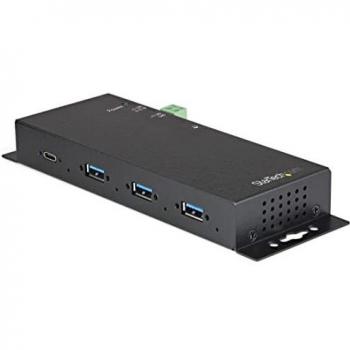
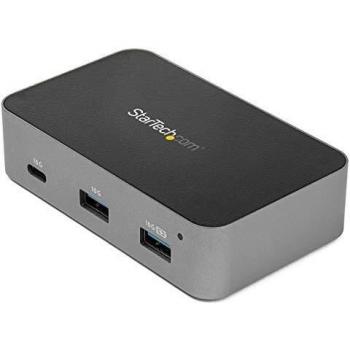
StarTech.com 3-Port USB Port Expander with Built-in Cable




Sponsored This site contains affiliate links for which we may receive compensation. More information
Find other available options:

| Identifiers | |
|---|---|
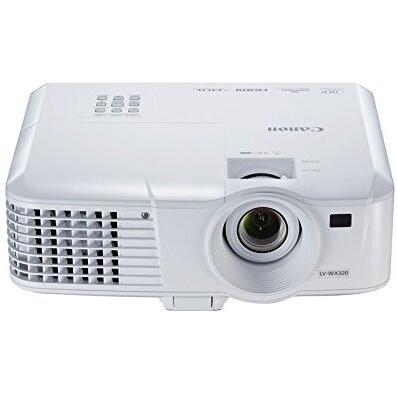
| Model | Canon 0908C003 |
| MPN | Canon ST3300G3UA |
| Dimensions / Weight | |
| Key Features | |
|
3D Indicates whether the product has built‑in support for 3‑dimensional (3D) content or displays. A value of "Yes" means the device can render or display 3D images, videos, or games; a value of "No" means it does not have native 3D capability.
|
No |
|
AC input frequency The frequency of the alternating current supplied to a power supply or charger, expressed in hertz (Hz). It indicates the acceptable operating range for the electrical mains that powers the device, ensuring proper functionality and safety.
|
50 - 60 |
|
AC input voltage The range of alternating current voltage that the product accepts from its power source, expressed in volts (V). It indicates the minimum and maximum supply voltages compatible with the device across different regions.
|
100 - 240 |
|
AC power in Indicates whether the product requires an AC mains power supply. A value of "Yes" means the device can be powered from a standard electrical outlet, while "No" indicates it does not use AC mains power (e.g., battery‑powered or USB‑only devices).
|
Yes |
|
Analog signal format system The standard analog video signal format that a device can receive or transmit, such as NTSC, PAL, or SECAM. Each value represents one of the common broadcast standards used for television and video equipment.
|
NTSC,NTSC 4.43,PAL,PAL 60,PAL M,PAL N,SECAM |
|
Audio (L,R) in Indicates the total number of audio input channels that a product can receive, such as left and right stereo inputs or additional surround‑sound inputs. The value is an integer representing how many separate audio input paths are available for connecting external devices.
|
1 |
|
Built-in display Indicates whether the product includes a built‑in screen or display unit that can be used directly for viewing content, such as an integrated monitor on a laptop or a built-in display on appliances. A value of "Yes" means the device has such a display; a value of "No" means it does not.
|
No |
|
Built-in speakers Indicates whether the product includes built‑in speaker(s) that can produce sound without requiring external audio devices. A value of "Yes" means the device has one or more integrated speakers; a value of "No" means it does not.
|
Yes |
|
Bulb power The electrical power rating of a light bulb or lamp, expressed in watts (W). It indicates the amount of energy the bulb consumes during operation or the maximum output it can deliver to connected equipment.
|
210 W |
|
Card reader integrated Indicates whether the device includes a built‑in card reader that can read removable memory cards such as SD, microSD, MMC or similar formats.
|
No |
|
Colour The colour or combination of colours that a product is available in, expressed as common names such as "Black", "Silver" or comma‑separated lists like "Black, White". It indicates the visual appearance of the item for consumers.
|
White |
|
Contrast ratio The contrast ratio is the proportion between the brightest and darkest luminance a display can produce, expressed as a simple ratio such as 1000:1. It indicates how well a screen can differentiate light from dark areas, affecting image clarity and color depth.
|
10000:1 |
|
Depth The linear measurement of an object from front to back or top to bottom, expressed in a physical unit such as millimeters, centimeters, inches, etc. It indicates how deep the item is and can be used for fitting, compatibility, or spatial planning.
|
232 mm |
|
Digital zoom Represents the multiplier that indicates how many times an image or field of view is enlarged by digital zoom. The value is expressed as a number without units, such as "4x" or "1.5x", where the numeric part indicates the factor of increase.
|
2x |
|
Ethernet LAN Indicates whether the product includes an Ethernet LAN interface for wired network connectivity, allowing data transmission over RJ‑45 or compatible cables.
|
Yes |
|
Ethernet LAN data rates Maximum theoretical speed at which a device can send or receive data over its Ethernet LAN interface, expressed in megabits per second (Mbps) or gigabits per second (Gbps). It represents the upper bound of throughput under optimal conditions and is useful for comparing network performance between devices with wired connectivity.
|
10,100 Mbit/s |
|
Focal length range The minimum and maximum focal lengths that a camera lens or optical system can cover, expressed in millimetres (mm). It indicates the zoom capability of the device and helps users understand the field‑of‑view range available.
|
22 - 24.1 mm |
|
Focus Specifies the focusing behavior of a camera or imaging device, indicating whether it uses automatic focus, manual focus, or a combination such as auto‑manual. The value is expressed as a free‑text string that describes the mode in use.
|
Manual |
|
Full HD Indicates whether the product is capable of displaying or transmitting video at Full HD resolution (1920 × 1080 pixels). A value of "Yes" means that Full HD functionality is supported, while a value of "No" indicates it is not available.
|
No |
|
Height The vertical dimension of a product measured from its lowest to highest point. It is expressed in a physical unit such as millimetres, centimetres or inches and applies to any item where height is relevant, including books, electronics, furniture and other objects.
|
114.5 mm |
|
Keystone correction horizontal The horizontal keystone correction angle specifies the range of degrees by which a projector or screen can adjust horizontally to correct image distortion without loss of clarity. It is expressed as a minimum‑maximum value, such as –30° to +30°, and applies to any device that supports keystone adjustment.
|
-30 - 30 |
|
Lamp type The classification or technology of a lamp, such as LED, halogen, incandescent, laser, or other variants. The value is a textual label that identifies the light source used by the product and does not include units or numeric quantities.
|
SHP |
|
Magnification The optical magnification factor of a device such as a camera lens, binoculars or telescope. It indicates how many times larger an object appears compared to its actual size when viewed through the product. Values are expressed as a multiplier (e.g., 2x, 10x).
|
1.1x |
|
Native aspect ratio The proportion between the width and height of a screen or image, expressed as two numbers separated by a colon (e.g., 16:9). It indicates whether content is designed for widescreen, square, or other aspect ratios and helps users match devices to their media formats.
|
16:10 |
| Noise Level | 36 dB |
|
Noise level economic mode The sound intensity produced by a product while operating in its economic or low‑power mode, expressed in decibels (dB). This value indicates how quiet the device is during energy‑saving operation and helps users assess suitability for quiet environments.
|
29 dB |
| Power consumption | 350 W |
|
Power consumption (network standby) The electrical power drawn by a device while it is in standby mode when connected to a network, expressed in watts (W). This value represents the minimal energy usage during idle operation over a network connection and can be used to estimate energy savings or compare efficiency across similar devices.
|
0.5 W |
| Power consumption (StandBy) | 3 W |
|
Power consumption economy mode The electrical power drawn by a device while operating in its economy or energy‑saving mode, expressed in watts (W). This value indicates the typical energy usage when the product is set to reduce consumption during normal operation.
|
240 W |
|
Power source The type of electrical supply that powers the device, such as mains electricity, batteries, USB power, or a combination of these options.
|
AC |
|
Projection distance The minimum and maximum distances, expressed in metres, at which a projector can display an image on a screen while maintaining acceptable sharpness and brightness. The value is represented as a range (e.g., "1.2 - 10 m"). This attribute helps users determine whether the projector will fit their room size.
|
2 - 6.6 m |
|
Projection technology The optical method used by a projector to create an image, such as DLP, LCD, LED or 3LCD. It indicates the underlying light‑processing system that determines brightness, color accuracy and overall visual performance.
|
DLP |
|
Projector brightness The amount of light emitted by a projector, expressed in ANSI lumens. It indicates how bright the projected image will appear under typical viewing conditions and allows users to compare brightness levels across different projectors.
|
3200 ANSI lumens |
|
Projector native resolution The pixel dimensions that a projector can output, expressed as width by height (e.g., 1920x1080). It indicates the native resolution of the projected image and is used to determine compatibility with source content and display quality.
|
WXGA (1280x800) |
|
RMS rated power The root‑mean‑square (RMS) power rating of a device, expressed in watts (W). It represents the average electrical power that the product can deliver or consume under normal operating conditions.
|
10 W |
|
Screen size compatibility The diagonal measurement ranges of screens that the product can project or display, expressed in millimeters and/or inches. It indicates the minimum and maximum screen sizes that the device is designed to handle.
|
1524 - 4572 mm (60 - 180") |
|
Service life of lamp The total operating hours a lamp can provide before it needs replacement, expressed in units of time such as hours or days.
|
4000 h |
|
Service life of lamp economic mode The total operating hours a lamp can provide before it needs replacement when operated in an energy‑saving or low‑power mode, expressed in units of time such as hours.
|
6000 h |
| Supported video modes | 480i,480p,576i,576p,720p,1080i,1080p |
|
Throw ratio The proportion between the distance from a projector to its screen and the width of the projected image, expressed as a simple ratio such as 2:1 or 1.5:1. It indicates how far the projector must be placed to achieve a desired screen size and is useful for planning installation space.
|
Normal |
|
TVI port Represents how many TVI (Television Interface) connectors are present on the product. The value is a simple integer indicating the total count of TVI ports, regardless of version or configuration.
|
No |
|
Uniformity Percentage indicating how consistently a product performs its intended function across units or over time, with higher values representing more consistent performance.
|
75% |
|
Weight The mass of the product expressed in a standard unit such as grams or kilograms. It represents how heavy the item is and can be used for shipping calculations, handling instructions, or consumer information.
|
2.5 kg |
|
Wi-Fi Indicates whether the product has built‑in Wi‑Fi capability, allowing it to connect to wireless networks without requiring external adapters or dongles.
|
No |
|
Width The horizontal measurement of a product, expressed in a linear unit such as millimetres or inches. It indicates how wide the item is from one side to the other and is used for sizing, fitting, and compatibility purposes.
|
282 mm |

Canon is a Japanese multinational corporation that specializes in the manufacture of imaging and optical products, including cameras, camcorders, photocopiers, steppers, and medical equipment. It has a wide range of products for both personal and business use, and is one of the leading brands in the digital camera market.