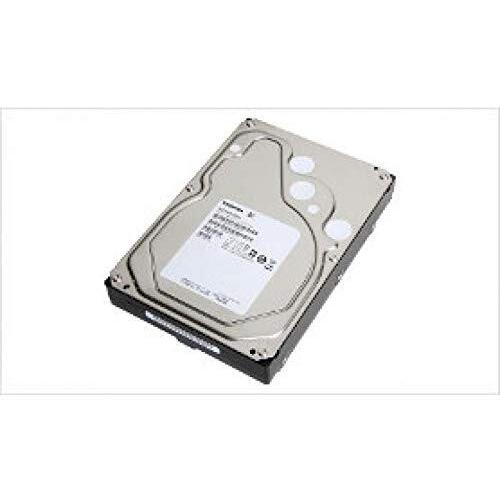
Toshiba Enterprise HDD 4TB Serial ATA Hard Disk Drive

Sponsored This site contains affiliate links for which we may receive compensation. More information
 Quzo
Quzo
Sponsored Toshiba Enterprise HDD 4TB 3.5" SATA
140.82 GBP
Price updated on: 09-06-2025 07:58:14
140.82 GBP
Price updated on: 09-06-2025 07:58:14 | Identifiers | |
|---|---|
| MPN | Toshiba 4053162923638 |
| Model | Toshiba MG04ACA400E |
| Dimensions / Weight | |
| Key Features | |
|
Average latency The typical time delay, measured in milliseconds, between a request and its response for storage devices such as hard drives or SSDs. It reflects how quickly data can be accessed from the device and is useful for comparing performance across similar products.
|
4.17 ms |
|
Bytes per sector The number of bytes contained in each storage sector of a device, indicating the smallest unit of data that can be read or written by the medium.
|
512 |
|
Cache memory The amount of internal memory reserved as a cache within a device or component, expressed in a data size such as megabytes (MB) or gigabytes (GB). It represents the temporary storage used to accelerate read/write operations by holding frequently accessed data closer to the processor or controller.
|
128 MB |
|
Certifications A list of formal recognitions, compliance marks, or standards that a product meets. Each entry may be a single certification (e.g., "RoHS") or a group of related certifications separated by commas (e.g., "CE, FCC, RoHS"). The attribute captures all applicable regulatory, environmental, safety, and quality approvals for the item.
|
RoHS compliant |
|
Data transfer rate The maximum theoretical speed at which a device can send or receive data, expressed in bits per second (bps) or its multiples such as kbps, mbps, gbps, etc. It represents the upper bound of throughput under optimal conditions and is useful for comparing performance across devices and interfaces.
|
6 Gbit/s |
|
Depth The linear measurement of an object from front to back or top to bottom, expressed in a physical unit such as millimeters, centimeters, inches, etc. It indicates how deep the item is and can be used for fitting, compatibility, or spatial planning.
|
147 mm |
|
Disk Capacity The total amount of digital storage that a disk drive—whether internal or external—can hold, expressed as a numeric value with an appropriate unit such as GB, MB, or TB. This attribute helps users understand how much data can be stored on the device and compare different drives.
|
4000 GB |
|
Disk form factor The physical size or shape of a storage disk, indicating the dimensions and mounting format used in computers and other devices. Common values include standard sizes such as "3.5" in., "2.5" in., and form‑factor codes like "M.2 2280" or "mSATA". This attribute helps users identify which drives are compatible with a given enclosure, motherboard, or system.
|
3.5 |
|
Disk speed The maximum rotational speed of a hard‑disk drive’s spindle, expressed in revolutions per minute (RPM). This value indicates how fast the drive’s platters spin and is useful for comparing performance or suitability across different models.
|
7200RPM |
|
Drive interface The physical or logical interface used by a hard drive to connect with other components, such as SATA, SAS, USB, or PCI Express. It indicates the technology that enables data transfer and power delivery between the device and its host system.
|
SATA III |
|
Electrical Power Consumption The amount of electrical power that a device consumes during operation, expressed in watts (W). It represents the typical energy draw of the product while it is active and can be used to estimate operating costs or compare efficiency across similar devices.
|
11.3 W |
|
Enclosure Type The form or mounting style of a hardware component, such as internal, portable, desktop, rack‑mountable, or external. It indicates how the device is physically housed and where it can be installed.
|
Internal |
|
Form factor Specifies the physical configuration or design of a product, such as ATX, Micro‑ATX, Mini‑ITX, tower, case with cover, etc. It describes how the device is built and what mounting or expansion options it supports.
|
Hard Disk Drive |
|
HDD Purpose The intended use or application of a hard drive, such as "Desktop", "NAS", "Enterprise" or "Surveillance". This attribute helps customers quickly identify the appropriate type of storage for their needs.
|
Desktop |
|
HDD Type The underlying storage technology used by the product, such as solid‑state drive (SSD), hard disk drive (HDD), embedded multi‑media card (eMMC) or a combination of these. It indicates the performance, durability and typical use cases for the device’s internal or external storage.
|
HDD |
|
Height The vertical dimension of a product measured from its lowest to highest point. It is expressed in a physical unit such as millimetres, centimetres or inches and applies to any item where height is relevant, including books, electronics, furniture and other objects.
|
26.1 mm |
|
Interface List of physical or logical interfaces that allow communication between a hard drive and other devices, such as SATA, M.2 PCIe, U.2, SAS, NVMe, or other standard connections.
|
Serial ATA III |
| Mean time between failures | 1400000 h |
|
Non-operating shock The mass of a component or device measured while it is not operating, expressed in grams. This value represents the total weight that the unit can sustain during shock testing and includes any internal parts and packaging if specified.
|
300 G |
| Operating shock | 70 G |
|
Pack quantity The total number of individual units contained within a single package or bundle. This value helps customers understand how many pieces they receive when purchasing the product, and it is useful for inventory, shipping, and comparison purposes.
|
1 |
|
Read Seek Time The average time required for a storage device to position its read/write head over the correct track before accessing data. It is expressed in milliseconds (ms) and indicates how quickly the device can begin reading or writing after a command is issued.
|
8.5 ms |
|
Shock non operating The mass, in grams, of a component or device that has been tested to determine its ability to withstand a non‑operating shock event. This value represents the total weight of the unit—including any internal parts and packaging if specified—used during the shock test.
|
300G for 2ms |
|
Shock operating The mass (in grams) of a component or device that has been tested to withstand shock without failure. This value represents the total weight of the unit, including any internal parts and packaging if specified, and indicates the robustness of the product under impact conditions.
|
70Gs for 2ms |
|
Start/stop cycles The total count of times a device can be powered on and off during its expected lifetime or usage period. This value helps users gauge the durability and reliability of the product, especially for appliances that are frequently started and stopped.
|
600000 |
|
Vibration non-operating The acceleration produced by a device when it is not in operation, expressed as a numeric value with the unit gram (g). It represents how much vibration the product generates during idle or standby conditions and can be used to assess mechanical stability and potential noise impact.
|
5 G, with 5 - 500 Hz |
|
Warranty The length of time for which the manufacturer guarantees that the product will be free from defects in materials and workmanship, typically expressed in years or months.
|
5 years (from date of purchase) |
|
Weight The mass of the product expressed in a standard unit such as grams or kilograms. It represents how heavy the item is and can be used for shipping calculations, handling instructions, or consumer information.
|
720 g |
|
Width The horizontal measurement of a product, expressed in a linear unit such as millimetres or inches. It indicates how wide the item is from one side to the other and is used for sizing, fitting, and compatibility purposes.
|
101.6 mm |
|
Write seek time The average time required for a storage device to move its read/write head to the desired track before performing an operation, expressed in milliseconds (ms). It indicates how quickly a drive can access data and is critical for overall performance.
|
9.5 ms |

Toshiba is a Japanese multinational conglomerate corporation that provides a wide range of products, services and solutions. Some of their most well-known products include laptops, tablets, televisions and smartphones. Toshiba is a well-respected brand and is known for their high-quality products.


