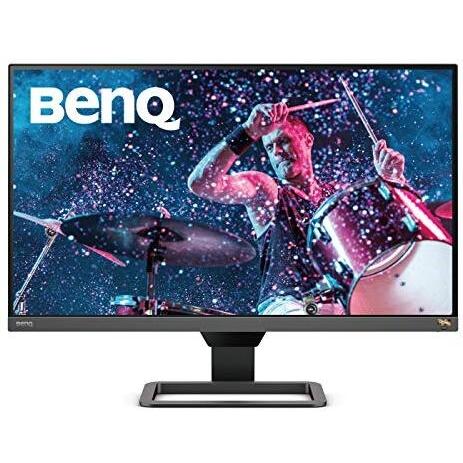
BENQ EW2780Q 27" Widescreen IPS LED Metallic Grey Multimedia Monitor


Sponsored This site contains affiliate links for which we may receive compensation. More information
Find other available options:

| Identifiers | |
|---|---|
| MPN | BenQ EW2780Q |
| Dimensions / Weight | |
| Key Features | |
|
AC input voltage The range of alternating current voltage that the product accepts from its power source, expressed in volts (V). It indicates the minimum and maximum supply voltages compatible with the device across different regions.
|
100 |
|
Annual energy consumption The total amount of electrical energy a product consumes in one year, expressed in kilowatt‑hours (kWh). This figure represents the expected yearly operating cost and allows consumers to compare the long‑term efficiency of appliances or electronics.
|
37 kWh |
|
Cable lock slot type Specifies the type of interface or mechanism used to secure a cable in its port, such as Kensington, Noble, IBM, or other standard lock slots. This attribute helps users identify compatibility and security features of the device.
|
Kensington |
|
Cables included A list of the cable types that are supplied with the product, such as USB, HDMI, VGA, DisplayPort, LAN (RJ‑45), SATA, audio or other relevant connectors.
|
AC, HDMI |
|
Colour The colour or combination of colours that a product is available in, expressed as common names such as "Black", "Silver" or comma‑separated lists like "Black, White". It indicates the visual appearance of the item for consumers.
|
Black, Grey |
|
Depth without stand The linear measurement of an object from front to back or top to bottom, expressed in a physical unit such as millimeters, centimeters, inches, etc. It indicates how deep the item is and can be used for fitting, compatibility, or spatial planning.
|
6.96 cm |
|
Display brightness typical The average luminance emitted by a display under normal viewing conditions, expressed in candela per square meter (cd/m²). It indicates how bright the screen will appear to users and is useful for comparing monitors, TVs, laptops and other visual devices.
|
350 cd/m² |
| Display diagonal | 68.58 cm |
|
Display number of colours The total count of distinct colours that a display can render, typically expressed as a numeric value (e.g., 16.78 million). This attribute indicates the colour depth and richness of the visual output; higher numbers generally mean more accurate and vibrant images.
|
16.78 million colours |
|
Display resolution The pixel dimensions of a display or image, expressed as width by height (e.g., 1920x1080). It indicates how many pixels are used to render visual content and is commonly used for monitors, TVs, smartphones, cameras, and digital images.
|
2560x1440 |
|
Display technology The type of display panel used in a visual device, such as LED‑backlit LCD, IPS, TN, VA, OLED, or AMOLED. It indicates the underlying technology that determines image quality, color accuracy, viewing angles, response time and power consumption.
|
LED |
|
DisplayPort version The specific version of the DisplayPort standard that a product supports, such as "1.4", "2.0" or "2.1b". This value indicates the capabilities and compatibility of the DisplayPort interfaces on the device.
|
1 |
|
Energy consumption (HDR) per 1000 hours The total amount of electrical energy a product consumes over a period of 1 000 hours, expressed in kilowatt‑hours (kWh). This metric allows consumers to compare the long‑term energy usage of devices that operate for extended periods and estimate annual consumption based on typical usage patterns.
|
30 kWh |
|
Energy consumption (SDR) per 1000 hours The total amount of electrical energy a product consumes during 1,000 operating hours, expressed in kilowatt‑hours (kWh). This metric allows comparison of energy efficiency across devices regardless of their typical usage patterns.
|
26 kWh |
|
Energy efficiency class (HDR) The energy efficiency class indicates the relative performance of a product, expressed with letters ranging from A+++ (most efficient) to G (least efficient). It allows consumers to compare expected operating costs and environmental impact across similar items.
|
G |
|
Energy efficiency class (SDR) The energy efficiency class indicates the relative performance of a product, expressed with letters ranging from A+++ (most efficient) to G (least efficient). It allows consumers to compare expected operating costs and environmental impact across similar items.
|
F |
|
Energy efficiency scale The energy efficiency scale indicates the relative performance of a product, expressed with letters ranging from A+++ (most efficient) to G (least efficient). It allows consumers to compare expected operating costs and environmental impact across similar items.
|
A to G |
|
Flicker-free technology Indicates whether the product incorporates a flicker‑free display technology that eliminates or reduces screen flickering, improving visual comfort and reducing eye strain.
|
Yes |
|
Harmonized System HS code The Harmonized System (HS) code is a standardized numerical identifier used internationally to classify traded goods. It consists of up to six digits, where each pair of digits represents progressively more specific product categories. The HS code facilitates customs duties, trade statistics, and regulatory compliance by providing a common language for describing products across borders.
|
85285210 |
|
HD type The pixel dimensions of a product’s screen, expressed as width by height (e.g., 1920x1080). It indicates the total number of pixels that compose the display and is used to assess image sharpness and clarity across devices such as monitors, TVs, laptops, and cameras.
|
1280x720 |
|
In stock Indicates whether the product is a wire‑cut item (custom cut to size) or a stock item (pre‑cut to standard dimensions). This attribute helps buyers understand the manufacturing process and potential customization options.
|
Y |
|
Market positioning A classification that indicates the target audience or use case for a product, such as Business, Gaming, Home & Office, Education, etc. It helps customers quickly identify which products are best suited to their needs.
|
Home |
|
Native aspect ratio The proportion between the width and height of a screen or image, expressed as two numbers separated by a colon (e.g., 16:9). It indicates whether content is designed for widescreen, square, or other aspect ratios and helps users match devices to their media formats.
|
16:9 |
|
Panel mounting interface The pair of horizontal and vertical dimensions in millimetres that a product supports for VESA mounting (e.g., "100 × 100 mm"). This value indicates the exact hole spacing required by a mounting bracket to secure the device. It is used for monitors, TVs, projectors and other display equipment that can be wall‑mounted or attached to stands.
|
100x100 |
|
Panel type The specific technology used to construct the display panel, such as IPS, TN, VA, OLED, or LCD. It indicates how pixels are controlled and affects image quality, color accuracy, viewing angles, and power consumption.
|
IPS |
| Power consumption | 25.5 W |
| Response time (fast) | 5 ms |
| RGB colour space | sRGB |
|
RMS rated power The root‑mean‑square (RMS) power rating of a device, expressed in watts (W). It represents the average electrical power that the product can deliver or consume under normal operating conditions.
|
10 W |
| Screen shape | Flat |
|
sRGB coverage typical The proportion of the standard sRGB color space that a display can reproduce, expressed as a percentage. Values close to 100 % indicate that the screen can render almost all colors defined by the sRGB standard, providing accurate and consistent visual output for images, videos, and design work.
|
99 % |
|
Tilt angle range The minimum and maximum angles, expressed in degrees, that a monitor can be tilted or adjusted vertically while maintaining acceptable performance or usability. It indicates the tilt limits for displays such as monitors, stands, or other adjustable equipment.
|
-5 - 15° |
|
Viewable size horizontal The width of the display area that a user can see without distortion, measured in a physical unit such as centimeters or inches. It represents the actual horizontal span of the screen that is visible when looking straight at it.
|
59.7 cm |
|
Viewable size vertical The maximum vertical dimension of the visible area on a display screen, expressed as a linear measurement (e.g., centimeters or inches). It indicates how tall the portion of the screen that can be seen by a user is, which helps compare monitors and other visual devices.
|
35.6 cm |
|
Width without stand The horizontal measurement of a product excluding any attached stand or base, expressed in a linear unit such as millimetres or inches. It indicates how wide the item is from one side to the other and is used for sizing, fitting, and compatibility purposes.
|
61.4 cm |

BenQ is a Taiwanese electronics company that produces a wide range of electronics products, including computer monitors, projectors, digital cameras, and mobile phones. The company is best known for its computer monitors, which are often considered some of the best on the market. BenQ is also a major player in the projector market, and its products are used in a wide variety of settings, from schools and businesses to home theaters.


