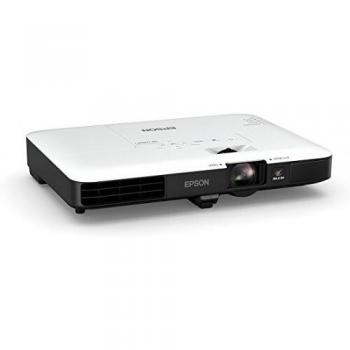
Epson EB-725W Projector 4000 ANSI Lumens, Laser, WXGA, White


Sponsored This site contains affiliate links for which we may receive compensation. More information
Find other available options:

| Identifiers | |
|---|---|
| MPN | Epson V11H999040 |
| Dimensions / Weight | |
| Key Features | |
|
AC input voltage The range of alternating current voltage that the product accepts from its power source, expressed in volts (V). It indicates the minimum and maximum supply voltages compatible with the device across different regions.
|
100 - 240 V |
|
Audio (L/R) in Total number of physical audio input connectors (left/right) available on the product, such as RCA or optical jacks. The value is an integer representing how many separate input points can be used to connect external audio sources.
|
3 |
|
Audio L/R out Indicates the total count of left‑and‑right (L/R) audio output ports available on a product, such as headphone jacks or speaker connectors that provide stereo sound. The value is an integer representing how many separate L/R pairs can be used to connect external audio devices.
|
1 |
|
Bundled software A list of software applications, operating systems, drivers, or utilities that are pre-installed or bundled with the product. The values may include antivirus suites, productivity tools, device management utilities, and other essential software components.
|
iProjection, Epson Projector Management |
|
Cable lock slot type Specifies the type of interface or mechanism used to secure a cable in its port, such as Kensington, Noble, IBM, or other standard lock slots. This attribute helps users identify compatibility and security features of the device.
|
Kensington |
|
Cables included A list of the cable types that are supplied with the product, such as USB, HDMI, VGA, DisplayPort, LAN (RJ‑45), SATA, audio or other relevant connectors.
|
AC |
|
Colour The colour or combination of colours that a product is available in, expressed as common names such as "Black", "Silver" or comma‑separated lists like "Black, White". It indicates the visual appearance of the item for consumers.
|
White |
|
Colour light output The amount of visible light emitted by a product, measured in ANSI lumens. This metric indicates the brightness level that users will experience when the device is operating under typical conditions.
|
4000 ANSI lumens |
|
Contrast The contrast ratio is the proportion between the brightest and darkest luminance a display can produce, expressed as a simple fraction such as 1000:1. It indicates how well a screen or projector can differentiate light from dark areas, affecting image clarity and color depth.
|
2,500,000 |
|
Contrast ratio The contrast ratio is the proportion between the brightest and darkest luminance a display can produce, expressed as a simple ratio such as 1000:1. It indicates how well a screen can differentiate light from dark areas, affecting image clarity and color depth.
|
2500000:1 |
|
Country of origin The country where the product was manufactured or its primary geographic source. This attribute indicates the nation responsible for the production or assembly of the item.
|
China |
|
Focal length range The minimum and maximum focal lengths that a lens or optical system can cover, expressed in millimetres (mm). It indicates the zoom capability of the device and helps users understand the field‑of‑view range available.
|
3.7 mm |
|
Focus Specifies the focusing behavior of a camera or imaging device, indicating whether it uses automatic focus, manual focus, or a combination such as auto‑manual. The value is expressed as a free‑text string that describes the mode in use.
|
Manual |
|
Harmonized System HS code The Harmonized System (HS) code is a standardized numerical identifier used internationally to classify traded goods. It consists of up to six digits, where each pair of digits represents progressively more specific product categories. The HS code facilitates customs duties, trade statistics, and regulatory compliance by providing a common language for describing products across borders.
|
85286200 |
| HDMI connector type | Full-size |
|
Image size The measurement of a display’s diagonal, expressed in inches or centimeters. It indicates the overall visual area available for content and is commonly used to compare monitors, televisions, laptops, tablets, and other electronic devices.
|
65 inches - 120 inches |
|
Item Indicates whether the product has a coating that blocks ultraviolet (UV) rays at 100 % intensity, protecting skin and eyes from harmful exposure.
|
V11H999040 |
|
Keystone correction horizontal The horizontal keystone correction angle specifies the range of degrees by which a projector or screen can adjust horizontally to correct image distortion without loss of clarity. It is expressed as a minimum‑maximum value, such as –30° to +30°, and applies to any device that supports keystone adjustment.
|
-3 - 3° |
|
Light source The main illumination source used by the product, such as LED, laser, CCFL, or other light-emitting technologies. It indicates whether the device uses a single light source or multiple sources and helps users understand the lighting characteristics of the item.
|
Laser |
| Matrix size | 0.6" |
|
Miracast Indicates whether the product is capable of using Miracast, a wireless display standard that allows mirroring or streaming video and audio from a compatible device to the product without cables.
|
Yes |
|
Native aspect ratio The proportion between the width and height of a screen or image, expressed as two numbers separated by a colon (e.g., 16:9). It indicates whether content is designed for widescreen, square, or other aspect ratios and helps users match devices to their media formats.
|
16:10 |
| Noise Level | 36 dB |
|
Noise level economic mode The sound intensity produced by a product while operating in its economic or low‑power mode, expressed in decibels (dB). This value indicates how quiet the device is during energy‑saving operation and helps users assess suitability for quiet environments.
|
26 dB |
|
Number of batteries supported The total count of battery cells that the product can accommodate or use. The value may be a simple integer (e.g., "4") or include the type of battery (e.g., "2x AAA"). It indicates how many individual batteries are required for operation, whether they are included in the package or need to be purchased separately.
|
2 |
|
Placement A list of the positions or mounting options where a product can be installed, such as indoor, outdoor, wall, desk, floor, ceiling, or universal. Each value represents a distinct placement scenario that the device supports.
|
Ceiling, Wall |
| Power consumption | 255 W |
| Power consumption (StandBy) | 0.5 W |
|
Power consumption economy mode The electrical power drawn by a device while operating in its economy or energy‑saving mode, expressed in watts (W). This value indicates the typical energy usage when the product is set to reduce consumption during normal operation.
|
197 W |
| Products per pallet | 12 pc(s) |
|
Projector brightness economic mode The amount of light emitted by a projector when operating in its low‑power or energy‑saving mode, expressed in lumens (cd/m² for luminance). This value indicates how bright the screen will appear under typical viewing conditions while conserving energy.
|
2800 ANSI lumens |
|
Projector native resolution The pixel dimensions that a projector can output, expressed as width by height (e.g., 1920x1080). It indicates the native resolution of the projected image and is used to determine compatibility with source content and display quality.
|
1280x800 |
|
RMS rated power The root‑mean‑square (RMS) power rating of a device, expressed in watts (W). It represents the average electrical power that the product can deliver or consume under normal operating conditions.
|
16 W |
|
Screen size compatibility The diagonal measurement ranges of screens that the product can project or display, expressed in millimeters and/or inches. It indicates the minimum and maximum screen sizes that the device is designed to handle.
|
1651 - 3048 mm ( |
|
Serial interface type The type of serial communication interface supported by the product, such as RS‑232, RS‑485, RJ‑45, or SATA. It indicates which physical connectors and protocols are available for data exchange with other devices.
|
RS-232C |
|
Service life of light source The total operating hours a projector lamp can provide before it needs replacement, expressed in units of time such as hours or days.
|
20000 h |
|
Service life of light source (economic mode) The total operating hours a lamp can provide before it needs replacement when running in an energy‑saving mode, expressed in units of time such as hours or days.
|
30000 h |
|
Supported network protocols A list of network communication protocols that a device can use or support, such as TCP/IP, HTTP, HTTPS, FTP, DHCP, DNS, and various wireless standards. Each protocol is represented by its standard name and may be separated by commas or slashes in the source data.
|
HTTPS, IPv4, IPv6, SNMP, ESC/VP.net, PJLink |
|
Sustainability certificates A list of environmental, safety or quality certifications that a product has obtained from recognized authorities. Typical entries include RoHS, ENERGY STAR, CE, WEEE, TCO Certified, FCC, and other industry‑specific standards.
|
TCO |
|
Technology The chemical composition of a battery that determines its performance, energy density, and suitability for different applications. Common chemistries include Lithium‑Ion, Nickel‑Metal Hydride, Alkaline, Lead‑Acid, and others.
|
LCD |
|
Throw ratio The proportion between the distance from a projector to its screen and the width of the projected image, expressed as a simple ratio such as 2:1 or 1.5:1. It indicates how far the projector must be placed to achieve a desired screen size and is useful for planning installation space.
|
37:1 |
|
Vertical scan range The range of vertical scan frequencies that a display device can support, expressed in hertz (Hz). It indicates the minimum and maximum refresh rates at which the screen updates vertically, affecting visual smoothness and stability.
|
100 - 120 Hz |
|
Video colour modes A list of the colour and lighting modes that a projector or display can produce, such as "Blackboard", "Cinema", "Dynamic", "Presentation" or "sRGB". Each value represents a distinct visual setting that the device can switch to for different viewing environments.
|
Blackboard, Cinema, Dynamic, Presentation, sRGB |
| Video processing | 10 bit |
|
Wi-Fi standards A list of the wireless networking protocols and frequency bands that a device can connect to, such as 802.11a, 802.11b, 802.11g, Wi‑Fi 4 (802.11n), Wi‑Fi 5 (802.11ac) or Wi‑Fi 6 (802.11ax). The values are typically separated by commas and may include both the technical name and a consumer‑friendly label.
|
802.11a,802.11b,802.11g,Wi-Fi 4 (802.11n),Wi-Fi 5 (802.11ac) |
|
Zoom ratio The proportion between the distance from a projector to its screen and the width of the projected image, expressed as a simple ratio such as 2:1 or 1.5:1. It indicates how far the projector must be placed to achieve a desired screen size and is useful for planning installation space.
|
35:1 |
| Zoom Type | Auto |

Epson is a Japanese electronics company that produces printers, scanners, projectors, and other imaging products. The company has a wide range of products for both personal and business use, and its printers are known for their quality and reliability.