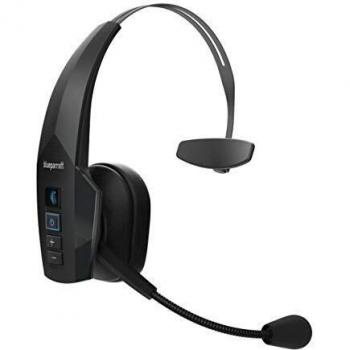
VXi VR12 3.5mm Mono Head-band Black headset


Sponsored This site contains affiliate links for which we may receive compensation. More information
Find other available options:

| Identifiers | |
|---|---|
| MPN | VXI 202984 |
| Dimensions / Weight | |
| Key Features | |
|
Colour The colour or combination of colours that a product is available in, expressed as common names such as "Black", "Silver" or comma‑separated lists like "Black, White". It indicates the visual appearance of the item for consumers.
|
Black |
|
Connectivity technology The network and data interface technologies supported by the product, such as Wired, Wireless, USB, Bluetooth, or combinations thereof. Each value represents a distinct technology that can be used for communication or power delivery.
|
Wired |
|
Country of origin The country where the product was manufactured or its primary geographic source. This attribute indicates the nation responsible for the production or assembly of the item.
|
China |
|
Ear coupling The type of ear attachment used by a headset or earphones, indicating how the device fits around or inside the ear. Common values include "Intraaural", "Circumaural", "Supraaural" and "On‑ear". This attribute helps users choose a model that matches their preferred fit and comfort.
|
Supraaural |
|
Harmonized System HS code The Harmonized System (HS) code is a standardized numerical identifier used internationally to classify traded goods. It consists of up to six digits, where each pair of digits represents progressively more specific product categories. The HS code facilitates customs duties, trade statistics, and regulatory compliance by providing a common language for describing products across borders.
|
85183000 |
|
Headphone frequency The span of audio frequencies that a product can accurately reproduce or respond to, expressed in hertz (Hz). It indicates the lowest and highest frequencies the device can handle, helping users assess suitability for music playback, communication, or signal processing applications.
|
300 |
|
Headset type The general classification of a headset based on how it delivers audio to the user, such as binaural (two‑channel), monaural (single‑channel), or other configurations. This attribute helps buyers understand whether the device provides stereo sound, single‑speaker output, or specialized listening modes.
|
Monaural |
|
Manufacturer The brand or company that produces the product, such as a computer, appliance, or accessory. This value helps users identify the source of the item and assess compatibility, support, and warranty information.
|
VXI Corporation, Inc |
|
Master (outer) case gross weight The total mass of a product’s outer enclosure, expressed in a standard unit such as grams or kilograms. It represents how heavy the case is and can be used for shipping calculations, handling instructions, or consumer information.
|
14.7 kg |
|
Master outer case height The vertical dimension of a product’s outer enclosure measured from its lowest to highest point. It is expressed in a physical unit such as millimetres, centimetres or inches and applies to any item where the overall height of the external case is relevant, including electronics, appliances, furniture and packaged goods.
|
370 mm |
|
Master outer case length The linear dimension of a product’s outer case measured in a standard unit such as meters, centimeters or inches. It represents the overall length from one end to the other and is used to compare the size of similar items across categories.
|
500 mm |
|
Master outer case width The horizontal dimension of a product’s outer enclosure measured in a linear unit such as millimetres or inches. It indicates how wide the item is from one side to the other and is used for sizing, fitting, and compatibility purposes.
|
600 mm |
|
Microphone frequency The span of audible frequencies that a microphone can accurately capture, expressed as a minimum and maximum value in hertz (Hz). It indicates the lowest and highest tones the device can reproduce or record, helping users assess suitability for different audio applications.
|
50 |
|
Microphone sensitivity The acoustic sensitivity of a microphone, expressed in decibels (dB). It indicates how effectively the microphone converts sound pressure into an electrical signal; lower (more negative) values mean higher sensitivity and better performance at low sound levels.
|
-54 dB |
|
Operating temperature The range of temperatures in which a product can safely operate without risk of damage or performance degradation. Values are expressed in degrees Celsius (°C) and may represent a single temperature, a minimum–maximum interval, or an average operating point.
|
-30 - 50 °C |
| Products per master (outer) case | 96 pc(s) |
|
Quantity Represents the count of individual units included in a product offering, such as pieces, packs, or sets. It indicates how many discrete items are available per purchase.
|
1 |
|
Recommended usage A brief statement of the intended or most suitable use cases for a product, such as the type of environment (indoor, outdoor), activity (gaming, office work, music listening) or general application category. It helps customers quickly determine whether the item fits their needs.
|
Aviation/Air traffic control |
|
Storage temperature The range of temperatures in which a device can safely operate without risk of damage or performance degradation. Values are expressed in degrees Celsius (°C) and may represent a single temperature, a minimum–maximum interval, or an average operating point.
|
-40 - 50 °C |
|
Wearing style A textual description of the way a product is worn or fitted on the body, such as "headband", "earhook", "neck‑band", "over‑the‑ear", or "in‑ear". This attribute helps users understand how the item will be positioned and secured during use.
|
Head-band |
VXI