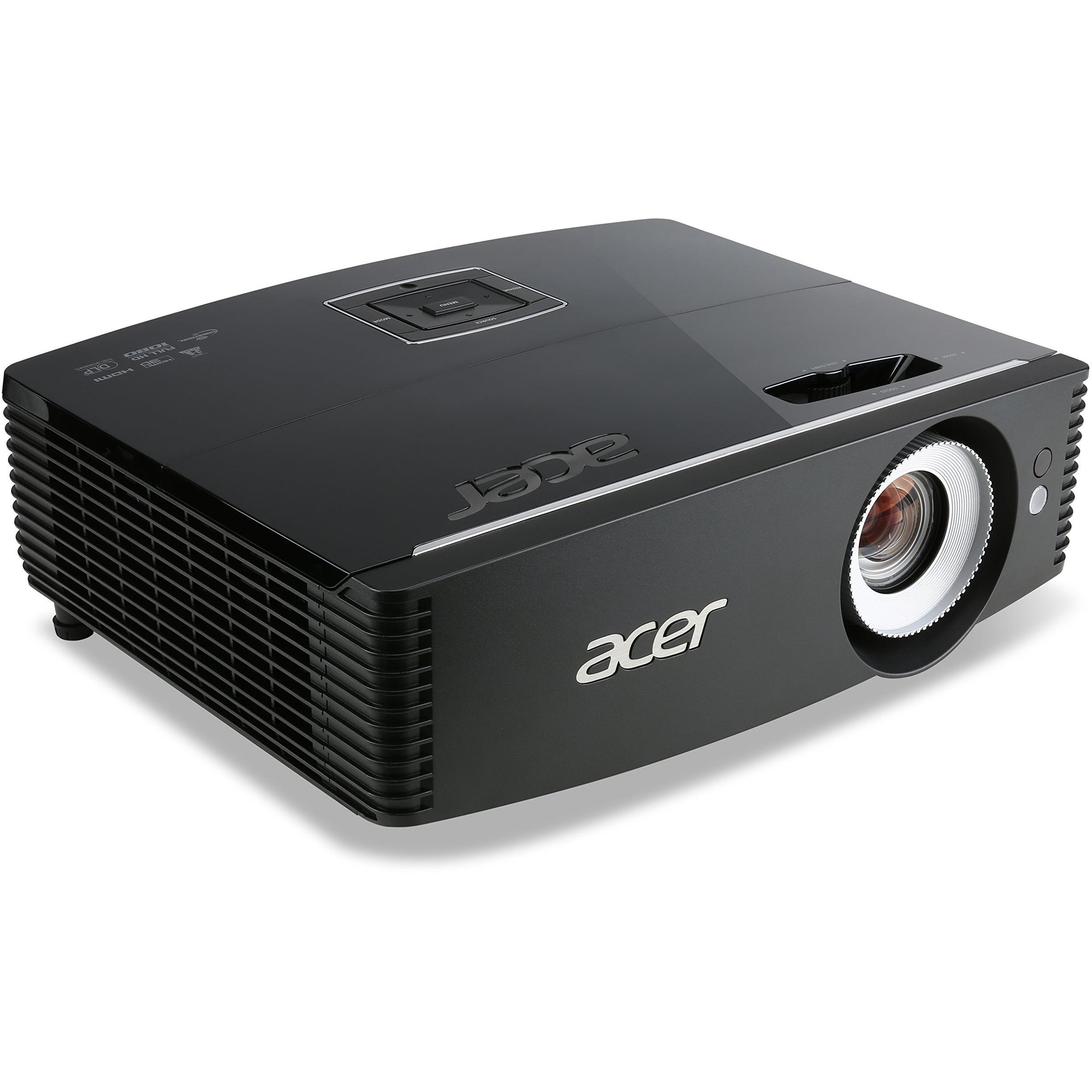
Acer P6200 XGA DLP Projector



Sponsored This site contains affiliate links for which we may receive compensation. More information
Find other available options:

| Identifiers | |
|---|---|
| Model | Acer MR.JMF11.001 |
| MPN | Acer MR.JMF11.001 |
| Dimensions / Weight | |
| Key Features | |
|
AC input voltage The range of alternating current voltage that the product accepts from its power source, expressed in volts (V). It indicates the minimum and maximum supply voltages compatible with the device across different regions.
|
120 - 230 V |
|
AC power in Indicates whether the product requires an AC mains power supply. A value of "Yes" means the device can be powered from a standard electrical outlet, while "No" indicates it does not use AC mains power (e.g., battery‑powered or USB‑only devices).
|
Yes |
|
Analog signal format system The standard analog video signal format that a device can receive or transmit, such as NTSC, PAL, or SECAM. Each value represents one of the common broadcast standards used for television and video equipment.
|
NTSC,PAL,SECAM |
|
Aperture range The minimum and maximum f‑number (aperture value) that a camera lens or optical system can achieve, expressed as a numeric range (e.g., "F1.4-F16") or a single value when only one aperture is available. It indicates the zoom and light‑gathering capability of the lens.
|
2.5 - 3.23 |
|
Audio (L,R) in Indicates the total number of audio input channels that a product can receive, such as left and right stereo inputs or additional surround‑sound inputs. The value is an integer representing how many separate audio input paths are available for connecting external devices.
|
1 |
|
Built-in display Indicates whether the product includes a built‑in screen or display unit that can be used directly for viewing content, such as an integrated monitor on a laptop or a built-in display on appliances. A value of "Yes" means the device has such a display; a value of "No" means it does not.
|
No |
|
Builtin speakers The total number of integrated speaker units present in the product. This value indicates how many separate speaker elements are built into the device, helping users compare audio capabilities across models.
|
2 |
|
Bulb power The electrical power rating of a light bulb or lamp, expressed in watts (W). It indicates the amount of energy the bulb consumes during operation or the maximum output it can deliver to connected equipment.
|
310 W |
|
Cables included A list of the cable types that are supplied with the product, such as USB, HDMI, VGA, DisplayPort, LAN (RJ‑45), SATA, audio or other relevant connectors.
|
AC,Component,Composite,VGA |
|
Colour The colour or combination of colours that a product is available in, expressed as common names such as "Black", "Silver" or comma‑separated lists like "Black, White". It indicates the visual appearance of the item for consumers.
|
Black |
|
Focal length range The minimum and maximum focal lengths that a camera lens or optical system can cover, expressed in millimetres (mm). It indicates the zoom capability of the device and helps users understand the field‑of‑view range available.
|
20.91 - 32.62 mm |
|
Focus Specifies the focusing behavior of a camera or imaging device, indicating whether it uses automatic focus, manual focus, or a combination such as auto‑manual. The value is expressed as a free‑text string that describes the mode in use.
|
Manual |
|
Horizontal synchronization The horizontal synchronization frequency indicates the rate, expressed in kilohertz (kHz), at which a display or projector synchronizes its horizontal scan lines. It represents how many horizontal cycles occur per second and helps users understand the refresh behavior of the device.
|
15 kHz |
|
Keystone correction horizontal The horizontal keystone correction angle specifies the range of degrees by which a projector or screen can adjust horizontally to correct image distortion without loss of clarity. It is expressed as a minimum‑maximum value, such as –30° to +30°, and applies to any device that supports keystone adjustment.
|
-30 - 30° |
|
Lamp type The classification or technology of a lamp, such as LED, halogen, incandescent, laser, or other variants. The value is a textual label that identifies the light source used by the product and does not include units or numeric quantities.
|
UHP |
|
Market positioning A classification that indicates the target audience or use case for a product, such as Business, Gaming, Home & Office, Education, etc. It helps customers quickly identify which products are best suited to their needs.
|
Presentation |
|
Maximum horizontal synchronization The highest horizontal synchronization frequency that a display or video device can support, expressed in kilohertz (kHz). It indicates the maximum rate at which horizontal scan lines can be refreshed, affecting video resolution and refresh performance.
|
100 kHz |
|
Maximum vertical synchronization The highest rate at which a display or projector updates its image vertically, expressed in hertz (Hz). It indicates the maximum vertical refresh frequency that the device can support, affecting image stability and motion clarity.
|
0.12 kHz |
|
Minimum vertical synchronization The lowest vertical synchronization frequency at which a display or projector can refresh its image, expressed in kilohertz (kHz). It indicates the minimum rate of line scanning per second and helps users assess compatibility with video sources and performance expectations.
|
0.024 kHz |
|
Native aspect ratio The proportion between the width and height of a screen or image, expressed as two numbers separated by a colon (e.g., 16:9). It indicates whether content is designed for widescreen, square, or other aspect ratios and helps users match devices to their media formats.
|
4:3 |
| Noise Level | 33 dB |
|
Noise level economic mode The sound intensity produced by a product while operating in its economic or low‑power mode, expressed in decibels (dB). This value indicates how quiet the device is during energy‑saving operation and helps users assess suitability for quiet environments.
|
28 dB |
|
Number of colours The total count of distinct colours that a display can render, typically expressed in millions or billions. This figure reflects the colour depth and determines how smoothly gradients and subtle hues are reproduced on the screen.
|
1.073 billion colors |
|
Operating relative humidity The range of relative humidity (in percentage) within which the product is designed to operate reliably. Values are expressed as a minimum–maximum interval such as "20 - 80 %" and indicate the acceptable environmental moisture level for optimal performance.
|
0 - 80% |
|
Operating temperature The range of temperatures in which a product can safely operate without risk of damage or performance degradation. Values are expressed in degrees Celsius (°C) and may represent a single temperature, a minimum–maximum interval, or an average operating point.
|
0 - 40 °C |
|
Optical zoom The multiplier that indicates how many times an image or field of view is enlarged by the optical system of a camera, lens or other imaging device. The value is expressed as a plain number with an optional "x" suffix (e.g., 2x, 5x). It represents the ratio between the magnified and the original size and does not include digital zoom effects.
|
1.6x |
| Power consumption | 383 W |
|
Power consumption economy mode The electrical power drawn by a device while operating in its economy or energy‑saving mode, expressed in watts (W). This value indicates the typical energy usage when the product is set to reduce consumption during normal operation.
|
305 W |
|
Projection distance The minimum and maximum distances, expressed in metres, at which a projector can display an image on a screen while maintaining acceptable sharpness and brightness. The value is represented as a range (e.g., "1.2 - 10 m"). This attribute helps users determine whether the projector will fit their room size.
|
1 - 11.4 m |
|
Projection modes A list of the different mounting or placement options available for a projector, such as Ceiling, Front, Rear, or combinations thereof. Each value indicates a supported configuration that determines where the projector can be positioned relative to the screen.
|
Ceiling,Front,Rear |
|
Projection technology The optical method used by a projector to create an image, such as DLP, LCD, LED or 3LCD. It indicates the underlying light‑processing system that determines brightness, color accuracy and overall visual performance.
|
DLP |
|
Projector brightness The amount of light emitted by a projector, expressed in ANSI lumens. It indicates how bright the projected image will appear under typical viewing conditions and allows users to compare brightness levels across different projectors.
|
5000 ANSI lumens |
|
Projector native resolution The pixel dimensions that a projector can output, expressed as width by height (e.g., 1920x1080). It indicates the native resolution of the projected image and is used to determine compatibility with source content and display quality.
|
XGA (1024x768) |
|
RMS rated power The root‑mean‑square (RMS) power rating of a device, expressed in watts (W). It represents the average electrical power that the product can deliver or consume under normal operating conditions.
|
20 W |
|
Screen size compatibility The diagonal measurement ranges of screens that the product can project or display, expressed in millimeters and/or inches. It indicates the minimum and maximum screen sizes that the device is designed to handle.
|
431.8 - 7620 mm (17 - 300") |
|
Service life of lamp The total operating hours a lamp can provide before it needs replacement, expressed in units of time such as hours or days.
|
3000 h |
|
Service life of lamp economic mode The total operating hours a lamp can provide before it needs replacement when operated in an energy‑saving or low‑power mode, expressed in units of time such as hours.
|
4000 h |
|
Supported aspect ratios The proportion between the width and height of a product’s display or image, expressed as two numbers separated by a colon (e.g., 16:9). It indicates whether the content is designed for widescreen, square, or other aspect ratios.
|
4:3, 16:9 |

Acer is a Taiwanese multinational hardware and electronics corporation, specializing in the production of personal computers, tablet computers, smartphones, and servers. Acer's products include desktop PCs, laptop PCs, tablets, servers, storage devices, displays, and smartphones.

