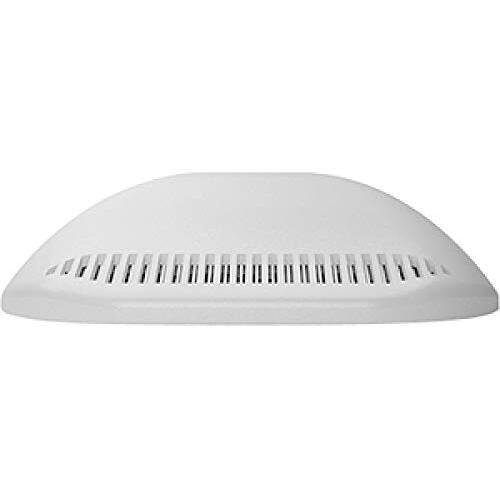
Extreme Networks ExtremeWireless WiNG AP-7612 IEEE 802.11ac 1.24 Gbit/s Wireless Access Point


Sponsored This site contains affiliate links for which we may receive compensation. More information
 smartteck.co.uk
Sponsored Extreme networks WiNG AP 7612 867 Mbit/s White Power over Ethernet...
318.80 GBP
Price updated on: 29-07-2024 05:27:38
318.80 GBP
Price updated on: 29-07-2024 05:27:38  computersdeal.co.uk
Sponsored Extreme networks WiNG AP 7612 867 Mbit/s White Power over Ethernet...
325.19 GBP
Price updated on: 20-06-2025 15:53:39
325.19 GBP
Price updated on: 20-06-2025 15:53:39 | Identifiers | |
|---|---|
| MPN | Extreme Networks 37102 |
| Dimensions / Weight | |
| Key Features | |
|
2.4 GHz The radio frequency band used by a wireless device, expressed in gigahertz (GHz). Common values include 2.4 GHz and 5 GHz, which indicate the operating spectrum for Wi‑Fi or other wireless protocols.
|
Yes |
|
Antenna gain level maximum The highest directional signal amplification a device’s antenna can provide, expressed in decibels relative to an isotropic radiator (dBi). It indicates the maximum gain achievable by the antenna and helps users compare coverage or range potential across devices.
|
8.5 dBi |
|
Colour The colour or combination of colours that a product is available in, expressed as common names such as "Black", "Silver" or comma‑separated lists like "Black, White". It indicates the visual appearance of the item for consumers.
|
White |
|
Ethernet LAN ports Represents the total count of Ethernet LAN (RJ‑45) interfaces available on a product. The value is an integer indicating how many physical Ethernet ports are present, regardless of speed or generation.
|
2 |
|
Frequency band The operating frequency range of a device expressed in hertz (Hz). It indicates the specific radio frequencies that the product can transmit or receive, whether as a single value (e.g., 2.4 GHz) or a range (e.g., 2.4–5 GHz). This attribute helps users understand the wireless capabilities and compatibility of the device with network standards.
|
2.412 - 2.472, 5.18 - 5.825 GHz |
|
Harmonized System HS code The Harmonized System (HS) code is a standardized numerical identifier used internationally to classify traded goods. It consists of up to six digits, where each pair of digits represents progressively more specific product categories. The HS code facilitates customs duties, trade statistics, and regulatory compliance by providing a common language for describing products across borders.
|
85176990 |
|
Housing material Indica el material o la combinación de materiales con los que está fabricado el componente más importante de un producto, como metal, plástico, vidrio u otros compuestos. Este atributo ayuda a comprender la durabilidad, peso y estética del artículo.
|
Aluminium, Plastic |
|
LED indicators A list of the functions or statuses that an LED indicator on a device can display, such as power status, activity, link, and other operational signals.
|
Activity |
|
Maximum data transfer rate The highest theoretical speed at which a device can send or receive data, expressed in bits per second (bps) or its multiples such as kbps, mbps, gbps, etc. This value represents the upper bound of throughput under optimal conditions and is useful for comparing performance across devices and interfaces.
|
867 Mbit/s |
|
Modulation The modulation technique used by a wireless device or component to encode digital information onto a carrier signal. Common schemes include QAM, OFDM, PSK, FSK and their variants. This attribute helps users understand the signal processing method and compatibility with other equipment.
|
256-QAM |
|
Operating relative humidity The range of relative humidity (in percentage) within which the product is designed to operate reliably. Values are expressed as a minimum–maximum interval such as "20 - 80 %" and indicate the acceptable environmental moisture level for optimal performance.
|
0 - 95% |
|
Operating temperature The range of temperatures in which a product can safely operate without risk of damage or performance degradation. Values are expressed in degrees Celsius (°C) and may represent a single temperature, a minimum–maximum interval, or an average operating point.
|
0 - 40 °C |
|
Placement A list of the positions or mounting options where a product can be installed, such as indoor, outdoor, wall, desk, floor, ceiling, or universal. Each value represents a distinct placement scenario that the device supports.
|
Wall |
|
Storage temperature The range of temperatures in which a device can safely operate without risk of damage or performance degradation. Values are expressed in degrees Celsius (°C) and may represent a single temperature, a minimum–maximum interval, or an average operating point.
|
-40 - 70 °C |
Extreme Networks


