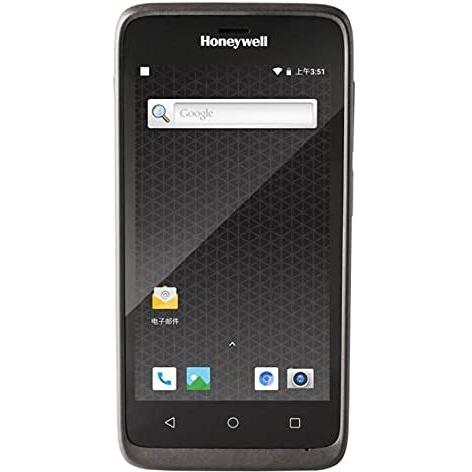
Honeywell ScanPal EDA51 Handheld Mobile Computer with Touchscreen Display
Sponsored This site contains affiliate links for which we may receive compensation. More information
 smartteck.co.uk
Sponsored Honeywell ScanPal EDA51 handheld mobile computer 12.7 cm (5") 1280...
417.96 GBP
Price updated on: 21-07-2024 03:08:08
417.96 GBP
Price updated on: 21-07-2024 03:08:08  computersdeal.co.uk
Sponsored Honeywell ScanPal EDA51 handheld mobile computer 12.7 cm (5") 1280...
422.59 GBP
Price updated on: 20-06-2025 15:37:16
422.59 GBP
Price updated on: 20-06-2025 15:37:16 | Identifiers | |
|---|---|
| Dimensions / Weight | |
| Key Features | |
|
Accelerometer Indicates whether the device is equipped with an accelerometer sensor, which measures acceleration forces along one or more axes.
|
Yes |
|
Colour The colour or combination of colours that a product is available in, expressed as common names such as "Black", "Silver" or comma‑separated lists like "Black, White". It indicates the visual appearance of the item for consumers.
|
Black, Grey |
| Display | LED |
| Display diagonal | 12.7 cm (5") |
|
Display resolution The pixel dimensions of a display or image, expressed as width by height (e.g., 1920x1080). It indicates how many pixels are used to render visual content and is commonly used for monitors, TVs, smartphones, cameras, and digital images.
|
1280 x 720 pixels |
|
Flash memory The total amount of internal flash memory available in a device, expressed as a data size (e.g., megabytes or gigabytes). This attribute indicates how much data can be stored on the device’s built‑in flash storage and is useful for comparing storage capacity across products.
|
32 GB |
|
Harmonized System HS code The Harmonized System (HS) code is a standardized numerical identifier used internationally to classify traded goods. It consists of up to six digits, where each pair of digits represents progressively more specific product categories. The HS code facilitates customs duties, trade statistics, and regulatory compliance by providing a common language for describing products across borders.
|
84713000 |
|
Internal memory The total amount of internal memory available in a device, expressed as a data size such as megabytes (MB) or gigabytes (GB). It indicates how much information the component can hold for active processes and affects multitasking performance.
|
3 GB |
|
Maximum battery life The longest period a device can operate on a single charge before needing to be recharged, expressed in standard time units such as hours or minutes.
|
12 h |
|
Number of cores The total count of processing cores present in a CPU or GPU. This value indicates how many independent execution units are available for parallel processing, which can affect performance and multitasking capability.
|
8 |
|
Operating relative humidity The range of relative humidity (in percentage) within which the product is designed to operate reliably. Values are expressed as a minimum–maximum interval such as "20 - 80 %" and indicate the acceptable environmental moisture level for optimal performance.
|
10 - 90% |
|
Operating system installed The operating system that is installed on the device, indicating the software platform that manages hardware resources and provides services for applications. It can be a commercial OS such as Windows or macOS, an open‑source distribution like Linux, or a proprietary firmware used in embedded devices.
|
Android |
|
Operating temperature The range of temperatures in which a product can safely operate without risk of damage or performance degradation. Values are expressed in degrees Celsius (°C) and may represent a single temperature, a minimum–maximum interval, or an average operating point.
|
-10 - 50 °C |
|
Processor family The processor family identifies the group or series of CPU models that share a common architecture, design, and performance characteristics. It helps users compare processors across brands and generations by indicating the underlying technology used in the chip.
|
Snapdragon |
|
Processor frequency The fundamental operating frequency of a processor, expressed in hertz (Hz). It indicates the speed at which the CPU runs under normal conditions and is typically reported in gigahertz (GHz) or megahertz (MHz). This value helps users compare performance potential across different models.
|
1.8 GHz |
|
Storage temperature The range of temperatures in which a device can safely operate without risk of damage or performance degradation. Values are expressed in degrees Celsius (°C) and may represent a single temperature, a minimum–maximum interval, or an average operating point.
|
-20 - 70 °C |
|
Touch technology The method by which a device’s touch-sensitive display detects user input, such as multi‑touch, single‑touch, capacitive, resistive, infrared or optical. This attribute indicates the specific interaction technology employed in the screen.
|
Multi-touch |
|
Wi-Fi standards A list of the wireless networking protocols and frequency bands that a device can connect to, such as 802.11a, 802.11b, 802.11g, Wi‑Fi 4 (802.11n), Wi‑Fi 5 (802.11ac) or Wi‑Fi 6 (802.11ax). The values are typically separated by commas and may include both the technical name and a consumer‑friendly label.
|
802.11a, 802.11b, 802.11g, Wi-Fi 4 (802.11n), Wi-Fi 5 (802.11ac) |

Honeywell is a brand that produces a wide range of products, from home thermostats to security systems. The company has a long history, dating back to 1885, and is known for its high-quality products. Honeywell is a trusted brand and is often recommended by experts.


